How Lighting Enhances Florals at Your Wedding
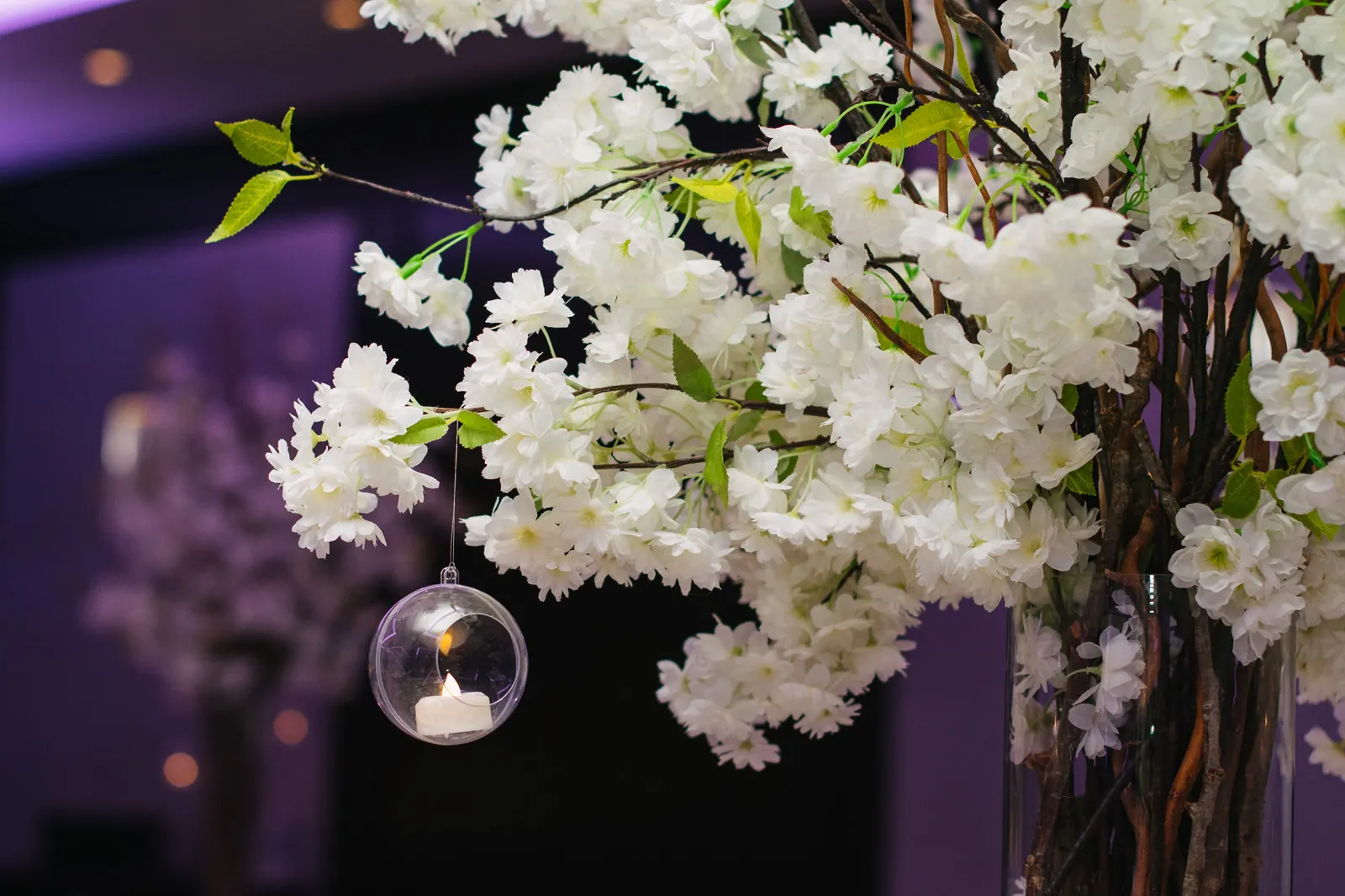
Quick answer: Lighting enhances florals by using focused light with good color rendering to bring out color and texture; warm white around 2700-3000K is one common aesthetic choice, not a rule for every palette. The best results come from florists and lighting designers planning together before the wedding, so pin spots, uplighting, and candle-toned fixtures are placed to highlight centerpieces, arches, and arrangements rather than compete with them.
Key takeaways
- Warm white light around 2700-3000K can complement many floral palettes, but the team should also evaluate color rendering, fixture placement, and the specific flower colors.
- Pin spotting centerpieces draws guest eyes to the table before the broader room lighting takes over for dancing.
- Florists and lighting designers should compare mockups or color swatches before the wedding, not on-site the day of.
- Uplighting placed behind or beside arrangements creates depth, but too much colored light can shift how flower hues actually read.
- FNA Events includes dance-floor lighting and offers free uplighting on its premium DJ and host packages, which can be coordinated with your florist’s palette.
Why Lighting Changes How Florals Actually Look
Flowers photograph and read differently depending on the light around them. A centerpiece that looks lush and saturated in daylight can turn flat and gray once the sun sets and a venue switches to standard overhead lighting. That is because most ambient room lighting is not aimed at your tables or your arch, so florals end up lit by whatever spills over from the ceiling.
Warm white light in the 2700-3000K range can complement many floral palettes, but a test under the actual fixture is more reliable than color temperature alone. Cooler light changes the contrast between warm-toned flowers and their surroundings, while poor color rendering can make hues look dull or inaccurate. This is one reason lighting and florals need to be planned together instead of treated as two separate line items on a wedding checklist.
For a deeper look at how color temperature and mood lighting work together across your whole reception, see our guide on designing lighting for your reception atmosphere.
What Is Centerpiece Lighting and Do You Need It?
Centerpiece lighting usually refers to small, focused fixtures, such as pin spots, battery LED picks, or mini uplights, used specifically to highlight a table arrangement, cake, or floral installation. It is different from general room lighting or uplighting on the walls, which sets overall mood rather than drawing attention to a specific piece.
You do not need centerpiece lighting for every wedding. If your venue already has warm, dimmable overhead lighting and your reception is during daylight hours, added fixtures may be unnecessary. Centerpiece lighting makes the biggest difference when:
- Your reception runs into the evening and the room lighting dims
- You invested in tall or statement floral arrangements you want guests to notice
- Your venue has high ceilings or dim ambient light that swallows detail
- You are hiring a photographer or videographer and want florals to show up well in evening shots
If you are weighing this against other visual upgrades, our guide to wedding add-ons and upgrades breaks down which enhancements tend to matter most for different venue types.
How Florists and Lighting Designers Should Collaborate
The best floral lighting results come from conversations that happen weeks before the wedding, not adjustments made during setup. A florist knows the exact color, texture, and height of the arrangements. A lighting designer knows how light behaves in that specific room. Neither can fully compensate for the other working alone.
Steps for a productive collaboration
- Share the floral mood board and the lighting mood board with each other, not just with the couple
- Confirm the venue’s ceiling height and outlet or truss locations, since this affects where pin spots or uplights can physically go
- Agree on color temperature and color-rendering goals before selecting or programming fixtures, since different light sources can change how the same flower looks
- Walk through the floor plan together to flag any arrangement that will sit in a shadow, such as centerpieces near a DJ booth or dance floor
- Do a final check at the rehearsal or early setup window, if the venue allows it, so adjustments happen before guests arrive
Teams that handle both lighting and entertainment under one roof, like FNA Events, can make this coordination simpler because the same crew is already on-site managing uplighting, dance-floor lighting, and the DJ setup together.
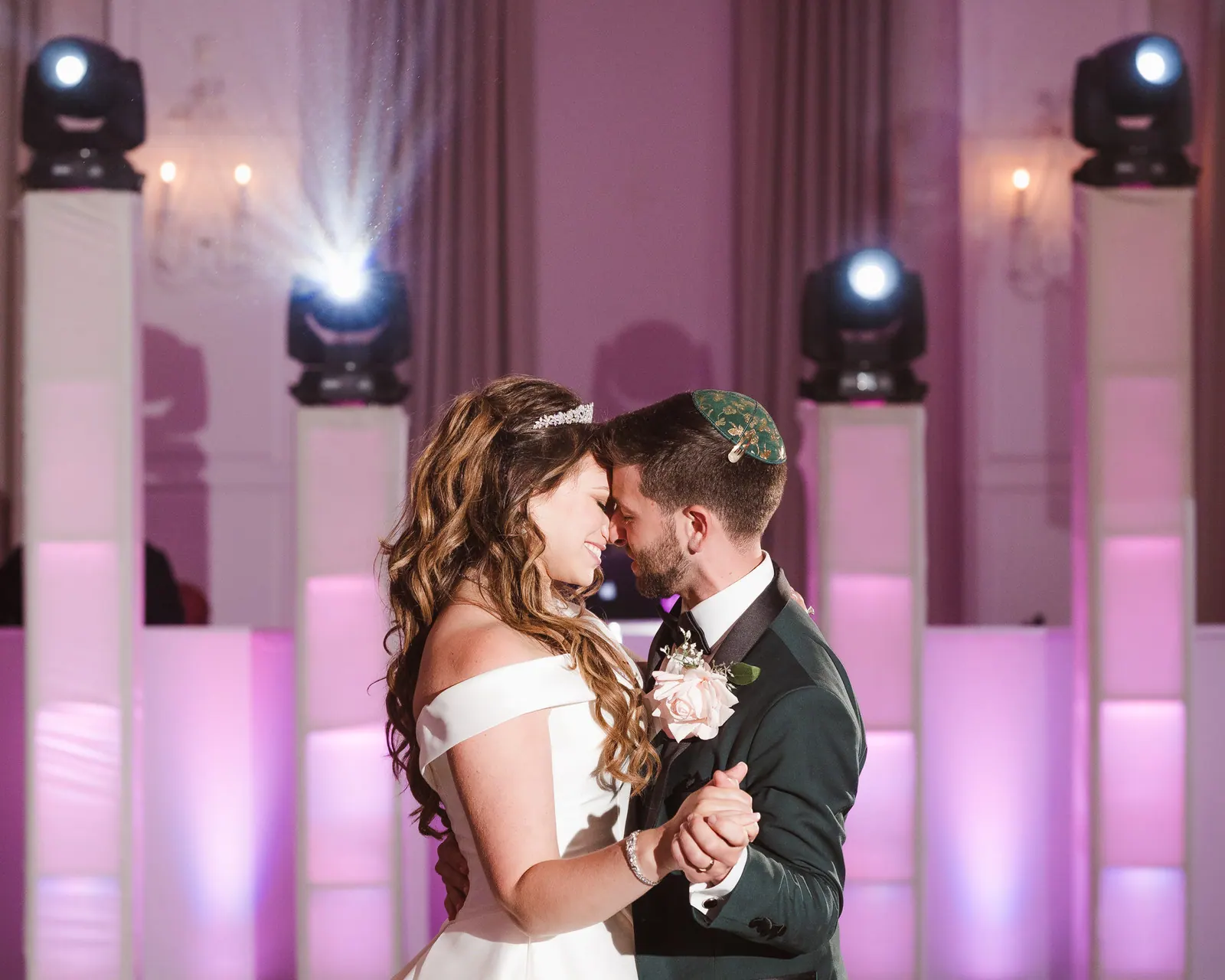
Lighting Techniques That Flatter Florals
Different floral setups call for different lighting approaches. A centerpiece needs a different technique than a hanging installation or a ceremony arch.
| Floral Feature | Lighting Technique | Why It Works |
|---|---|---|
| Low centerpieces | Pin spotting from above | Draws the eye down to the table without glare at guest eye level |
| Tall arrangements or candelabras | Uplighting from the base | Adds depth and drama by lighting the arrangement from below |
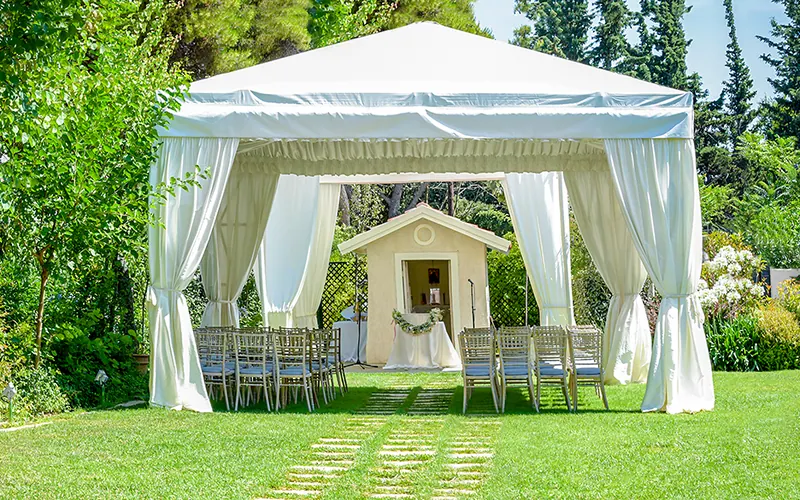
| Ceremony arch or arbor | Soft side lighting or string lights woven through greenery | Evenly fills in shadows across a wide structure |
| Hanging floral installations | Warm spotlights angled from the floor or nearby truss | Highlights texture and movement without flattening the piece |
| Head table or sweetheart table florals | Combination of uplighting and a focused accent light | Keeps the couple’s table visually anchored during toasts and photos |
FNA Events includes dance-floor lighting with its DJ and MC packages and offers uplighting at no extra cost on its premium DJ and host packages, which can be color-matched to a florist’s palette as part of the overall room design. For florals near the dance floor, pairing this with intelligent lighting helps keep the look cohesive once dancing starts.
Color Temperature and Why It Matters for Flower Tones
Color temperature, measured in Kelvin, describes whether a light reads warm (amber, candle-like) or cool (blue-white, clinical). Warm white in the 2700-3000K range is a common aesthetic choice for weddings, but couples should test it against the floral palette and prioritize fixtures with strong color rendering.
Bold colored uplighting, such as deep red or purple, can be striking for a reception’s overall mood but will shift how nearby florals actually appear. A white and green centerpiece under a magenta wash will not look white and green anymore. If your florist has chosen specific, intentional hues, it is worth asking your lighting designer to keep colored washes away from the florals themselves and reserve bold color for walls, drapery, or the dance floor instead.
For couples still deciding on their overall lighting palette, our reception lighting design guide goes deeper into choosing a cohesive color scheme for the whole room.
What Florals Lighting Can and Cannot Fix
Good lighting elevates florals that are already well designed, but it cannot correct arrangements that are poorly scaled for the room or placed where fixtures cannot be positioned safely. Lighting also cannot replace the need for sturdy floral mechanics; a centerpiece that leans or wilts will still look that way under a spotlight, just more visibly.
For safety, have the venue approve lighting near florals, candles, or draped fabric, and use qualified event professionals for power distribution, overhead rigging, or equipment near open flame.
What Shapes an Event-Lighting Quote
Event-lighting quotes vary with the venue, fixture count, setup access, rigging needs, power requirements, programming, and whether a lighting technician remains on-site. Ask for an itemized proposal showing equipment, labor, delivery, setup, operation, and removal.
Exact event-lighting costs depend on the number and type of fixtures, setup complexity, and whether a technician is needed during the event. FNA Events keeps its package pricing behind a quote request; review the packages page or use the contact page to request an estimate.
Questions to Ask Before You Book Lighting and Florals Separately
If you are hiring your florist and lighting vendor independently rather than through one entertainment company, a short checklist helps avoid mismatched results on the wedding day.
- Will the florist and lighting designer speak directly, or only through the couple or planner?
- What color temperature will the lighting use, and does it match the floral palette?
- Are there enough outlets or battery-powered fixture options near the ceremony arch and centerpieces?
- Who is responsible for final placement check during setup, the florist, the lighting crew, or the venue coordinator?
- What is the fallback plan if an outdoor ceremony loses daylight earlier than expected?
Even when lighting and entertainment come from one team, include the florist and venue in the final placement review. To explore FNA Events’ available lighting options, visit the event enhancements page.
Frequently Asked Questions
Can I use real candles near floral arrangements at my reception?
Many venues restrict open flame near florals due to fire codes, especially with dried or silk elements. Battery-operated LED candles are a common substitute that provides a warm glow without an open flame. Always confirm your venue’s specific candle policy before finalizing your floral and lighting plan.
Does uplighting damage or heat up fresh flowers?
LED fixtures usually direct less radiant heat toward florals than incandescent lamps, but the fixture housing can still become warm. Follow the manufacturer’s clearance instructions, keep equipment away from water, and ask the florist before placing battery lights inside an arrangement.
Should my florist and DJ/lighting vendor meet before the wedding?
It helps if they at least exchange mood boards, floor plans, and color preferences even if they never meet in person. This avoids last-minute surprises, like a lighting color that clashes with the florals, and lets both vendors plan fixture placement around the other’s needs in advance.
What is a pin spot and do I need one for every centerpiece?
A pin spot is a small, narrow-beam light aimed directly at one object, commonly a centerpiece or cake, to make it stand out. You typically do not need one on every table; many couples use them on the head table, cake table, or a few focal arrangements instead of every centerpiece in the room.
How far in advance should I plan lighting with my florist?
Finalize floral and lighting details once the floor plan, venue rules, and major arrangement sizes are confirmed, leaving enough time for both vendors to review fixture placement. Earlier conversations about color palette and general style can happen as soon as both vendors are booked.
Ready to Check Your Date
If you are planning a wedding or celebration in New Jersey, New York, or the Philadelphia area, the FNA Events team can walk you through DJ and MC entertainment, photography, videography, live music, enhancements, and photo booths, all run by one coordinated crew. Call (844) 373-7411 or visit our contact page to share your date and venue and get pricing for your celebration.
Written by the team at Fresh New Angle Events, Toms River, New Jersey wedding DJs, photographers, videographers, and event professionals serving couples across New Jersey, New York, and the Philadelphia area.