Coordinating Dancing on the Clouds with Photo and Video
Quick answer: Coordinating Dancing on the Clouds with your photographer and videographer means sharing the first-dance timing, song length, and camera angles in advance so the low-lying cloud effect reads clearly in photos and video instead of blocking the couple or confusing the room’s lighting.
Key takeaways
- Share your first-dance song and timing with your photographer, videographer, and DJ well before the wedding, not on the day itself.
- Low-lying cloud effects photograph best when the dance floor has even, warm lighting and a clear sightline, since the cloud itself is subtle rather than theatrical fog.
- Confirm with your venue coordinator that dancing on clouds is approved, since fire-alarm sensitivity and ventilation vary by room.
- A second camera angle (wide and tight, or a riser shot) helps video capture the cloud rolling in without losing the couple’s faces.
- Outdoor settings rarely hold the cloud effect well because even light breezes thin it before it builds, so it works best in indoor reception spaces.
What Is the Dancing on the Clouds Effect, and Why Does Timing Matter?
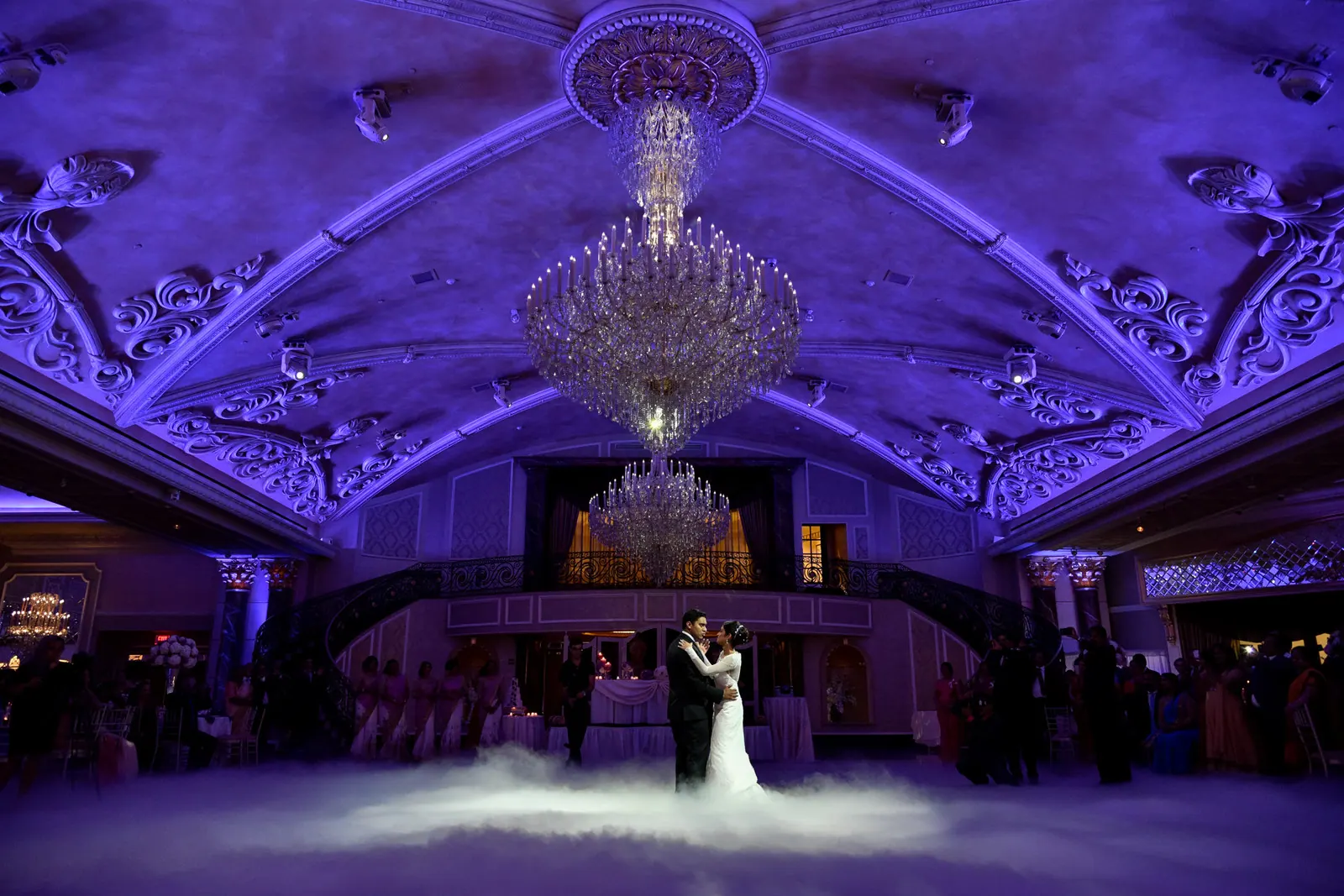
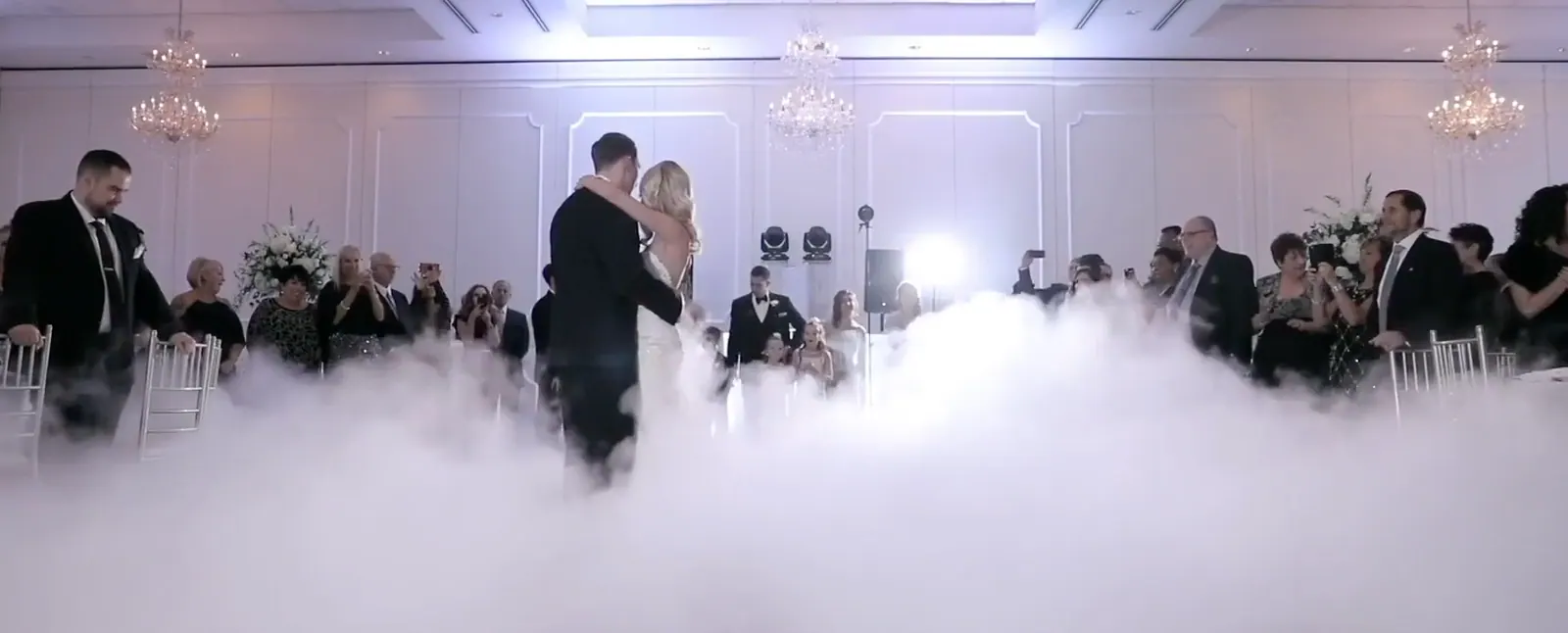
Dancing on the Clouds is a low-lying cloud effect, typically created with a dry-ice or water-based fogger, that rolls across the dance floor and settles around a couple’s feet and ankles during the first dance. Unlike a theatrical fog machine that fills a whole room, the effect is designed to stay close to the ground so it reads as a soft, dreamlike layer in photos rather than an obscuring haze. FNA Events offers Dancing on the Clouds as one of its wedding enhancements, and describes the low-lying cloud option as indoor-safe when set up correctly.
Good timing helps the cloud effect appear at the intended point in the first dance. The cloud needs a few seconds to build before it looks full in photos, and it needs to clear before the room moves into open dancing. If the DJ, photographer, and videographer are not working from the same cue, the effect can trigger too early, too late, or right as a guest walks through the shot.
How Should You Plan the Timing with Your Vendor Team?
The cleanest way to coordinate is to build the cue into your written reception timeline, not just mention it verbally on the day. A shared timeline removes guesswork for every vendor and keeps the moment from feeling rushed. Give the photography and video teams the same timeline before the wedding so everyone knows when key moments will happen and can coordinate positions without pulling the couple in different directions.
- Pick the exact point in the song where the cloud should start, allowing the couple time to settle into the dance before the effect begins.
- Tell your DJ or MC the cue so they can trigger the machine or signal the operator at that moment.
- Give your photographer and videographer the same cue point so they are already positioned and focused before the cloud appears.
- Decide how long the effect should run, matched to your song length, so it does not dissipate mid-dance or linger into the next song.
- Walk the plan past your venue coordinator ahead of time, since approval and ventilation setup take advance notice.
FNA’s own dancing on the clouds planning guide and the NJ wedding reception timeline guide are useful starting points for working this cue into the rest of your reception order.
What Camera Angles Work Best for a Cloud First Dance?
Using more than one planned angle can show both the cloud moving across the floor and the couple’s expressions. The cloud needs to be visible rolling across the floor, and the couple needs to stay the clear focal point above it. A few angle combinations tend to work consistently well.
| Angle | What It Captures | Best For |
|---|---|---|
| Low, floor-level shot | The cloud rolling and pooling around the couple’s feet | Dramatic detail shots and reels |
| Eye-level, straight-on | Faces, expressions, and the couple’s full silhouette against the cloud | The primary portrait of the dance |
| Elevated or balcony angle | The full shape of the cloud across the dance floor and guest reactions | Wide establishing shots for video |
| Side angle near the DJ booth | Lighting changes and the moment the cloud first appears | A second video camera for a same-day edit or highlight reel |
For couples booking both services, a wedding photography team shooting stills alongside a cinematic videography team gives you both the frozen, detailed image and the movement of the cloud rolling in, which a still photo alone cannot show.
How Does Lighting Affect the Cloud Effect in Photos?
Lighting makes or breaks this shot more than almost any other reception moment. A cloud effect photographed under flat, bright overhead lighting tends to look washed out and gray instead of soft and glowing. Warm uplighting or a single controlled spotlight on the couple separates them from the background and gives the cloud something to catch and diffuse.
If your venue allows it, ask your DJ or lighting vendor to dim the room and bring up a focused light on the dance floor right before the first dance begins, then let uplighting or intelligent dance-floor lighting carry the rest of the room. Avoid stacking too many effects into one moment. A cold spark fountain or CO2 cannon fired at the same time as the cloud can overwhelm both the shot and the camera’s exposure, so most couples choose one statement effect for the first dance and save others, like cold spark fountains or CO2 cannons, for the final send-off or a later high-energy song.
Will Dancing on the Clouds Work at an Outdoor Wedding?
Mostly, no, and it is worth knowing this before you fall in love with the idea for a tented or beachfront reception. Low-lying cloud effects depend on still air to build and hold their shape. Even a light breeze thins the cloud before it can settle around the couple’s feet, which is why the effect is almost always recommended for indoor dance floors with controlled airflow.
If your reception is outdoors or at a shore venue, consider other enhancements that hold up better in open air, or plan an indoor moment, such as a cocktail-hour transition or an indoor ceremony backup space, for the cloud effect instead. Couples planning a Jersey Shore or beachfront wedding should also think through a broader weather plan, since wind and humidity affect more than just special effects.
Do You Need Venue Approval Before Booking This Effect?
Yes, and this step should happen early in planning, not the week of your wedding. Many banquet halls, hotels, and restored venues have specific rules about fog, haze, and dry-ice machines because these effects may interact with smoke-detection and fire-alarm systems. Some venues require written documentation of the equipment being used, and a few restrict the effect entirely in rooms with sensitive smoke detection.
Ask your venue coordinator specifically about low-lying cloud effects rather than using the general word fog, since the two are treated differently by many venues. Confirm the dance floor’s ventilation, nearby ceiling fans, and whether HVAC vents can be adjusted during the dance, since all three will move the cloud away from where your photographer needs it.
How Do You Brief Your Photographer and Videographer Ahead of Time?
A short written brief works better than a conversation you will both forget by wedding week. Send your photographer and videographer the song choice, the planned cue point, the expected duration of the effect, and any lighting changes you have arranged with your DJ. Mention where you would like them positioned and whether you want a close portrait, a wide room shot, or both.
This is also the moment to decide which medium should lead. Photography and video do not need to produce identical results: stills can preserve a fleeting expression, while video records the music and the motion of the cloud rolling across the floor. If you are still deciding whether your wedding needs both services, FNA’s guide on photographer versus videographer coverage walks through how the two roles complement each other during moments like this one.
What Should You Ask When Booking Dancing on the Clouds?
A short checklist before you sign off on this add-on will save confusion later.
- Is the effect indoor-safe and approved by your specific venue’s fire and event policies?
- Who operates the machine, and have they coordinated with your DJ or MC on the exact cue?
- Have your photographer and videographer received the same timing and song information?
- Does the package include a pre-wedding venue conversation, or is that your responsibility?
- Is the effect bundled into a larger enhancement or DJ package, or booked as a standalone add-on?
FNA Events lists Dancing on the Clouds among its enhancement offerings, alongside uplighting, cold sparks, and custom monograms, and couples can review full package options on the FNA packages page or reach out through the contact page to ask how the effect fits a specific venue.
Frequently Asked Questions
How long should the Dancing on the Clouds effect last during the first dance?
The effect should be timed to the song, equipment, dance-floor conditions, and operator’s plan so it builds at the intended moment and does not end unexpectedly. The exact length should match your song choice and be agreed on with your DJ or effect operator ahead of time rather than decided in the moment.
Can Dancing on the Clouds trigger a venue’s fire alarm?
It can, depending on the type of sensor and how close the dance floor is to a detector. This is why venues want the effect documented and approved in advance, and why couples should confirm ventilation and alarm sensitivity with their venue coordinator before booking.
Is Dancing on the Clouds better for photos or video?
Both mediums benefit, but they capture different things. Photos freeze a single striking frame of the couple above the cloud, while video shows the cloud rolling in and builds the moment with music and movement, so many couples book both for full coverage.
Does Dancing on the Clouds work with a dry wedding dress or suit?
The effect is intended to stay low, but condensation can make nearby surfaces damp, so ask the operator how the equipment will be positioned and how the floor will be monitored. Confirm with your vendor that the specific machine and fluid used are suited for indoor, close-proximity use.
What other enhancements pair well with a cloud first dance?
Warm uplighting or a single spotlight pairs well since it keeps the room from looking flat. Avoid combining the cloud effect with cold sparks or CO2 cannons in the same moment, since multiple effects at once can overwhelm both the shot and the room.
Sources
Ready to Check Your Date
If you are planning a wedding or celebration in New Jersey, New York, or the Philadelphia area, the FNA Events team can walk you through DJ and MC entertainment, photography, videography, live music, enhancements, and photo booths, all run by one coordinated crew. Call (844) 373-7411 or visit our contact page to share your date and venue and get pricing for your celebration.
Written by the team at Fresh New Angle Events, Toms River, New Jersey wedding DJs, photographers, videographers, and event professionals serving couples across New Jersey, New York, and the Philadelphia area.