Money Dance Etiquette: How the Dollar Dance Actually Works
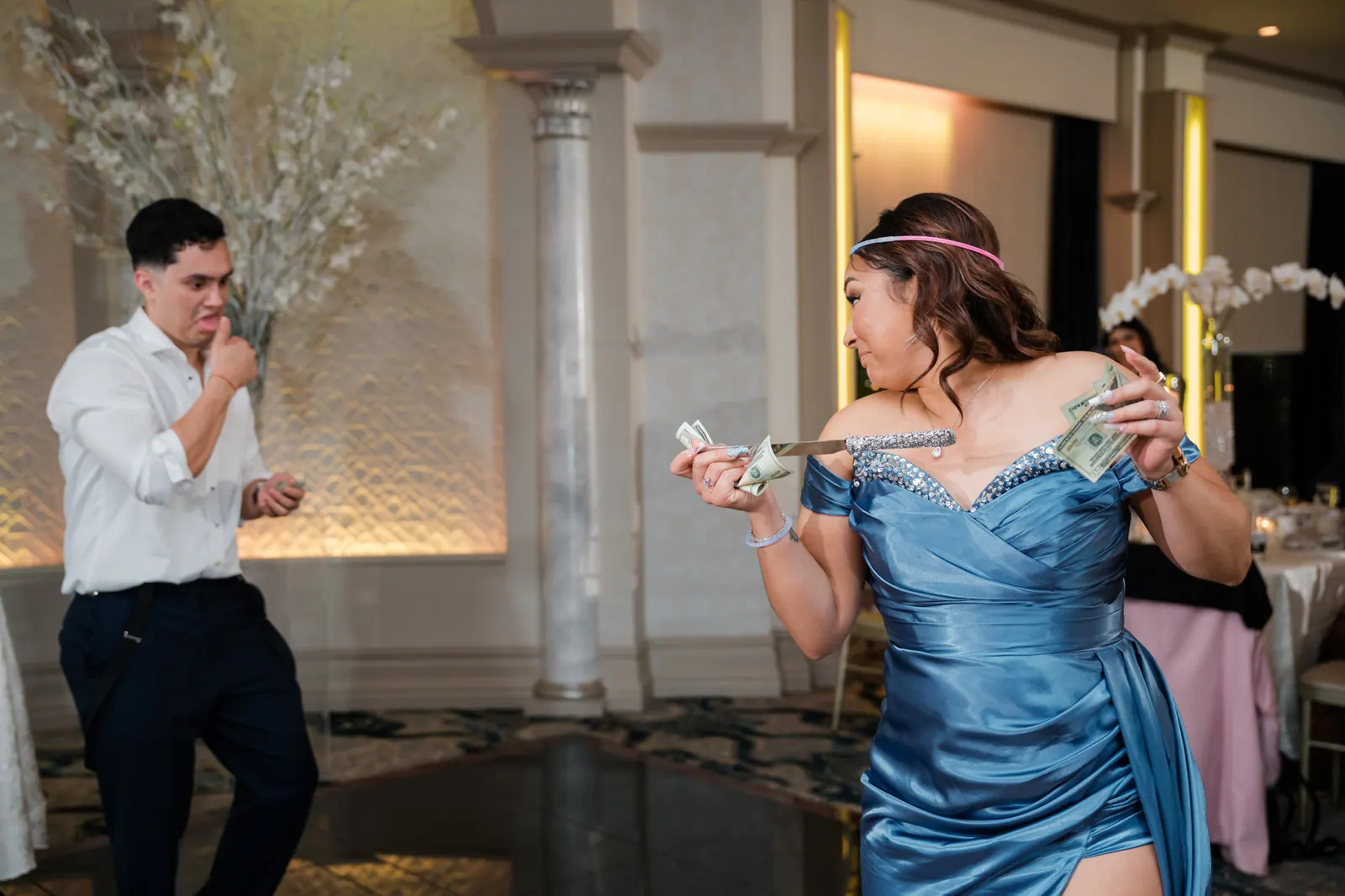
Quick answer: A money dance (also called a dollar dance, apron dance, or baile del billete) is an optional reception tradition in which guests may offer cash while dancing with or celebrating the newlyweds. It often takes place later in the reception, and the announcement should make clear that participation is optional.
Key takeaways
- The money dance is optional for guests and separate from a wedding gift, never a substitute for one.
- The Knot recommends holding it later in the reception and keeping it to about 10 to 20 minutes.
- Names and mechanics vary by culture: pinning cash to clothing, tucking it into an apron or bag, or showering it during the first dance.
- A warm MC announcement that frames it as optional fun, not an expectation, can help keep guests comfortable.
- Couples who want to avoid pinning bills to their clothing can use paper clips, an apron, a bag, or a decorated box.
What Is a Money Dance, and How Does It Work?
A money dance is a reception tradition where guests pay a small amount of cash for a brief dance with the bride or groom, usually just long enough for one verse or chorus of a song. Depending on the family’s background, guests pin bills to the couple’s clothing, drop cash into an apron, purse, or decorated box, or simply hand it over with a hug before stepping back to let the next guest in line.
It goes by several names depending on the culture: dollar dance in general American usage, apron dance in Polish and Ukrainian families, baile del billete in Mexican weddings, and money spray in Nigerian celebrations. The mechanics differ slightly, but the spirit is the same across nearly all versions: it is a celebratory extra guests can choose to join, not a required part of the gift-giving at the wedding.
If you are still working out which traditions belong in your reception lineup at all, our NJ wedding reception timeline guide is a good place to see where a money dance might fit alongside toasts, cake cutting, and parent dances.
Where Does the Money Dance Tradition Come From?
There is no single agreed origin for the money dance, which has long appeared in distinct forms across several cultures. Different cultures developed distinct versions, including pinning bills to clothing, placing money in an apron or bag, showering the couple with bills, and offering money for a brief dance.
Brides.com notes you will find some version of this tradition in Poland, Greece, Nigeria, the Philippines, Samoa, Fiji, Tonga, Portugal, Cuba, Mexico, and across Eastern Europe and Latin America. Across many versions, the money serves as a gesture of love, celebration, or support for the newlyweds, though the custom’s meaning varies by family and culture.
Regional Variations: How Different Cultures Handle the Dollar Dance
If your families come from different backgrounds, it helps to know what guests from each tradition might expect walking in the door. Here is a quick comparison of common versions.
| Tradition | What it’s called | How money is given |
|---|---|---|
| Polish / Ukrainian / Eastern European | Apron dance or money dance | Pinned to the bride’s gown or placed in an apron or purse |
| Mexican | Baile del billete | Pinned to clothing or thrown during the dance |
| Filipino | Money dance | Bills may be pinned to either partner’s clothing, depending on the family’s custom |
| Nigerian | Spraying | Bills showered on or around the couple while they dance |
| Greek / Cypriot | Money dance | Thrown onto the dance floor or tucked into clothing |
| Portuguese | Money dance | Guests pay to dance briefly with the bride or groom, sometimes passing around a shoe |
| General U.S. tradition | Dollar dance | Cash handed over directly for a brief dance |
FNA Events provides DJ and MC entertainment across New Jersey, New York, and the Philadelphia area. When that happens, we recommend picking the version that feels most natural to your family rather than trying to run two formats back to back, which can eat into dance floor time.

When Should You Schedule the Money Dance?
Timing matters more than most couples expect. The Knot recommends running the money dance toward the end of the reception festivities; the exact placement can depend on the couple’s tradition and timeline. Scheduling it too early, before guests have eaten or settled in, tends to make the line feel forced.
As for length, The Knot suggests keeping it to roughly 10 to 20 minutes so guests have time to join the line without the moment dragging on or starting to feel obligatory. A few practical steps keep it moving:
- Have your MC introduce the tradition briefly and warmly, especially if many guests have never seen it before.
- Form two lines, one for each partner, with an attendant such as the maid of honor or best man managing pacing and any pins or bags.
- Keep each dance short, around 15 to 30 seconds, so the line keeps moving.
- Close with a clear transition, often bringing both families in for a final chorus before opening the floor back up.
A good MC team can read the room and adjust the pacing on the fly, which is one reason couples lean on a professional host rather than trying to run this moment themselves. Our DJ and MC entertainment services include experienced hosts who handle these transitions as part of the overall reception flow.
How Should the Announcement Sound?
The way your MC frames the money dance determines whether it feels like a beloved family tradition or an awkward ask. The goal is a warm, brief explanation that makes clear participation is entirely optional, something guests can skip without a second thought.
A simple script might sound like: “We’re about to begin an optional money dance tradition. Anyone who would like a quick dance with either newlywed may join the line and offer a cash gift if they wish. Please feel free to sit this one out—there’s no pressure to participate.”
That kind of framing matters because, as etiquette guides consistently note, the money dance is a celebratory extra and never a substitute for a wedding gift. Your MC’s wording should make the optional nature of the tradition clear so no guest feels singled out or obligated.
Should You Have a Money Dance? Pros, Cons, and Alternatives
The money dance is not for every wedding, and that is fine. Some couples love the tradition because it is part of their family heritage and guests who grew up with it genuinely look forward to it. Other couples skip it entirely because it was never part of either family’s background and introducing it would read as asking for extra cash on top of gifts.
A few things worth weighing before you decide:
- Pro: It gives participating guests a brief one-on-one moment with the couple.
- Pro: It is a meaningful nod to cultural heritage for families with Polish, Filipino, Mexican, Nigerian, Greek, or Portuguese roots, among others.
- Con: If neither family practices the tradition, it can come across as an unexpected request for money.
- Con: It takes 10 to 20 minutes out of open dancing, which matters on a tight reception timeline.
If you like the sentiment but not the cash collection, Brides.com suggests a modern alternative: ask guests to write short love notes or pieces of advice on cards and toss those instead, sometimes called a wish dance. It keeps the warmth of the tradition without any money changing hands.
Practical Tips for Handling the Cash
However you structure it, a little planning prevents fumbling during the moment itself. Consider these options:
- Pinning: If your family’s version involves attaching bills to clothing, provide paper clips or another garment-safe option and ask an attendant to help.
- Apron or bag: A satin bag, apron, or small decorated box held by an attendant lets guests drop cash in without touching your outfit at all.
- Throwing or spraying: If your tradition involves showering bills onto the floor, assign someone to gather and count the cash afterward so nothing gets left behind or swept up with decor.
- Second outfit: Some couples change into a simpler outfit specifically for the money dance to protect a delicate gown from repeated pinning.
Whatever method you choose, designate one person, often a parent or the maid of honor, to count and safeguard the cash once the dance wraps up. It should go straight into a bag or envelope that travels with the couple or a trusted family member for the rest of the night.
Money Dance Songs: What Works Best
You don’t need to stick to slow love songs for a money dance. Many couples prefer upbeat, familiar tracks that keep the energy high since guests are moving in and out of a line rather than settling into a formal dance. Some couples lean into the theme with songs that reference money in the chorus for a playful touch, while others simply let the DJ carry over the same high-energy set that was already playing before the dance party paused.
Because the timing and format vary by tradition, choose music that supports the planned mood and keeps the activity moving. If you want guidance on first dance or parent dance song selection specifically, see our guides on first dance song ideas and father-daughter dance songs. For the money dance itself, a short, upbeat playlist your DJ can mix seamlessly is usually the better call, and it’s worth adding to your must-play and do-not-play list so your DJ knows exactly what to cue.
How FNA Events Helps Keep This Moment Smooth
FNA Events provides professional DJ and MC entertainment across Toms River, Brick, Freehold, Belmar, Cherry Hill, Staten Island, Philadelphia, and the broader New Jersey, New York, and Pennsylvania service area. Couples can discuss the announcement, timing, and transition back to open dancing with their DJ and MC team before the reception.
If you are weighing whether to include a money dance, a bilingual announcement for multicultural guest lists, or how it fits alongside your parent dances and toasts, our team is happy to talk through your specific reception timeline. You can also browse real FNA weddings by venue or read verbatim feedback from couples on the Google reviews page.
Frequently Asked Questions
Is it rude to not do a money dance at your wedding?
No. The money dance is entirely optional and plenty of couples skip it, especially if it isn’t part of either family’s tradition. If it is not part of your family or cultural tradition, briefly explain it to guests if you choose to include it; otherwise, you can skip it without breaching wedding etiquette.
How much money do guests typically give during a dollar dance?
There’s no fixed amount. Any contribution should be left to the guest’s discretion and should never be presented as a required fee.
Can you combine a money dance with other reception traditions?
Yes. Depending on the family’s tradition and the reception timeline, it can follow formal dances or take place later in the celebration. Just keep it to roughly 10 to 20 minutes so it doesn’t crowd out other moments like toasts, cake cutting, or the bouquet toss on a tight timeline.
What if my fiance and I come from different cultural backgrounds with different money dance traditions?
Pick whichever version feels most meaningful to your families rather than running two formats back to back, which eats into dance time. If needed, ask your MC to explain the chosen tradition in both languages and use wording approved by both families.
Does the money collected during the dollar dance count as a wedding gift?
No. Etiquette guides consistently treat money dance cash as a separate, celebratory extra, not a substitute for a wedding gift. Participation should not determine whether a guest is expected to give another gift.
Sources
- The Knot: How to Have the Money Dance Wedding Tradition at Your Reception
- Brides.com: How to Celebrate the Money Dance Tradition on Your Wedding Day
Ready to Check Your Date
If you are planning a wedding or celebration in New Jersey, New York, or the Philadelphia area, the FNA Events team can walk you through DJ and MC entertainment, photography, videography, live music, enhancements, and photo booths, all run by one coordinated crew. Call (844) 373-7411 or visit our contact page to share your date and venue and get pricing for your celebration.
Written by the team at Fresh New Angle Events, Toms River, New Jersey wedding DJs, photographers, videographers, and event professionals serving couples across New Jersey, New York, and the Philadelphia area.