Outdoor Power Setup and Weatherproofing Tips for NJ, NY, and PA Weddings
Quick answer: A solid outdoor power and weatherproofing plan means sizing a generator (or confirming venue shore power) for every piece of equipment, protecting all cords and connections from moisture, and building in backup capacity, since outdoor weddings in New Jersey, New York, and Pennsylvania face variable weather and limited on-site electrical access.
Key takeaways
- Outdoor ceremonies and receptions may need a dedicated power source when the venue cannot provide suitable outlets and circuit capacity near each setup area.
- Never run a generator indoors, in a tent vestibule, or near seating, because carbon monoxide risk is real, according to the New Jersey Office of Emergency Management.
- Generator capacity should be based on the running and starting wattage of every connected device; multiple event zones may require separate circuits or power sources.
- Outdoor-rated extension cords, GFCI protection, weather-resistant connection covers, and protected cable paths help reduce shock hazards and power interruptions in damp conditions.
- Confirm with your venue and vendors who supplies power, whether outdoor circuits are available, and whether a generator must be arranged separately.
Why Outdoor Events Need a Real Power Plan
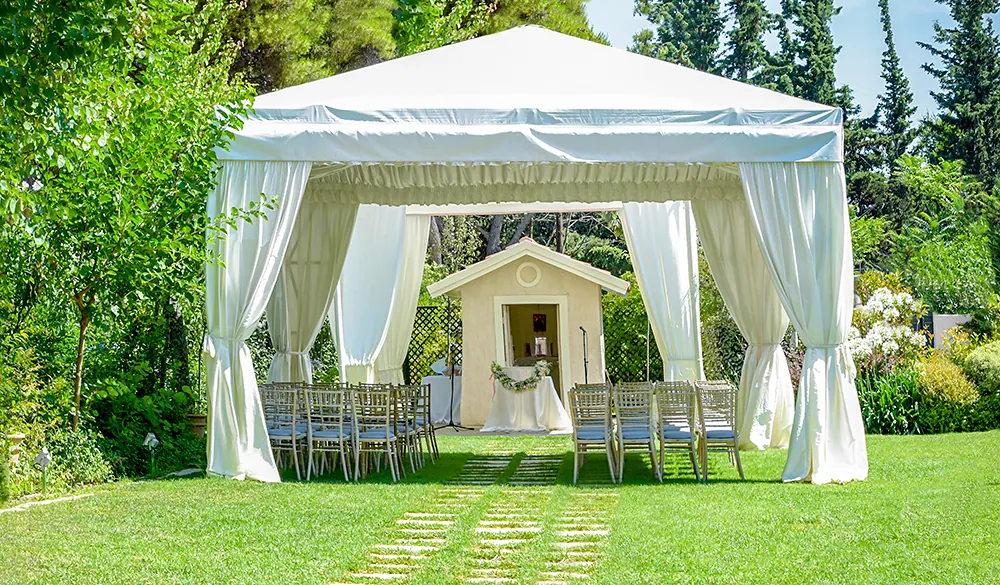
Indoor venues may have nearby outlets, but their available circuits and capacity still need to be confirmed for a DJ booth, photo booth, and lighting rig. Outdoor spaces rarely do. Beach ceremonies, backyard tents, vineyard lawns, and boardwalk receptions across the Jersey Shore, North Jersey, and the Philadelphia area often have one or two outlets at best, sometimes none within a reasonable cable run.
That gap is why a dedicated outdoor power setup, usually a generator or a confirmed shore-power hookup from the venue, needs to be settled weeks before the wedding, not the morning of. Confirming power access before load-in helps avoid last-minute changes to the ceremony setup.
Ask your venue and DJ and MC entertainment provider about power access early, alongside the sound and lighting questions in our venue AV checklist.
What Actually Draws Power at an Outdoor Wedding
Couples are often surprised by how many separate items need electricity once you add them up. A single outdoor reception setup can include a DJ sound system, wireless microphones, dance-floor and uplighting, a photo booth, a video wall or TV display, and sometimes a live musician’s amp or pedalboard.
Each draws a modest amount of power on its own, but together they add up, and spikes happen when speakers and lighting rigs power on at the same time. Knowing your full equipment list before calling a generator rental company (or your DJ company) prevents an under-sized setup that trips breakers mid-reception.
- DJ sound system and mixer
- Wireless microphones and in-ear monitors
- Dance-floor and uplighting fixtures
- Photo booth and its backdrop lighting
- TV displays, video walls, or projectors
- Live musician amps (saxophone, violin, or drum kit pickups)
- Catering equipment, if sharing the same power source
Live musicians who play alongside a DJ, such as sax, electric violin, or percussion, add their own modest power draw for amps and pedals; see our live wedding musicians page for how that pairing typically works. Enhancements like uplighting or a video wall, detailed on our wedding enhancements page, also need to be counted into the load.
How to Size a Generator for Your Event
Generator sizing starts with the running wattage of every connected device plus the manufacturer’s listed starting wattage for equipment that has a startup surge. Generator output varies substantially by type and model, so use each device’s nameplate wattage and the generator manufacturer’s continuous and starting-watt ratings rather than relying on a general size range.
For an outdoor wedding reception, total the running and starting wattage for the DJ system, lighting, photo booth, video equipment, and any other loads before selecting a generator or assigning circuits. A layout with multiple zones may require separate circuits or power sources; have the venue, rental provider, or a qualified electrician design the distribution plan and address redundancy separately.
Quick Sizing Steps
- List every powered item and its wattage (check the label or manual).
- Account for each device’s listed starting wattage and any approved additional load, following the generator manufacturer’s guidance.
- Group equipment by zone (ceremony, cocktail, reception) rather than one single circuit.
- Confirm with your rental company or DJ team which zones need dedicated generators.
- Identify an appropriate backup plan for critical equipment with the venue and vendors.
This kind of redundancy thinking overlaps with general event backup planning; our backup plans and redundancy guide covers that in more depth.
Generator Safety: What Every Host Should Know
Generator safety is not optional, and it is one area where cutting corners can turn a wedding into a medical emergency. The New Jersey Office of Emergency Management warns that generators should never be operated indoors, in a garage, or in any enclosed space, because of the risk of carbon monoxide poisoning, a risk that applies just as much to a reception tent with closed sidewalls as it does to a home.
Follow the generator manufacturer’s placement instructions, keep the unit outdoors and well away from tents, buildings, doors, windows, and air intakes, and use outdoor-rated cords sized for the connected load. These guidelines were written for homeowners, but they apply directly to tented receptions and marquee setups as well.
| Safety Step | Why It Matters |
|---|---|
| Keep the generator outdoors and follow manufacturer guidance for distance from tents, buildings, openings, and air intakes | Helps keep exhaust and heat away from occupied areas |
| Never run a generator inside a tent, even with open sides | Carbon monoxide can still accumulate in low-airflow areas, per the NJ Office of Emergency Management |
| Use only outdoor-rated extension cords | Indoor cords are not built for moisture or heavier outdoor loads |
| Place the generator on a stable, level surface | Prevents fuel spills and tipping on uneven lawns or sand |
| Keep a fire extinguisher nearby | The correct extinguisher type and placement should follow venue rules, local fire-code requirements, and the generator manufacturer’s instructions |
If your event involves a licensed electrician tying into permanent power instead of a portable generator, New Jersey’s adopted electrical subcode (the National Electrical Code, per the NJ Department of Community Affairs) governs that work, and it should only be handled by a licensed electrician, not a DIY hookup.
Weatherproofing Your Outdoor Power Setup
Weather is the other half of outdoor power planning, and it matters even on a day with a sunny forecast. Morning dew, an afternoon shower, or shoreline humidity along the Jersey Shore can all affect exposed cords, connectors, and equipment that was never designed to sit in the open.
Weatherproofing Checklist
- Route cords through outdoor-rated cable ramps or another venue-approved protection system; do not conceal them beneath flooring unless the system is designed for that use.
- Use waterproof or weather-resistant connection boxes at every splice point.
- Protect the generator from rain only with a manufacturer-approved operating cover or shelter, while maintaining required clearances and directing exhaust away from people, tents, buildings, and openings.
- Have a tarp or equipment cover ready for the DJ booth, photo booth, and any open-air electronics in case of sudden rain.
- Check wind forecasts for uplighting fixtures, speaker stands, and signage that can tip in gusts near open water or elevated decks.
Couples planning a shore venue, including spots like Point Pleasant covered in our Point Pleasant wedding entertainment guide, should expect more humidity and breeze considerations than an inland suburban lawn. Rain contingencies for the ceremony itself, as opposed to power and gear, are covered separately in our outdoor ceremony rain plan guide.
Generator Rental vs. Venue-Supplied Power
Before renting anything, ask your venue directly whether they provide power access for outdoor ceremony and reception areas, and get the answer in writing. Some properties have dedicated outdoor outlets or even built-in generator hookups for events; others expect every vendor to bring their own power.
| Factor | Venue-Supplied Power | Rented Generator |
|---|---|---|
| Setup effort | Low, if outlets are close to the setup area | Moderate, requires delivery, placement, and fuel |
| Reliability checks | Confirm circuit capacity, outlet condition, and whether other vendors share the circuits | Confirm correct unit sizing, maintenance status, fuel plan, and on-site support |
| Flexibility for multiple zones | Limited to existing outlet locations | Can be placed wherever needed |
| What to confirm is included | Power access, available circuits, cable routes, and any venue electrical fees | Generator, power distribution, delivery, fuel, setup, pickup, and staffing |
| Backup needed? | Yes, outages happen even with venue power | Yes, a second unit or battery backup is still wise |
Whichever route you choose, confirm the answer early enough that your DJ, photographer, and photo booth vendor can plan around it. For any outdoor ceremony, confirm the power source, cable route, weather protection, and responsible vendor well before the wedding day.
Building Backup Into Your Outdoor Event
Even a well-sized generator can fail, run out of fuel, or get bumped by a guest. That is why professional outdoor setups build in backup capacity rather than relying on a single power source for everything.
Our DJ and MC teams bring backup laptops, microphones, and speakers to every event as standard practice, which matters even more outdoors where there is no indoor electrical system to fall back on. Pairing that kind of equipment redundancy with a properly sized generator and weatherproofed cable runs is what keeps an outdoor reception running through a passing shower or a tripped breaker.
For a deeper look at building redundancy into your whole event, not just power, see our backup plans and redundancy guide, and our day-of logistics guide for how setup and load-in timing affects when power needs to be live.
Questions to Ask Your Vendors Before the Big Day
Review outdoor power requirements well before the event, allowing time for a site visit, rental arrangements, permits, or electrical work if needed. Bring this list to your venue walkthrough or your vendor meeting.
- Does the venue have outdoor outlets near the ceremony and reception areas, and how far is the nearest one?
- Who is responsible for providing a generator if venue power is insufficient, the couple, the venue, or the vendors?
- What is the total wattage of all planned equipment, including lighting, sound, photo booth, and video displays?
- Is there a weatherproof, vented location to place the generator at least 20 feet from tents or structures?
- What is the backup plan if the generator fails or runs out of fuel mid-event?
- Are cords and connection points routed away from guest walkways and protected from rain or dew?
Couples exploring premium wedding DJ packages or a full entertainment and photo/video package can raise power logistics directly with their FNA planning contact, since confirming it early avoids last-minute rental scrambles.
Frequently Asked Questions
How many generators do I need for an outdoor wedding?
The number and capacity of generators depend on each device’s running and starting wattage, the number and location of event zones, cable distances, and the distribution design. Ask the venue, rental provider, or a qualified electrician to size the system and plan redundancy.
Can a generator get wet during a wedding?
A generator should never sit fully exposed to rain, but it also should not be placed in a sealed, airtight enclosure. Use only a manufacturer-approved operating cover or shelter, maintain all required clearances, and direct exhaust away from people, tents, buildings, doors, windows, and air intakes.
Who provides power for an outdoor wedding, the venue or the vendors?
It depends entirely on the venue. Some properties have dedicated outdoor power access included in the rental fee, while others expect the couple or their vendors to arrange a generator. Always confirm this in writing during the venue walkthrough, not the week of the wedding.
Do I need a licensed electrician for an outdoor event?
If you are tying into a venue’s permanent electrical system rather than using a portable generator, that work should be done by a licensed electrician in line with New Jersey’s adopted electrical code. For portable-generator setups, follow the manufacturer’s instructions and ask the venue and local authority whether permits, inspection, grounding, or a qualified electrical professional are required.
What happens if the generator fails during the reception?
A well-planned event has backup equipment on hand, such as spare batteries, a second generator, or battery-powered speakers, so music and lighting can continue briefly while the issue is resolved. FNA Events’ DJ and MC teams bring backup laptops, microphones, and speakers to every event, but the power backup plan should still be confirmed separately.
Sources
- Power Outages | NJOEM
- Generator Buying Guide – Consumer Reports
- New Jersey Department of Community Affairs | Current Construction Codes
Ready to Check Your Date
If you are planning a wedding or celebration in New Jersey, New York, or the Philadelphia area, the FNA Events team can walk you through DJ and MC entertainment, photography, videography, live music, enhancements, and photo booths, all run by one coordinated crew. Call (844) 373-7411 or visit our contact page to share your date and venue and get pricing for your celebration.
Written by the team at Fresh New Angle Events, Toms River, New Jersey wedding DJs, photographers, videographers, and event professionals serving couples across New Jersey, New York, and the Philadelphia area.