How Long Should a Wedding Reception Be?
Quick answer: The Knot describes a typical wedding reception as about five hours total, including one hour for cocktails and four hours for dinner and dancing. The right length depends on guest count, meal style, venue curfew, and how central dancing is to your celebration.
Key takeaways
- The Knot says a typical wedding reception runs about five hours total, including one hour for cocktails and four hours for dinner and dancing.
- Smaller weddings under 75 guests can comfortably wrap in 3.5 to 4 hours, while weddings over 200 guests often need 5.5 to 6 hours.
- Meal-service timing varies by guest count, menu, staffing, and venue layout; ask the caterer for a service estimate before finalizing the reception timeline.
- Venue packages define their own event windows and overtime policies, so confirm exactly which hours cover guest time, setup, and cleanup.
- Larger guest counts may require extra time for meal service, bar lines, and transitions, so confirm the needed buffer with the venue and caterer.
What Is the Average Wedding Reception Length?
Many wedding receptions run about five hours when cocktail hour is included; the ceremony is generally timed separately. According to The Knot, the average reception runs about five hours total, including one hour for cocktails and four hours for dinner and dancing. That window gives couples enough time to cover a welcome, a meal, toasts, a few key dances, and a real stretch of open dancing without the night dragging.
This range is not a rigid rule. A reception that is too short can feel rushed, cutting into dinner service or forcing you to skip the cake cutting. A longer reception can lose momentum if the schedule contains extended gaps, so add time only when it supports the meal, entertainment, or guest experience. A practical timeline starts with the couple’s priorities and adjusts for the venue, meal service, guest count, and entertainment.
How Many Hours Is a Typical Wedding Reception, by Guest Count?
Guest count changes the math more than almost anything else. A 50-person backyard wedding and a 250-person ballroom wedding cannot run on the same clock, because dinner service, speeches, and greeting tables all take longer with more people in the room.
- Under 75 guests: 3.5 to 4 hours is usually enough. Dinner moves fast, there is typically one round of toasts, and the dance floor fills quickly since most guests already know each other.
- 100 to 180 guests: Plan for the full 4 to 5 hours to get through a plated dinner, multiple speeches, and a proper dance set.
- 200+ guests: Many couples stretch to 5.5 or 6 hours, mainly because plated, table-by-table dinner service alone can take 90 minutes, and the couple needs more time to visit every table.
A reasonable rule of thumb is to add 15 to 20 minutes of reception time for every 50 guests beyond 150, most of which gets absorbed by dinner service and bar lines. If you are planning a larger celebration at a shore or city venue, the FNA wedding venue guides can help you explore different venues and layouts.
Plated Dinner, Buffet, or Family Style: How Meal Service Changes the Clock
Meal format affects total reception length more than almost any other single decision. A plated dinner, where servers deliver each course table by table, typically takes 60 to 90 minutes once you account for course changes and service pacing for a full room. A buffet is not automatically faster than plated service; timing depends on the guest count, number of serving lines, room layout, and catering staff. Family-style service tends to land in between, since dishes are passed around the table rather than served individually.
If dancing is a priority, ask the caterer which service format will be fastest for your specific guest count, menu, staffing, and floor plan. Couples who want a longer open-dancing block often choose a faster meal format for exactly this reason.
Sample 4, 5, and 6-Hour Reception Timelines
Here is a simplified look at how a reception’s key moments shift depending on the total length you choose. These are starting points; your DJ or MC should adjust the order based on your priorities and venue rules.
| Reception Length | Best For | Dinner Style | Open Dancing Time |
|---|---|---|---|
| 4 hours | Smaller or budget-conscious weddings, under 100 guests | Buffet or family-style | About 1.5 hours |
| 5 hours | Most weddings, 100-180 guests | Plated or buffet | About 2 to 2.5 hours |
| 6 hours | Larger weddings, 200+ guests, or couples who want a late night | Plated, multi-course | About 3 hours |
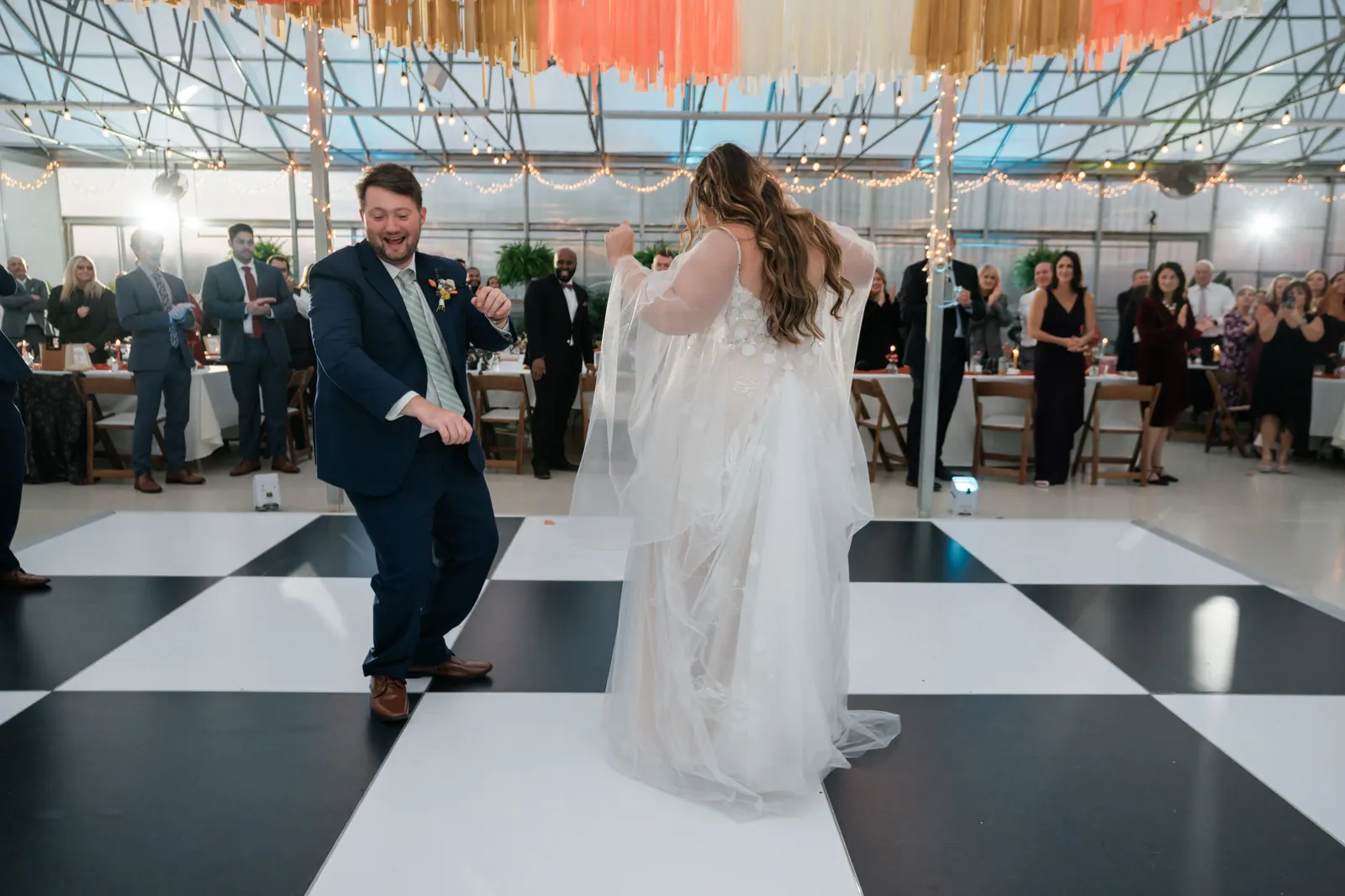
Within any of these windows, the general flow is grand entrance, first dance, welcome, dinner, toasts, parent dances, then open dancing. A common planning mistake is scattering dances and activities throughout the night instead of front-loading them, which can interrupt momentum once the dance floor finally gets going. For a full breakdown of how each segment fits together, see our NJ wedding reception timeline guide.
How Venue Packages and Overtime Rules Affect Reception Length
Reception blocks, setup allowances, cleanup time, and overtime charges vary by venue and should be confirmed in the contract. Some banquet facility rentals, such as those at Kean University’s event space, are structured around an eight-hour total rental that includes two hours for setup, five hours of guest time, and an hour for cleanup, which is a useful example of how much non-reception time a venue contract can actually include.
Before you lock in a reception length, ask your venue three questions: what time must the music end, is there a hard curfew tied to local noise ordinances, and what is the overtime rate if your celebration runs long. Noise rules and outdoor-music cutoffs vary by municipality and venue, so confirm the exact requirements for your location rather than assuming one setting permits later music than another. Use the FNA Events service-area page to see the regions the team serves, then verify local rules with your venue and municipality.
How Guest Demographics and Vibe Change the Ideal Length
A dance-focused crowd may enjoy a longer reception, but guest interest, travel plans, and the event schedule matter more than age alone. A reception with an older guest demographic, more out-of-town travelers, or a large number of families with young children may feel more successful at a tighter four to 4.5 hours, since guests are more likely to head out earlier.
How central dancing is to your vision also matters. If dancing is a top priority, build in a longer open-floor block and consider a faster dinner service to protect that time. If you would rather emphasize conversation, cocktail-style stations, and a relaxed pace, a shorter, more leisurely reception might suit your group better than packing in extra dance time nobody asked for.
Building a Realistic Wedding Reception Schedule
A workable reception timeline is built backward from your venue’s end time, not forward from your ceremony start. Here is a simple process we recommend to couples planning anywhere from the Jersey Shore to the Philadelphia area.
- Confirm your venue’s hard end time and any overtime policy in writing.
- Subtract your cocktail hour and ceremony time to find your actual reception window.
- Choose your meal format and estimate its real service time, not just the eating time.
- Block in toasts, usually kept under 15 minutes total for two to three speakers.
- Decide which traditions you want (parent dances, cake cutting, bouquet or garter toss) and place them early in the night rather than mid-dance-floor.
- Protect at least two uninterrupted hours of open dancing if that matters to your group.
Your DJ and MC play a direct role in keeping this schedule on track in real time, adjusting announcements and song pacing if dinner runs long or guests are slow to the floor. FNA Events’ DJ and MC entertainment team builds and manages this kind of live timeline at weddings across New Jersey, New York, and the Philadelphia area, with up to six hours of DJ and MC coverage included on wedding packages. If you want speech order details, our guide to giving a great wedding speech covers pacing for toasts specifically.
Coordinating Your Reception Timeline With Other Vendors
Your reception length does not exist in isolation. It needs to line up with your photographer’s coverage hours, your videographer’s shot list, and sometimes live musicians who play alongside your DJ for cocktail hour or dinner. A reception that runs long without checking in with your photography coverage window can mean missing the sparkler exit or last dance on camera.
We recommend confirming your full vendor lineup’s hours at the same time you finalize your reception length, not after. FNA Events offers photography coverage and cinematography services that couples can coordinate with the day’s schedule, and live musicians who perform alongside your DJ can extend the feel of a longer celebration during cocktail hour or dinner. For more on getting everyone’s schedule aligned, see our guide on coordinating your DJ, photographer, and videographer.
Frequently Asked Questions
Is a 4-hour wedding reception too short?
A 4-hour reception works well for smaller weddings under 100 guests or couples prioritizing a tighter, budget-friendly schedule. It can feel rushed for larger guest lists or formal plated dinners. Pairing a shorter reception with a buffet or family-style meal helps protect dance-floor time within that window.
What time should a wedding reception end?
Reception end times depend on the venue contract, local noise rules, transportation plans, and the couple’s schedule. Music cutoffs vary by municipality and venue, so confirm the applicable end time directly with both. Always confirm your venue’s exact end time and any overtime fees before finalizing your schedule.
How long should cocktail hour be before the reception?
Cocktail hour is typically one hour, which gives photographers time for formal portraits, lets guests mingle, and prevents an awkward lull once the reception officially starts. Some couples extend cocktail hour for larger guest counts or additional photos, but a longer gap should include enough food, drinks, seating, and entertainment to keep guests comfortable.
Do all weddings need a bouquet and garter toss?
No, these traditions are optional and increasingly skipped. Many modern couples choose to omit them entirely or replace them with an anniversary dance or another activity. If you do include them, placing them earlier in the reception avoids interrupting peak dance-floor energy later in the night.
Can a wedding reception run longer than 6 hours?
Some venues allow receptions longer than six hours, but the amount of open dancing depends on meal service, speeches, traditions, and other scheduled activities. Longer receptions raise the risk of guest fatigue and higher venue or vendor overtime costs, so confirm policies before planning past six hours.
Sources
Ready to Check Your Date
If you are planning a wedding or celebration in New Jersey, New York, or the Philadelphia area, the FNA Events team can walk you through DJ and MC entertainment, photography, videography, live music, enhancements, and photo booths, all run by one coordinated crew. Call (844) 373-7411 or visit our contact page to share your date and venue and get pricing for your celebration.
Written by the team at Fresh New Angle Events, Toms River, New Jersey wedding DJs, photographers, videographers, and event professionals serving couples across New Jersey, New York, and the Philadelphia area.