Wedding Toast Order: Who Speaks and When
Quick answer: The traditional wedding toast order starts with the host or father of the bride, followed by the father of the groom, maid of honor, best man, and then the couple, but many modern couples reorder or shorten this list. Toasts work best during or right after dinner, run two to five minutes each, and should be managed by your DJ or emcee for smooth transitions.
Key takeaways
- The traditional toast order is father of the bride, father of the groom, maid of honor, best man, then the couple, according to The Knot.
- Most wedding toasts should run two to five minutes each, with Vogue noting toasts stay closer to two to three minutes and fuller speeches under five.
- Toasts usually happen right after guests are seated for dinner, often paired with the grand entrance or first dance for smooth pacing.
- A DJ or emcee should coordinate microphone handoffs and keep a backup plan ready in case a speaker gets nervous or skips their turn.
- Couples should tell every speaker in advance when they will speak and how long they have, so no one feels put on the spot.
Who Traditionally Gives Wedding Toasts?
Toasts exist to welcome guests, honor the couple, and mark the shift from ceremony formality to reception celebration. According to The Knot, a typical wedding has about five speeches, and the traditional order starts with whoever is hosting the wedding, historically the father of the bride.
From there, the classic lineup moves to the father of the groom (or both parents of the second spouse), then the maid of honor, the best man, and finally a few words from the couple themselves. This order isn’t a rule carved in stone. It developed because parents were historically the financial hosts of a wedding, so they spoke first to welcome guests, and the wedding party followed with more personal, often funnier material.
Why the Order Matters
Speech order affects the emotional arc of the evening. Starting with a warm welcome from parents, then building toward personal stories from the wedding party, and closing with the couple’s own thank-you creates a natural rise and fall rather than an abrupt start-and-stop. If you are also weighing who pays for various parts of the wedding, our guide on wedding expense etiquette in NJ covers how hosting roles tie into these traditions.
What Does a Modern Wedding Toast Order Look Like?
Plenty of couples today skip or reorder the traditional lineup entirely. It is increasingly common to include siblings, grandparents, or close friends instead of (or alongside) parents, and some couples drop parent speeches altogether if that fits their family dynamic better.
A modern order might look like: officiant or emcee welcome, best man, maid of honor, a parent or two, then the couple. The only real requirement is that the people you most want to hear from get a turn, and that the sequence builds rather than repeats the same tone back-to-back. If two speakers tend to be serious, consider separating them with a funnier one in between.
- Decide early how many toasts you want, and keep the lineup concise enough to hold guests’ attention.
- Tell each speaker their place in the order so no one over-prepares a 10-minute speech meant to be a 3-minute one.
- If a sibling or close friend wasn’t in the wedding party but is important to you, there is no rule against adding them.
When Should Toasts Happen During the Reception?
Most planners schedule toasts shortly after guests sit down for dinner, often right after the grand entrance and first dance. Brides notes that a common wedding-day timeline has guests seated around 7:15 p.m., with the grand entrance and first dance following at 7:30 p.m., which naturally sets up toasts as dinner service begins.
Scheduling toasts before the first course or after plates have been cleared helps guests listen without competing with active food service. Waiting until after dessert risks a sleepy or distracted crowd, especially if the bar has been open for hours. For a full breakdown of how toasts fit into the rest of the night, see our NJ wedding reception timeline guide.
Splitting Toasts Into Two Rounds
Some couples split speeches into two shorter rounds: parents and honor attendants right after the entrance, and a second round (siblings, a toast from the couple) later before cake cutting. This works well for larger weddings but adds complexity for your emcee, so it should be mapped out in advance rather than decided on the fly.
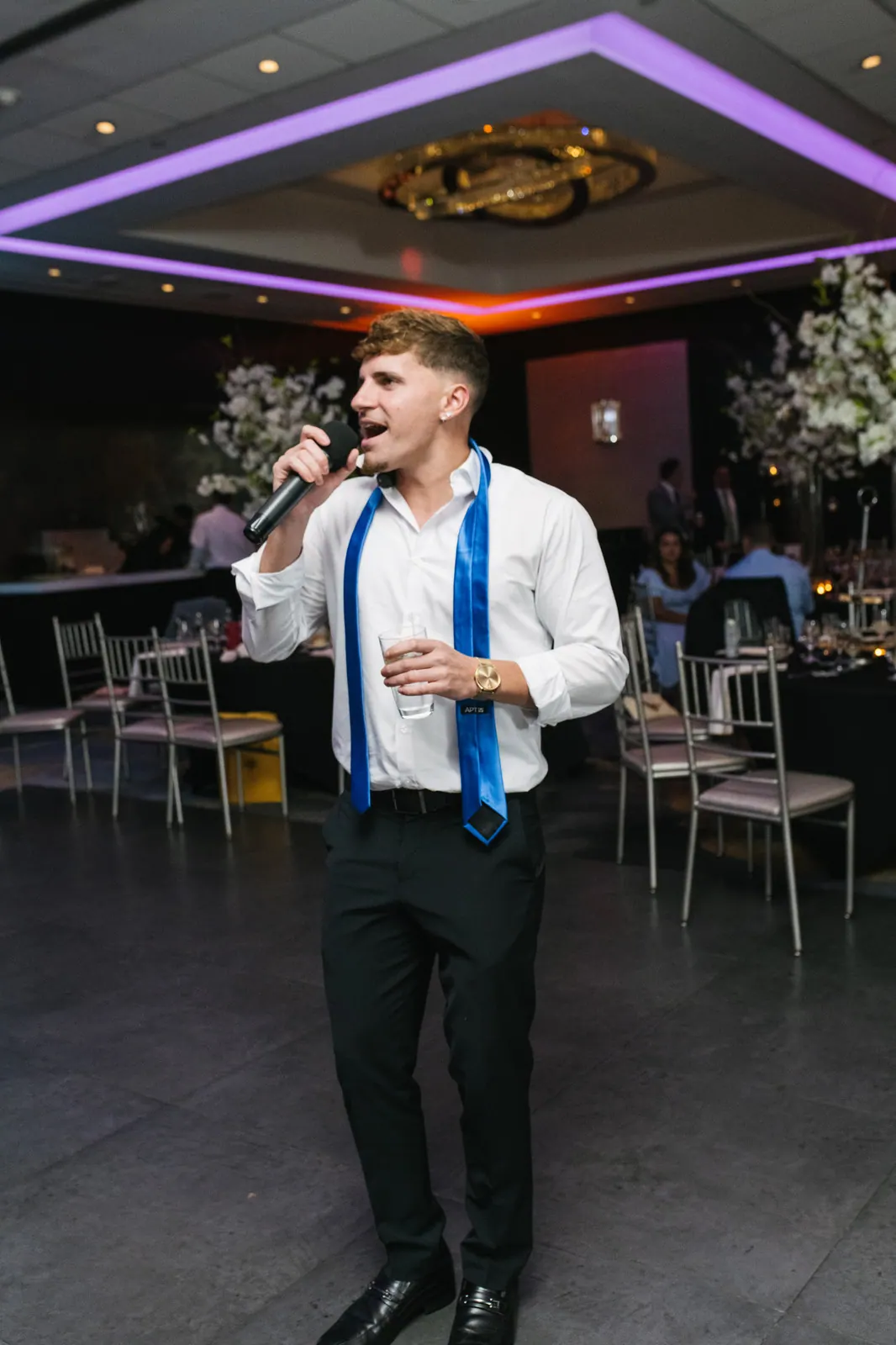
How Long Should Each Wedding Toast Be?
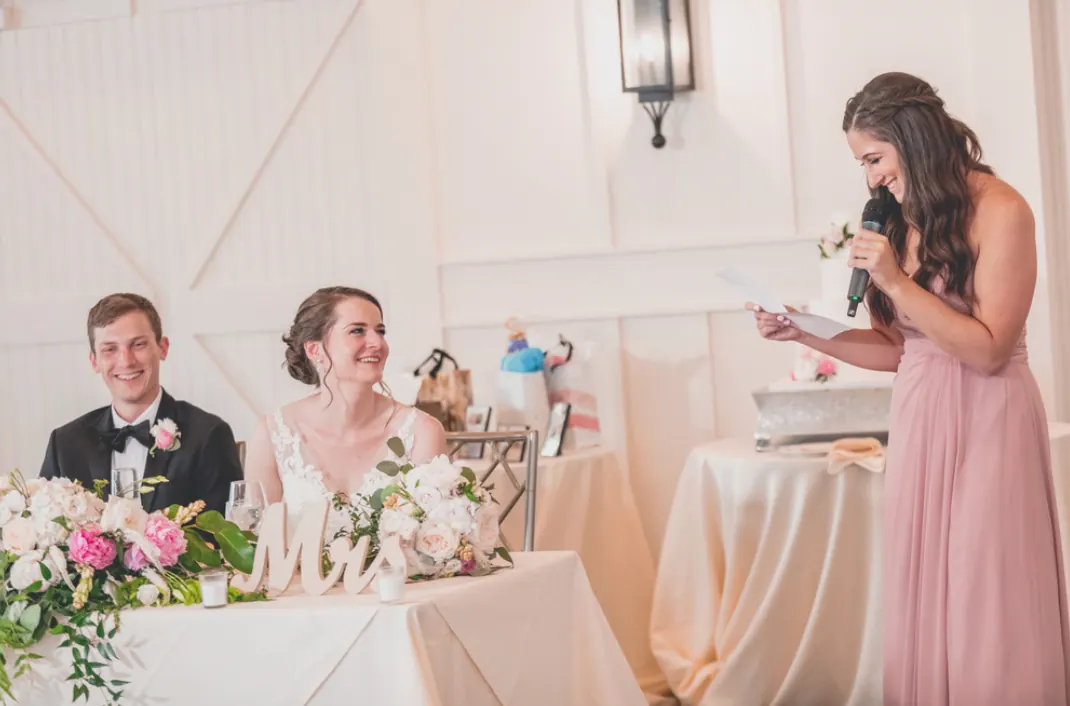
Vogue draws a useful distinction between a toast and a speech: a toast is a short, celebratory moment meant to raise a glass, while a speech allows more room for stories and reflection. Wedding planner Jove Meyer tells Vogue that toasts typically run two to three minutes, while speeches should stay under five.
| Speaker | Typical Length | Tone |
|---|---|---|
| Parent welcome toast | 2-4 minutes | Warm, welcoming, sets the tone |
| Maid of honor | 3-5 minutes | Personal story, humor plus sentiment |
| Best man | 3-5 minutes | Humor balanced with genuine affection |
| Couple’s thank-you | 2-3 minutes | Gratitude to guests and families |
A good rule for every speaker is to rehearse aloud, trim anything repetitive, and leave a little time for pauses and audience reactions.
How Does the Emcee Keep Toasts Moving Smoothly?
A trained emcee or DJ host can help toasts flow smoothly. Their job includes introducing each speaker by name and relationship to the couple, managing microphone handoffs, cueing background music softly under applause, and quietly signaling a speaker if they are running long.
FNA Events’ DJ and MC teams handle these transitions as part of wedding entertainment coverage, including backup microphones and speakers at every event in case of equipment issues. If you want more detail on structuring remarks themselves, our post on how to give a great wedding speech covers content and delivery. You can also learn more about professional emcee services for weddings if you’re still deciding how formal you want hosting duties to be.
Backup Plans Every Emcee Should Have
- A written list of speaker names, order, and pronunciation notes, confirmed the week of the wedding.
- A backup microphone and sound system on-site, since a dead battery or feedback issue should never stop a toast.
- A plan for a no-show speaker: skip gracefully to the next name rather than pausing the room awkwardly.
- A gentle wrap-up cue, such as music fading in, for any speech running well past its planned length.
Microphone and Sound Logistics for Toasts
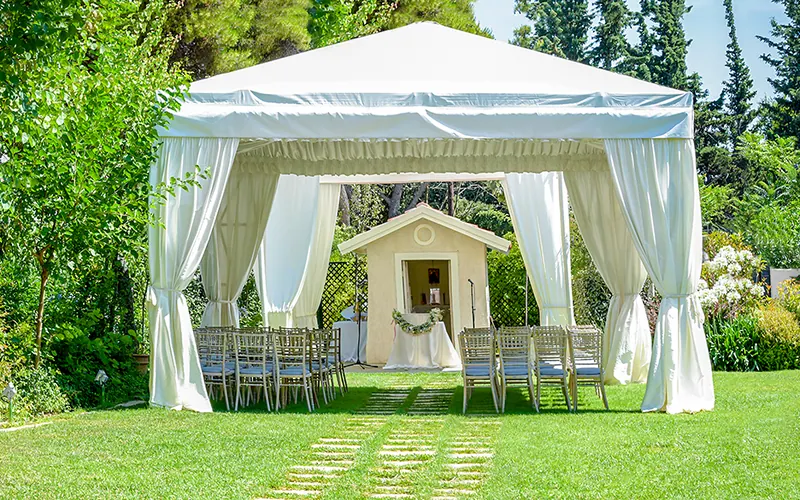
Sound logistics matter more outdoors than most couples expect. At shore venues with ocean breeze or open-air tents, wind and ambient noise can swallow a voice that would carry fine indoors. Use a microphone with suitable wind protection, place the speaker where the audio team directs, and run a sound check before guests arrive; outdoors, clear delivery is more effective than shouting.
Indoors, a single handheld mic passed between speakers works for small weddings, but larger head counts or multi-room venues often benefit from two mics so the emcee can hand one off while holding the next speaker’s ready. If your venue has unusual acoustics, such as a barn, boathouse, or tented lawn, flag it with your DJ ahead of time so they can test levels before guests arrive.
Should You Skip Toasts Entirely, or Limit Who Speaks?
Toasts are a tradition, not a requirement. Some couples skip them altogether to protect a tighter reception timeline, especially if the overall event runs on the shorter side. If you are deciding how many hours you actually need, our guide on how long a wedding reception should be walks through how toasts, dinner, and dancing compete for limited time.
If you do want speeches but worry about length or tone, it’s reasonable to set expectations with speakers in advance: ask for a time cap, request they avoid certain topics, or ask to review a draft if you’re nervous about an inside joke going too far. Vogue’s etiquette guide notes that toasts are typically reserved for people the couple has specifically chosen, so it’s also fine to tell a well-meaning guest that speeches are limited to the wedding party and parents this time.
Frequently Asked Questions
Can the bride or groom’s siblings give a toast instead of parents?
Yes. There is no rule requiring parent toasts. Many couples prefer a sibling or close friend speak instead, especially if that person knows them better or if parents are not comfortable public speaking. The key is telling the couple in advance so the emcee can plan the order.
What if a planned speaker gets too nervous to go on?
An emcee can prepare a simple backup plan for this situation. A good DJ or MC will quietly check in, offer a moment to step aside, and move to the next speaker without drawing attention to the gap, then circle back later if the original speaker feels ready.
Is it rude to not have any toasts at a wedding?
No. Toasts are a tradition, not an obligation. Couples may skip them to simplify the timeline, especially for smaller or shorter receptions.
Should toasts happen before or after the first dance?
Either can work. Pairing the grand entrance with the first dance and then moving into toasts can keep the formalities together, but the final order should be coordinated with dinner service.
Who should write out a toast order for the emcee?
The couple should finalize speaker names and order well before the wedding and share the list directly with the planner and DJ or emcee so introductions and microphone handoffs go smoothly.
Sources
- The Wedding Speech Order Guide to Easily Follow – The Knot
- Wedding Toast Etiquette: Everything You Should Know – Vogue
- An Expert-Approved Timeline for Your Wedding Day – Brides
Ready to Check Your Date
If you are planning a wedding or celebration in New Jersey, New York, or the Philadelphia area, the FNA Events team can walk you through DJ and MC entertainment, photography, videography, live music, enhancements, and photo booths, all run by one coordinated crew. Call (844) 373-7411 or visit our contact page to share your date and venue and get pricing for your celebration.
Written by the team at Fresh New Angle Events, Toms River, New Jersey wedding DJs, photographers, videographers, and event professionals serving couples across New Jersey, New York, and the Philadelphia area.