How to Plan Golden Hour Wedding Portraits
Quick answer: The best time for golden hour wedding portraits is often within the final 30 to 90 minutes before sunset, but the usable window depends on the venue and weather. Look up sunset for the wedding date and location, then work with the photographer and venue to reserve a short portrait block with buffer time.
Key takeaways
- Golden hour is roughly the 30 to 90 minutes before actual sunset, so the exact window changes by date, season, and location, according to The Knot.
- Build your wedding timeline backward from the real sunset time for your venue and date, not forward from the ceremony.
- Build buffer time before golden hour so a delayed ceremony or extended family formals do not consume the portrait window.
- A first look gives couples a calmer backup portrait session so a cloudy or rushed golden hour is not the only chance at great photos.
- Some NJ beach towns restrict wedding photo sessions on public beaches to daylight hours or specific date ranges, so confirm local rules before counting on a shoreline sunset shot.
What Is Golden Hour and Why Do Couples Want It?
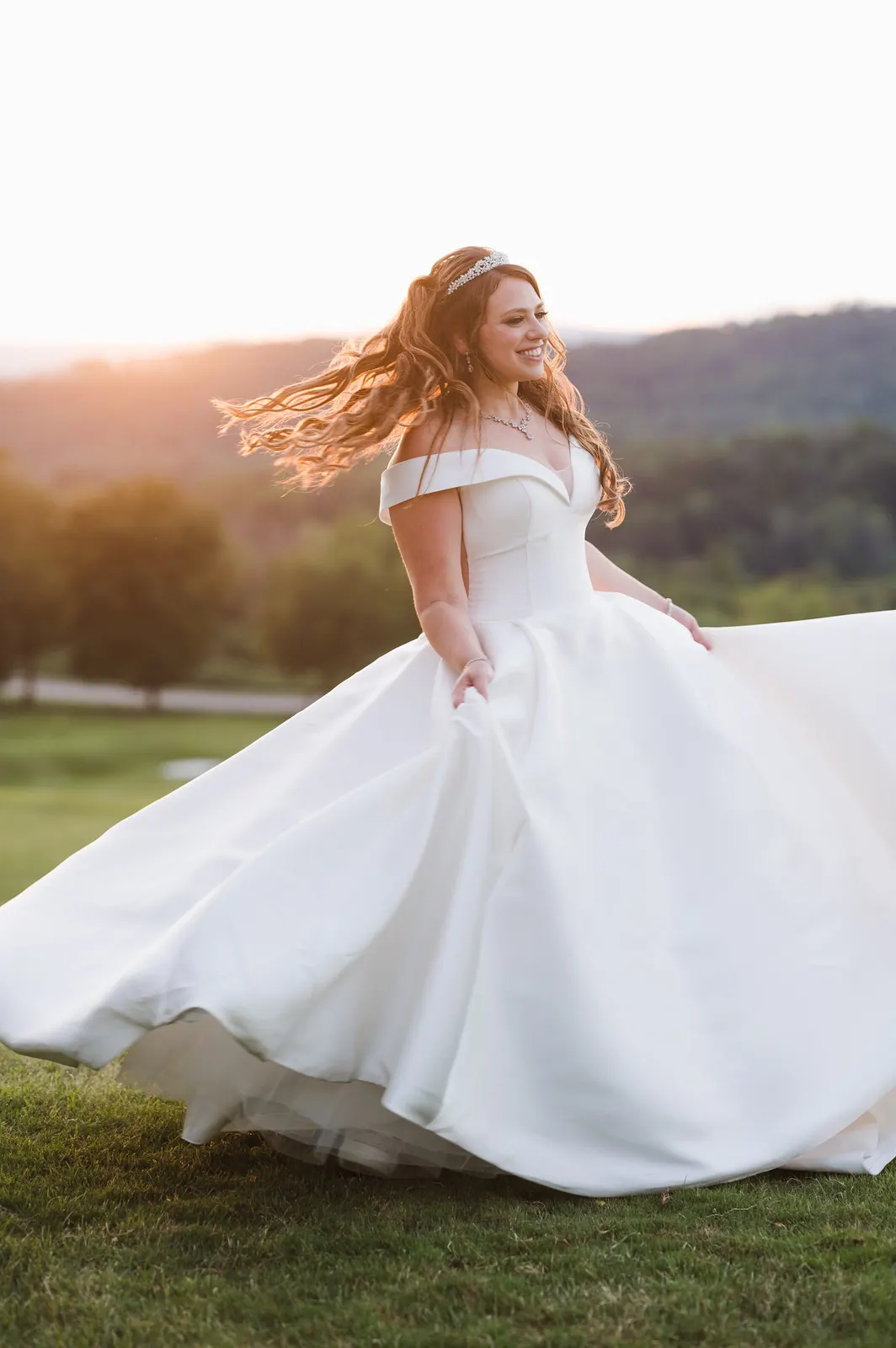
Golden hour is the stretch of time around sunset when the sun sits low on the horizon and often casts soft, warm light. According to The Knot, golden hour typically runs 30 to 90 minutes before the sun actually touches the horizon, though the exact length depends on the season, latitude, and surrounding terrain.
This light flatters skin tones, softens shadows on the face, and often produces the glowing backlit or silhouette shots couples pin on their inspiration boards. It is also short and does not wait for anyone, which is exactly why it has to be planned rather than hoped for.
Ask your photographer to assess how trees, buildings, terrain, and the direction of the view will affect sunset light at your venue. For background on how photography coverage generally works across a wedding day, see our guide to getting your best shots on your wedding day.
When Is Golden Hour on Your Wedding Date?
There is no single clock time for golden hour because sunset shifts throughout the year and across regions. Across New Jersey, New York, and Pennsylvania, sunset occurs much later in summer than in winter, so use the wedding date and venue location to determine the portrait window.
The first real planning step is simple: look up the actual sunset time for your wedding date and venue location, not a rough guess. Look up the sunset time while building the timeline, then have your photographer confirm the portrait window based on the venue’s terrain and sightlines.
Sunset may fall in late afternoon during winter and late evening during summer. Check a reputable sunset calculator for the venue’s exact location and date rather than relying on a seasonal table.
The usable light will also shift with the exact date, terrain, buildings, trees, and coastal or inland setting. Couples planning a fall wedding can find more season-specific timing detail in our guide to fall wedding photos in New Jersey and in our overview of the the best time of year to get married in New Jersey.
How to Build Your Timeline Backward From Sunset
To protect the portrait window, mark golden hour as a fixed point on the schedule and work backward with your photographer, planner, and venue coordinator.
- Find the real sunset time for your date and venue.
- Mark the hour before sunset as your golden hour window.
- Ask your photographer which part of the window will work best for the desired look and the venue’s sightlines.
- Work backward to set cocktail hour, ceremony end time, and family formals so nothing crowds into the window.
- Add buffer time before the window opens in case the ceremony or formals run long.
This approach treats golden hour the same way you would treat the ceremony start time: a fixed appointment everything else has to respect. Our NJ wedding reception timeline guide walks through how the rest of the evening fits around a portrait block like this.
Coordinating With Your Photographer and Venue
Once you know your target window, share it with your photographer, planner, and venue coordinator well before the wedding, not the week of. Everyone running the day should know the planned portrait window and how much flexibility the photographer needs.
Ask your venue where on the property the best light will be at that specific hour, since trees, buildings, or a west-facing versus east-facing lawn can change things significantly. If your reception venue does not have a good golden hour spot, ask whether a quick trip to a nearby park, boardwalk, or waterfront is realistic within your timeline.
Photography coverage, including how many hours you book and when your photographer arrives, directly affects whether golden hour fits cleanly into the day. See our guide to wedding photography coverage hours for help matching your package to your timeline. Couples can review FNA Events’ wedding photography coverage and package options, then ask how their preferred portrait timing can fit the day.
First Look vs. No First Look: How It Changes Your Golden Hour Plan
Whether you schedule a first look changes how golden hour fits into your day. With a first look, couples typically complete most portraits earlier and use golden hour as a shorter, more relaxed bonus session during cocktail hour or early reception.
Without a first look, fewer pre-ceremony portrait options may be available, so protect enough time after the ceremony for couple portraits. Our guide on how to plan a first look covers the tradeoffs in more detail.
- First look: portraits spread across two sessions, lower pressure on golden hour timing.
- No first look: portraits concentrated into fewer windows, golden hour timing matters more.
- Either way: schedule family formals so they do not consume the couple’s planned golden-hour window.
What Happens When Weather or the Schedule Runs Long?
Sunset does not wait, and neither does a reception schedule once dinner service starts. Build in buffer time because ceremonies, receiving lines, travel, and family formals can all reduce the time available for golden-hour portraits.
A written shot list handed to a planner or bridal party member ahead of time speeds up formals considerably. If the ceremony itself runs long, having that buffer already built in means you can still make the window instead of losing it entirely.
Cloud cover is a separate issue from running late. Overcast skies still allow for portraits, just with a softer, cooler look rather than the warm glow golden hour is known for. If rain is a real possibility, our guide on how photographers make rainy weddings work covers backup plans worth discussing with your photographer ahead of time.
Local Notes for NJ, NY, and Philadelphia-Area Couples
Couples marrying along the Jersey Shore should check local beach rules before planning a golden hour session on public sand. For example, Ocean Gate borough ordinance 185-4 permits wedding and photo sessions on its riverfront beach only between 10 a.m. and dusk, and prohibits them entirely from the Saturday before Memorial Day through Labor Day, a reminder that shore towns can have their own seasonal and hourly restrictions worth confirming early.
County and state park properties carry their own rules too. Ocean County park facilities are subject to operating hours set by the parks director. For a planned activity at a New Jersey state park, forest, or historic site, contact the park superintendent early to ask whether a State Park Service special-use permit is required.
FNA Events is based in Toms River and covers weddings across New Jersey, New York, and the Philadelphia area. Golden-hour timing varies among shore, suburban, and city venues, so confirm the plan for your specific setting. Couples can see the full list of towns served on the service areas page, and the venues page features real FNA weddings, including a golden-hour first look at the Sheraton Eatontown.
Quick Checklist Before the Big Day
A short pre-wedding checklist keeps golden hour from becoming an afterthought.
- Look up the exact sunset time for your venue and date, then confirm again closer to the wedding.
- Share the golden hour window with your photographer, planner, and venue coordinator in writing.
- Decide on a first look or not, and adjust where golden hour falls in your timeline accordingly.
- Build in buffer time before the window for formals or a ceremony that runs long.
- Identify a backup location on the property in case weather or timing changes the plan.
- Confirm any public beach, boardwalk, or park permit rules if your golden hour spot is off the venue grounds.
Couples finalizing their broader photography plan may also want to review our overview of how to choose a wedding photographer and consider cinematic videography to capture the same golden hour moments in motion.
Frequently Asked Questions
Can you get golden hour photos on a cloudy day?
Yes, overcast skies diffuse sunlight and often create soft, even light that works well for portraits, though you lose the warm color and sun flare effect. Light cloud cover can reduce harsh shadows and produce more even light, although the result depends on the cloud density and direction of the remaining light.
Do we need a first look to get golden hour portraits?
A first look is not required, but it gives couples a second, calmer portrait session earlier in the day as a backup if golden hour gets rushed or clouded out. Without a first look, more couple portraits may need to happen after the ceremony, which can add pressure to the timeline.
What happens to golden hour portraits if our reception runs late?
If the ceremony or cocktail hour runs long, the golden hour window can close before you reach it, since sunset does not move. This is why it helps to build buffer time into the timeline and identify a backup portrait location or later outdoor window with your photographer.
Should we do golden hour portraits before or after the ceremony?
It depends on whether you plan a first look. Couples with a first look often shoot golden hour portraits as a dedicated block during cocktail hour or early reception. Couples without one usually fit a shorter golden hour session between family formals and the reception, so timing accuracy matters even more.
How do we find the exact sunset time for our wedding date?
Use a reputable sunset calculator for the venue’s exact location and wedding date, then separately confirm any public-land, beach, or park access rules. Your photographer or planner can help translate that number into a working timeline slot.
Sources
- The Knot – What Is Golden Hour Photography? Pros Share Tips and Ideas
- Article II: Weddings, Photo Sessions and Other Activities – Borough of Ocean Gate, NJ
- NJ DEP State Park Service Special Use Permit Guidelines
Ready to Check Your Date
If you are planning a wedding or celebration in New Jersey, New York, or the Philadelphia area, the FNA Events team can walk you through DJ and MC entertainment, photography, videography, live music, enhancements, and photo booths, all run by one coordinated crew. Call (844) 373-7411 or visit our contact page to share your date and venue and get pricing for your celebration.
Written by the team at Fresh New Angle Events, Toms River, New Jersey wedding DJs, photographers, videographers, and event professionals serving couples across New Jersey, New York, and the Philadelphia area.