Wedding Family Photo List: How to Plan Formals Fast
Quick answer: Organize wedding family formals fast by writing a specific shot list in advance, naming a “wrangler” for each side of the family, and shooting largest groups first. Budget about two minutes per grouping (per The Knot), which keeps an 8-10 grouping list to roughly 20-25 minutes right after the ceremony.
Key takeaways
- Budget about two minutes of shooting time per grouping, per The Knot, plus extra for lining people up and finding wanderers.
- Eight groupings require about 16 minutes of shooting time, while 15 require about 30 minutes, plus time for gathering people and changing groups.
- Write your shot list weeks in advance and share it with your photographer and a designated family “wrangler” on each side.
- Shoot largest groups first, then peel off into smaller combinations so people who finish early can head to cocktail hour.
- Tell every person on the list ahead of time that they’re needed for photos right after the ceremony, so no one has to be tracked down.
Why Family Formals Are the Timeline’s Biggest Risk Point
Family formals are the one block of the wedding day where nearly everyone stands still at the same time, in the same place, for the camera. That makes them easy to plan for on paper and surprisingly easy to derail in real life. A missing uncle, a confused grandmother, or a guest who wandered to the bar can turn a planned 20-minute block into 45 minutes, which pushes back your grand entrance and cuts into cocktail hour.
The fix is not a longer photography package. It is a written, specific list, a clear order of operations, and one person per family side whose only job is rounding people up. A written plan helps you make efficient use of your wedding photography coverage, whether you are shooting at a city hotel ballroom, a shore venue, or a backyard tent in the suburbs.
How Long Do Family Photos Actually Take?
Most photographers plan around two minutes of shooting time per grouping, according to The Knot. That sounds fast, and the shooting itself usually is. What actually eats the clock is everything around it: calling the next group, walking them into position, and waiting on whoever is not paying attention.
The Knot says most wedding photographers recommend setting aside about 30 minutes for family photos and budgeting roughly two minutes for each combination, with additional time for gathering and positioning relatives.
| Number of groupings | Approximate shooting time | Block to plan on your timeline |
|---|---|---|
| 8 groupings | About 16 minutes | 20 minutes |
| 12 groupings | About 24 minutes | 25 to 30 minutes |
| 15 groupings | About 30 minutes | About 35 minutes |
| 20+ groupings, multiple families rotating | At least 40 minutes | Allow substantial extra time for changeovers |
That bottom row is where weddings run long. When divorced parents, both sides of the family, and several branches of relatives are all rotating in and out, add time for changeovers on top of the two-minutes-per-grouping rule. FNA Events recommends a second photographer when family members are getting ready in separate locations; for a large formal-photo list, discuss staffing and timing with your photographer. For more on how coverage hours and camera setups work together, see our guide to getting your best shots on your wedding day.
A Starting Family Photo List You Can Copy
Start with this eight-grouping template and customize it for your own family. “Partner A” and “Partner B” stand in for you and your soon-to-be spouse.
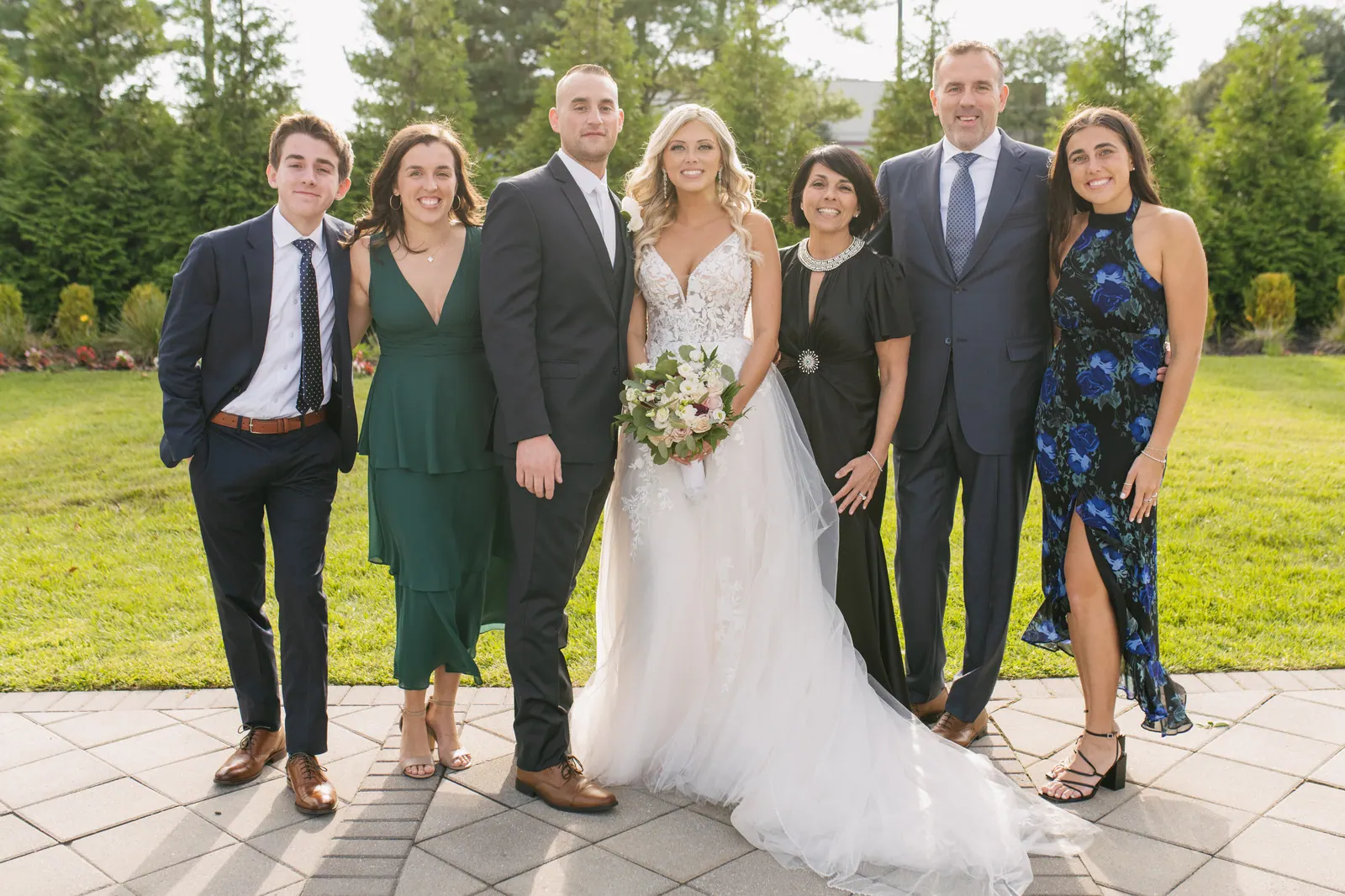
- Couple with both sets of parents together
- Couple with Partner A’s parents only
- Couple with Partner A’s parents and siblings
- Couple with Partner A’s entire extended family (grandparents, aunts, uncles, cousins)
- Couple with Partner B’s parents only
- Couple with Partner B’s parents and siblings
- Couple with Partner B’s entire extended family
- Couple with both immediate families combined (parents and siblings from both sides)
From there, add grandparents-only shots, godparents, or any blended-family combinations you need. Keep each grouping to a specific, named list of people rather than a vague category like “family,” since vague categories are what cause confusion and delay on the day.
This formals list is separate from your broader shot list for the ceremony and reception. If you have not built that one yet, our companion guide to the ceremony and reception shot list covers must-have moments beyond family groupings.
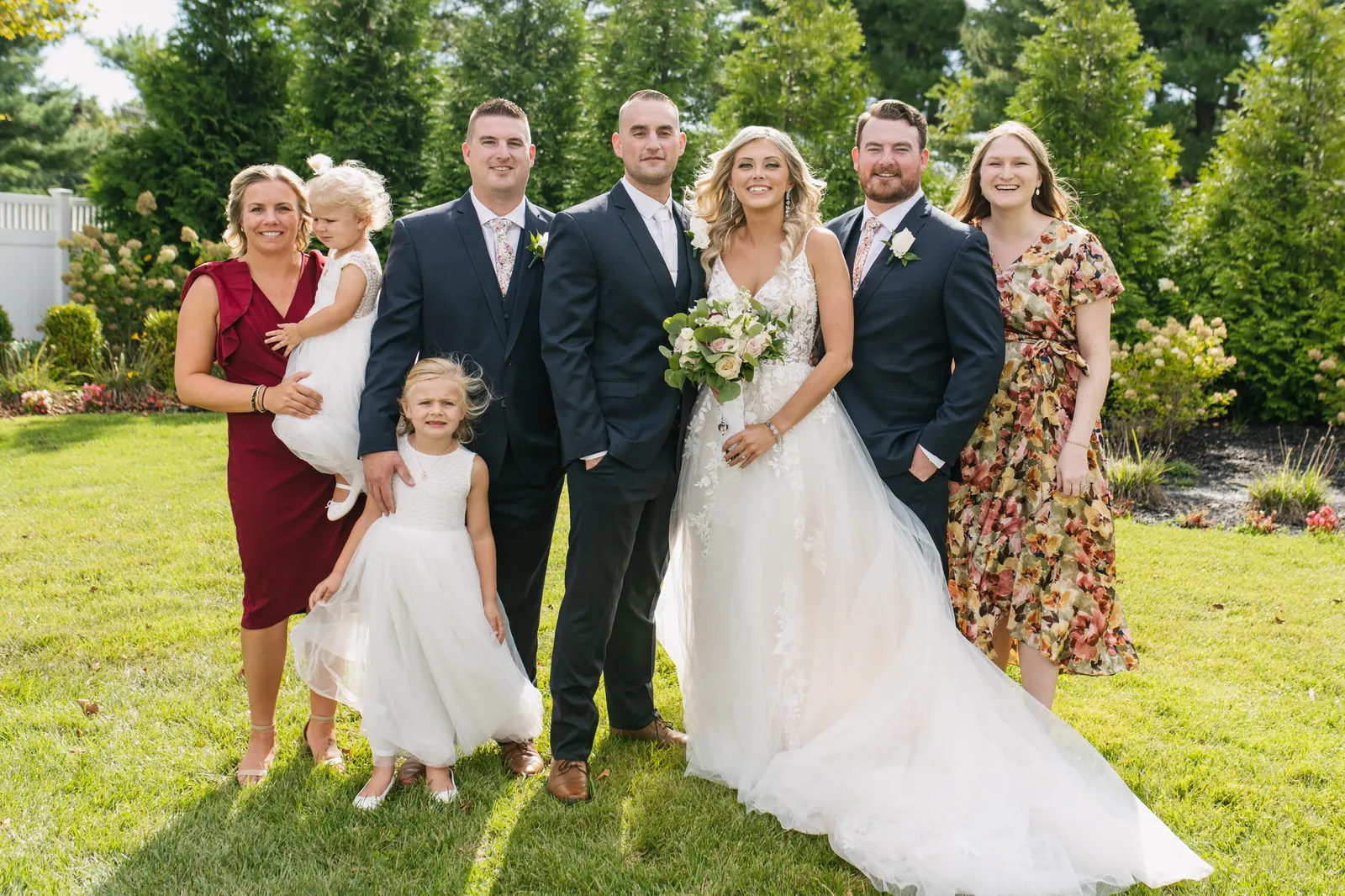
The Order That Keeps Things Moving
Shoot from largest group to smallest. Start with everyone together, then peel off branches of the family one at a time so people who are done can step away to cocktail hour instead of standing around waiting through the entire block.
- Start with the biggest combined group (both families together)
- Move to each side’s full extended family
- Narrow to parents and siblings
- Take grandparents-only combinations before releasing grandparents, then finish with parents-only, siblings-only, godparent, and other one-off photos
This order means grandparents and older relatives, who often tire first, are released earliest rather than held until the end. It also means that once a group finishes their photo, they are free to head toward the bar or the cocktail hour setup rather than waiting through fifteen more combinations they are not part of.
Planning Around Divorced Parents, Blended Families, and Big Guest Lists
Family structure and family size can both make formals more complicated. If parents are divorced, decide in advance whether they will be photographed together at all, and tell your photographer so there is no awkward moment of asking on the spot. Many couples do a quick combined shot for politeness and then separate shots with each parent and their current partner.
For blended families, give each step-parent and half-sibling combination its own quick grouping rather than trying to capture everyone at once. It takes an extra two minutes but avoids a lineup that feels forced or leaves someone unsure where to stand.
For large or multigenerational extended families, consider splitting the group into smaller branches rather than trying to fit everyone into a single tight combination. Venue grounds and public parks may have their own photography rules. For example, Palisades Interstate Park requires a permit for wedding-photo groups over 25 people and for commercial productions using multiple cameras, crews, lighting, or similar equipment, so confirm the rules for any off-site location in advance.
Who Should Coordinate Family Formals
Your photographer runs the camera and calls names from the list, but they cannot also chase down a wandering uncle across a cocktail hour lawn. That is the job of a family “wrangler,” ideally one outgoing, organized relative per side who knows the extended family by sight and is not part of the wedding party.
Give your wrangler a printed copy of the list ahead of time and point them out to your photographer before the ceremony starts. A coordinator on each side can reduce delays by gathering relatives before each grouping is called.
Your DJ and MC team can also help by making a clear, friendly announcement if family photos are happening during what would otherwise be cocktail hour, so guests understand the timeline is intentional rather than a delay. If you hire DJ and MC entertainment, ask the MC, photographer, and venue coordinator to confirm the announcement plan and photo timing in advance.
Sharing the List With Your Photographer and Family Ahead of Time
Send your final list to your photographer at least a week or two before the wedding, not the morning of. Email it or print it, and review it together during your final details call so there are no surprises about who is included.
Equally important: tell the people on the list that they are needed. Send a quick group text or mention it at the rehearsal dinner so relatives know to stay nearby right after the ceremony instead of drifting toward the bar or their cars. The most common cause of a slow formals block is not a long list, it is people who did not know they were supposed to stay put.
If your photos are happening immediately after the ceremony rather than during a first look, build a few extra minutes into your reception timeline to account for the walk from the ceremony space to the photo location, especially at venues with separate indoor and outdoor areas.
Should You Do Formals Before or After the Ceremony?
The actual shooting time is nearly identical whether you do formals before the ceremony as part of a first look or right after. Doing them before means you walk into cocktail hour as a married couple with photos already done, which many couples prefer. Doing them after is simpler logistically since the whole family is already gathered in one place, but it does cut into cocktail hour time with your guests.
Neither choice is wrong; decide based on your venue layout, guest count, timeline, and personal preference. If you are weighing the pros and cons of seeing each other early, our guide on how to plan a first look covers that decision in more depth, and it pairs naturally with this formals planning process.
Whichever order you choose, consider reviewing your venue’s photo spots in advance with your coordinator or photographer. At venues we’ve covered like The English Manor and Sheraton Eatontown, having a pre-identified formals location saves the time it would otherwise take to scout a spot with thirty relatives standing around waiting.
Frequently Asked Questions
Should family photos happen before or after the ceremony?
Either works; the shooting time is about the same. Before the ceremony (a first look) means you head straight into cocktail hour afterward. After the ceremony is simpler logistically since everyone is already gathered, but it eats into cocktail hour, so let guests know formals will take 20-30 minutes.
What if my parents are divorced and don’t want to be in photos together?
Tell your photographer in advance so they can plan separate groupings and avoid an awkward lineup. List exactly who should and should not be paired, and consider doing step-parent combinations as their own quick grouping rather than one giant blended-family shot.
Who should be in charge of gathering relatives for photos?
Assign one organized, outgoing relative per side, often an aunt, uncle, or sibling who knows the extended family by sight. This person, sometimes called a wrangler, physically finds and brings people into place while your photographer calls names from the list.
Can I skip family formals entirely?
Some couples do, especially at small or destination weddings, replacing formals with casual candids during the reception. If you skip them, let family know ahead of time so no one expects a posed moment, and consider a few quick portraits during cocktail hour instead.
How many groupings is too many?
There is no fixed cutoff, but each additional combination adds shooting and transition time. If the list no longer fits your allotted photo block, prioritize immediate family and plan more relaxed photos with extended relatives later.
Sources
- The Family Wedding Photos Shot List to Show Your Photographer – The Knot
- How long should I set aside for formal photos? – The Knot
- Photography & Filming Permits – Palisades Interstate Park
Ready to Check Your Date
If you are planning a wedding or celebration in New Jersey, New York, or the Philadelphia area, the FNA Events team can walk you through DJ and MC entertainment, photography, videography, live music, enhancements, and photo booths, all run by one coordinated crew. Call (844) 373-7411 or visit our contact page to share your date and venue and get pricing for your celebration.
Written by the team at Fresh New Angle Events, Toms River, New Jersey wedding DJs, photographers, videographers, and event professionals serving couples across New Jersey, New York, and the Philadelphia area.