Cultural Wedding Dance Traditions: Hora, Tarantella and More
Quick answer: Cultural wedding dance traditions like the Hora and Tarantella are communal, music-driven moments that can honor heritage and invite guests onto the dance floor. Done respectfully, they need the right song, a clear MC cue, chair safety for lifts, and a reception timeline slot that keeps energy high without overwhelming other milestones.
Key takeaways
- The Hora often happens early in the reception, sometimes after the couple’s entrance and first dance, though families may schedule it later.
- Chair lifts during the Hora should only be handled by sober adults who understand the lift, and some couples skip the chair entirely for safety.
- The Tarantella is an Italian circle and line dance usually built around a fast 6/8 tarantella rhythm, often led by the bride, groom, or a specific family member.
- A good MC or bandleader briefs guests with simple spoken instructions before any participation dance starts, since most guests have never done the steps.
- Cultural dances work best as a planned moment in the reception timeline, not an afterthought squeezed in between other traditions.
What Are Cultural Wedding Dance Traditions?
Cultural wedding dance traditions are group dances tied to a couple’s heritage, faith, or family background, performed during the reception to celebrate identity and bring guests together. Unlike a choreographed first dance, most of these are communal: guests of all ages and dance skill levels are expected to join in, often learning the steps on the spot.
Couples in New Jersey, New York, and the Philadelphia area frequently blend more than one tradition into a single reception, especially at weddings with mixed or multicultural families. We see this often across the towns and venues we cover in our New Jersey, New York, and Pennsylvania service area, where Italian, Jewish, Greek, Polish, Latin American, and other traditions frequently appear at the same celebration.
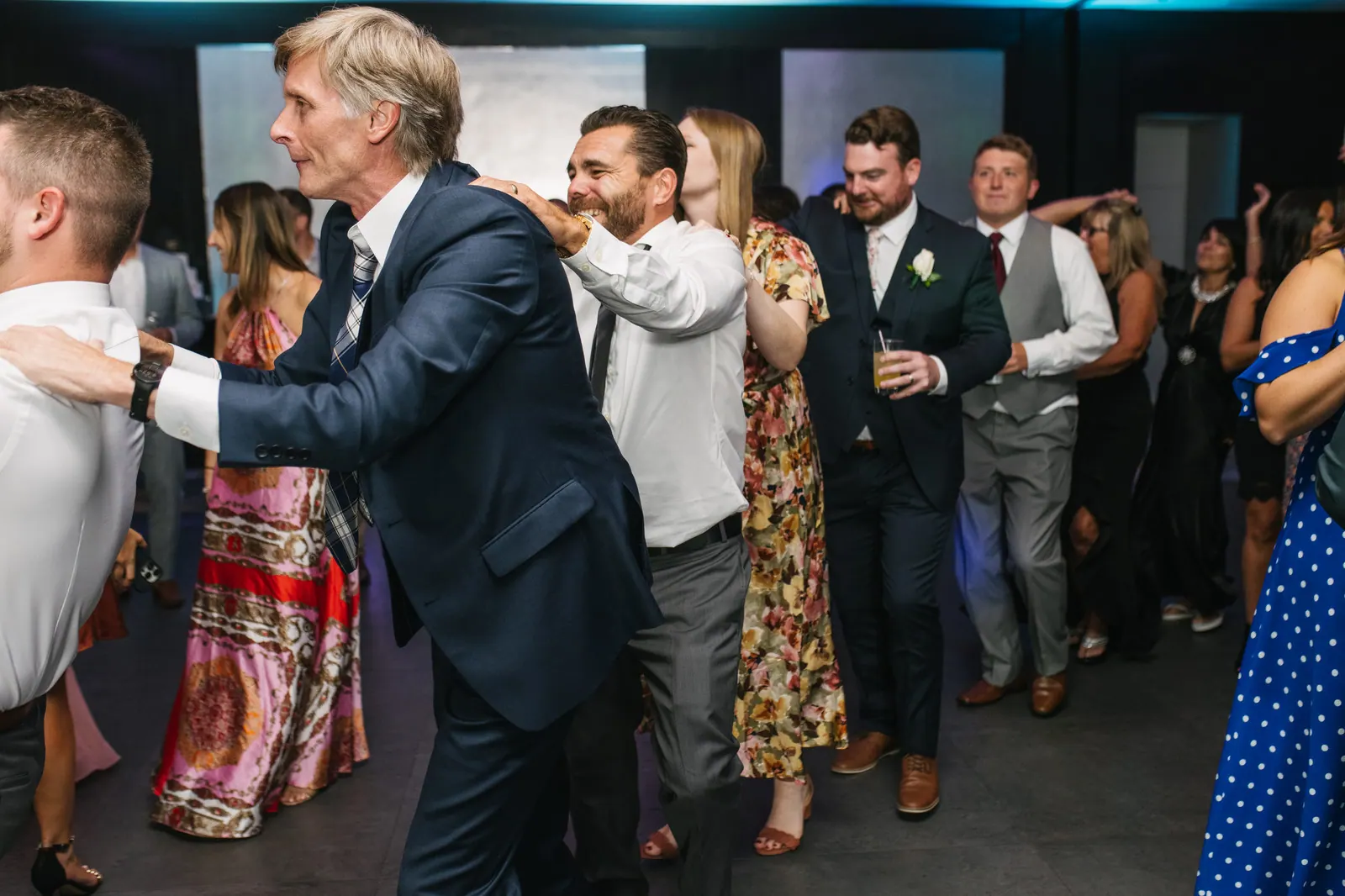
The common thread across all of these dances is participation. A good wedding MC explains the steps in plain language before the music starts, so guests who have never done the dance still feel comfortable joining the circle.
How Does the Hora Wedding Dance Work?
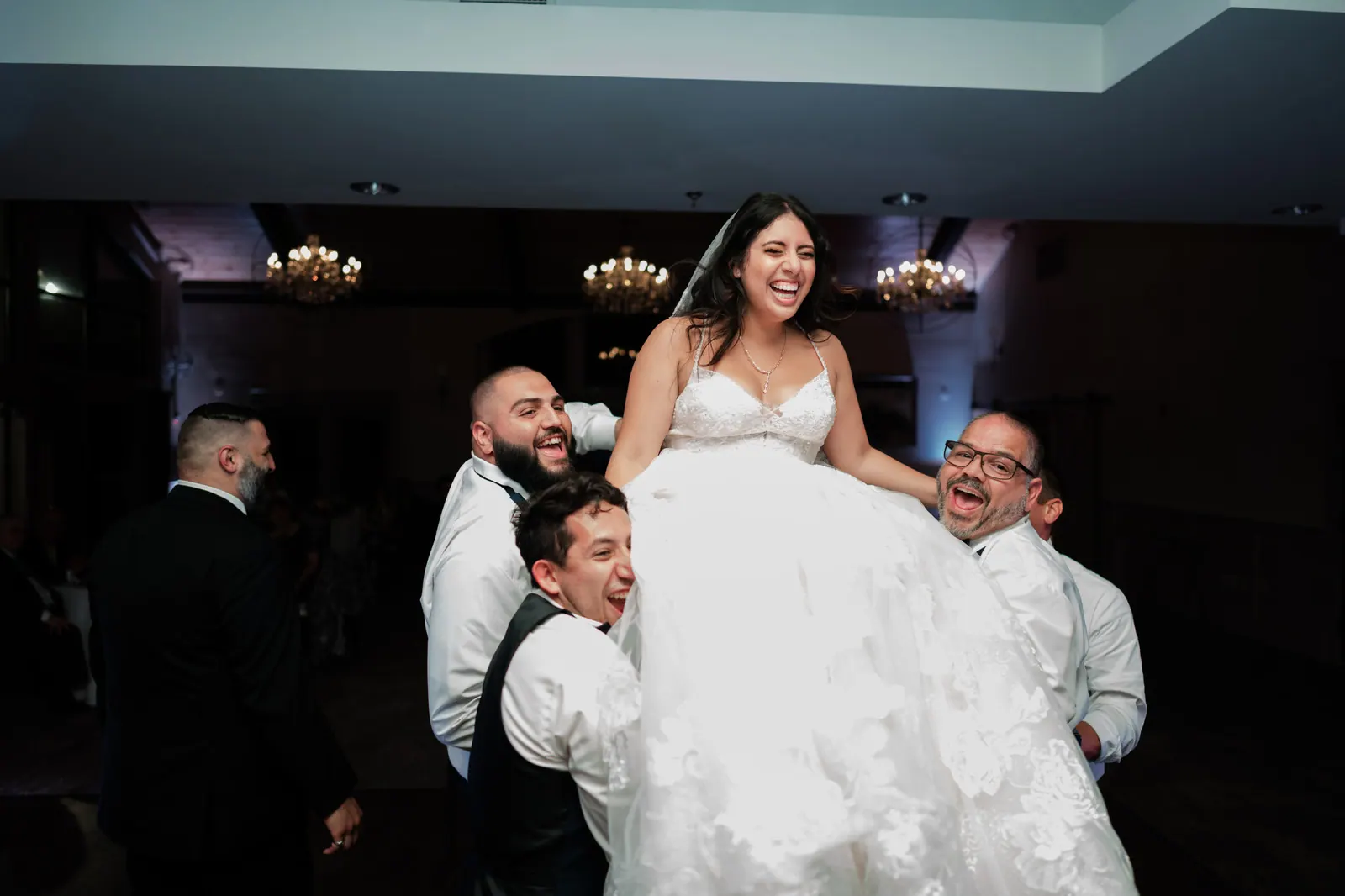
The Hora is a circle dance associated with Jewish celebrations and Eastern European folk traditions, with participants joining hands and following the lead dancers’ repeating steps. According to Brides, the Hora typically happens early in the reception, right after the couple is introduced and right after their first dance, when guests still have energy to spare.
The dance is open to everyone who wants to join, not just the wedding party, and it is common for the couple’s parents or siblings to be lifted on chairs alongside the newlyweds. Brides notes that anybody can lift the couple, but whoever takes on that role needs the physical strength for it and should be sober, since an uneven lift can tip the chair or injure the people underneath it.
Planning the Hora with Your DJ or Band
Brides recommends starting to plan reception details, including the Hora, about two months before the wedding, so your DJ and MC team knows exactly when to cue the music and how long you want the dance to run. Ask your DJ or bandleader to choose a length that suits the music, the number of participants, and the room’s energy.
- Confirm who is lifting the couple before the reception starts, and have a backup lifter ready.
- Ask whether the venue permits chair lifts and which chairs, if any, it approves for that purpose; never improvise with an unapproved chair.
- Brief your MC on the names of any family members who should also be lifted.
- Decide whether the Hora happens right after your first dance or later, after dinner, when the room has re-energized.
What Is the Tarantella and How Is It Danced at Weddings?
The Tarantella is a fast, lively Italian folk dance in 6/8 time, traditionally danced in a circle or in couples, with quick footwork and playful partner-switching. At Italian-American weddings, it is often one of the first dances to pull the whole room onto the floor, sometimes led by the bride and groom, sometimes by a grandparent or aunt who grew up dancing it at family gatherings.
Because the steps move fast and the dance often involves spinning or linking arms, it works best on a dance floor with enough clear space and good footing. If your reception floor is smaller or shared with other activities, talk to your DJ about timing the Tarantella for a slot when the floor is less crowded.
Music Choices for the Tarantella
Traditional Tarantella recordings use accordion, mandolin, and tambourine, and some bands or DJs blend in modern Italian-American wedding staples to keep the tempo moving. If you are working with a live musician alongside your DJ, a quick runthrough of the song and tempo beforehand helps the handoff feel seamless; ask whether live musicians who perform alongside the DJ can arrange instrumentation that fits your chosen Tarantella recording and reception style.
Other Cultural Wedding Dances Couples Ask About
Beyond the Hora and Tarantella, several other traditions show up regularly at New Jersey, New York, and Philadelphia-area weddings. Each has its own music cues and level of guest participation, so it helps to know the basics before you ask your DJ to build it into the night.
| Dance Tradition | Origin | Typical Participation | When It Happens |
|---|---|---|---|
| Hora | Jewish / Eastern European | Whole room, circle dance with chair lifts | Right after the first dance, or after dinner |
| Tarantella | Italian | Couple leads, guests join the circle | Early reception or during a dedicated dance set |
| Kolo | Serbian, Croatian, and other Balkan cultures | Hand-linked circle, open to all ages | Often during cocktail hour or early reception |
| Zeibekiko | Greek | Solo or small-group improvisational dance | Later in the night, often spontaneous |
| Bhangra or Garba | Punjabi / Gujarati (South Asian) | Whole room, upbeat group dance | Reception dance set, sometimes at sangeet events |
If your family’s tradition is not on this list, mention it to your planning team early. A dance that is new to your DJ just means more lead time to source the right track and confirm the steps with family members who know it well.
How Do You Introduce Cultural Dances to Guests Respectfully?
Because some guests may be unfamiliar with a Hora, Tarantella, or Kolo, a short, clear introduction from the MC can help them participate comfortably. The goal is participation, not perfection, and guests relax once they understand that nobody expects flawless footwork.
- Have the MC give a simple, friendly explanation before the music starts, naming the culture and the basic step.
- Ask a family member or member of the wedding party to demonstrate the first few steps on the floor.
- Keep instructions short, one or two sentences, so the energy does not drop before the dance begins.
- Avoid stereotyping language. Describe the dance factually and let the tradition speak for itself.
- If multiple cultural dances are planned, space them out in the timeline rather than stacking them back to back.
This is also where a strong MC and DJ partnership pays off. An experienced host reads the room, adjusts the pacing, and keeps the transition into the next part of the reception smooth.
Where Do Cultural Dances Fit in the Reception Timeline?
Timing matters as much as the dance itself. According to The Knot, DJ-led receptions commonly frontload the first dance, parent dances, and speeches, then move into cultural dances as part of the open dance set that follows. Band-led receptions sometimes spread these moments out, running a dance set first and saving parent dances for later in the night.
There is no single right order. The Knot notes that most planners encourage couples to build the flow that fits their family and guest list rather than forcing a rigid formula. If you want a detailed hour-by-hour structure to slot these dances into, our NJ wedding reception timeline guide walks through a full evening from cocktail hour to last dance.
For multicultural families blending two or more dance traditions, our guide to bilingual and multicultural reception music covers how to balance languages and genres across the night, and FNA Events offers bilingual English and Spanish MC service for couples who need it.
Safety Notes Every Couple Should Know Before the Hora
Chair lifts are the one part of cultural wedding dances that carries real physical risk, and it deserves honest attention. Lifting an adult on a chair takes several strong, sober people working in sync, and a missed grip or an unstable chair can cause a fall.
Some practical limits worth setting ahead of time:
- Confirm whether the venue permits chair lifts and which chairs, if any, it approves; ordinary event chairs should not be assumed safe for lifting.
- Only ask people who are sober and physically able to lift; this is not the moment for spontaneous volunteers who have been drinking.
- If the venue permits a lift, use designated sober adults, follow the venue or coordinator’s safety instructions, and stop immediately if the chair becomes unstable.
- If your venue has low ceilings, hanging decor, or a tented reception space, ask your coordinator about overhead clearance before anyone goes up on a chair.
- If you are uneasy about the lift altogether, it is completely fine to skip it and still dance the Hora in the circle. The tradition does not require the chair to feel meaningful.
How Can a DJ or MC Help Cultural Dances Go Smoothly?
A DJ or MC who has run cultural dances before knows how to read the room, time the music, and keep the transition tight so the reception does not lose momentum. That includes having the right recordings ready, briefing the wedding party ahead of time, and giving clear, respectful instructions to guests who are trying the steps for the first time.
FNA Events is based in Toms River and serves weddings across New Jersey, New York, and the Philadelphia area; couples can discuss cultural dance cues, music, and introductions with the DJ and MC before the event. You can also ask whether pairing your DJ and MC with live musicians would suit your selected music and cultural traditions.
If you are still deciding how to structure your overall reception entertainment, our guide on choosing the right wedding DJ can help you prepare for vendor conversations.
Frequently Asked Questions
Can you skip cultural wedding dances if they are not part of either family’s background?
Yes. Cultural dances are optional additions, not requirements. Many couples choose to include a tradition from one side of the family, blend two traditions, or skip them entirely in favor of a standard open dance set. Talk with your DJ or band about what fits your families and your reception style.
How long should the Hora or Tarantella last at a reception?
The best length depends on the song, the number of participants, and the room’s energy; ask your DJ or bandleader to fade or transition when participation begins to taper. Your DJ or bandleader can watch the crowd and fade the music naturally once participation starts to taper off.
Do guests need to know the steps ahead of time?
No. Many of these dances use repeating steps that guests can follow by watching experienced participants. A short spoken introduction from the MC, plus a few confident dancers leading the circle, is usually all that is needed.
What if our venue has a small dance floor for a cultural dance like the Tarantella?
Tell your DJ or coordinator in advance so they can time the dance for a less crowded moment, or adjust the formation to a smaller circle. Venues with tight floor space sometimes do better with a seated-area version or a shortened dance window.
Are cold sparks or other effects appropriate during a cultural dance moment?
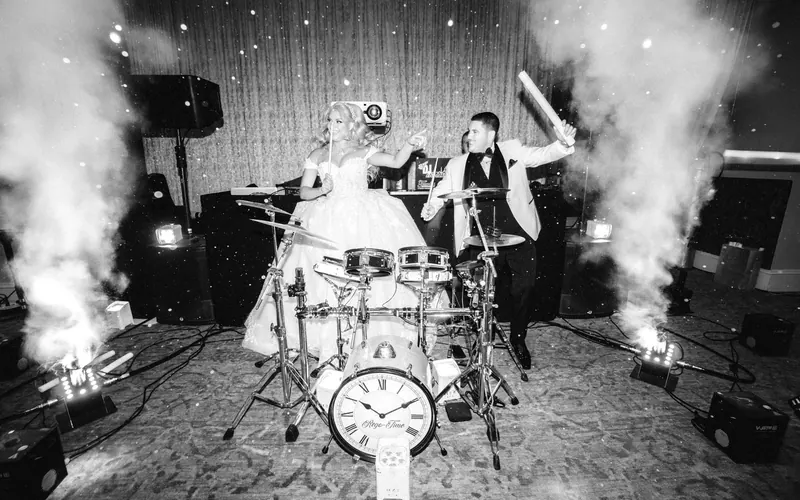
They can work well for building energy, but confirm indoor-safe effects with your venue first. FNA Events describes its cold spark and low-lying cloud effects as indoor-safe, which is worth asking about if you want a visual moment layered into a Hora or similar dance.
Sources
- The Order of Dances at a Wedding to Follow – The Knot
- What to Know About the Jewish Hora Dance – Brides
Ready to Check Your Date
If you are planning a wedding or celebration in New Jersey, New York, or the Philadelphia area, the FNA Events team can walk you through DJ and MC entertainment, photography, videography, live music, enhancements, and photo booths, all run by one coordinated crew. Call (844) 373-7411 or visit our contact page to share your date and venue and get pricing for your celebration.
Written by the team at Fresh New Angle Events, Toms River, New Jersey wedding DJs, photographers, videographers, and event professionals serving couples across New Jersey, New York, and the Philadelphia area.