Designing Reception Lighting to Match Your Wedding Style
Quick answer: Reception lighting design means layering uplighting, pin-spots, string lights, and intelligent dance-floor fixtures to match your wedding’s color palette and style, then timing brightness changes to guide the night from dinner to dancing. A good plan works with your venue’s existing architecture rather than fighting it, and uses color sparingly for impact.
Key takeaways
- Uplighting can be a practical way to change a room’s color and mood without adding overhead fixtures.
- Lighting should follow an “arc” through the night: brighter and warmer during dinner, dimmer and more dynamic once dancing starts.
- Match your fixture choices to your venue’s existing architecture, a barn calls for string lights while a modern ballroom often just needs uplighting and pin-spots.
- Stick to one or two accent colors plus a neutral base so photos and florals don’t get washed out.
- Always confirm venue power access and any outdoor lighting rules before finalizing your plan, especially for shore and historic properties.
What Does Reception Lighting Design Actually Involve?
Reception lighting design is the plan for how light shapes a room over the course of an evening. It covers color, brightness, direction, and timing, not just whether the lights are on or off. A thoughtful plan uses several layers of light working together: ambient light for general visibility, accent light for color and mood, and task light so guests can read a menu or find their seat.
Couples often think of lighting as decoration, but it also affects photos and video. A room lit only by harsh overhead fixtures photographs flat and yellow, while a layered plan with warm uplighting and dimmed overheads gives photographers and videographers something to work with. That is why lighting decisions are worth making early, alongside your DJ and MC entertainment planning, rather than as an afterthought.
How Do You Choose a Lighting Color Scheme for Your Wedding?
Color is the fastest way to change how a room feels, but it is easy to overdo. A good starting point is to pick one or two accent colors that echo your wedding palette, then keep everything else neutral.
- Warm palettes (amber, blush, soft gold): flatter most skin tones and read as romantic; a strong choice for barn, farm, and historic venues.
- Cool palettes (navy, lavender, ice blue): work well for modern ballrooms, winter weddings, or black-tie affairs.
- Jewel tones (emerald, burgundy, sapphire): dramatic and photogenic in the evening, especially for fall and winter receptions.
- White or warm white only: the safest choice if you want your florals and decor colors to stay true in photos without competing light.
A common mistake is choosing uplighting to match the bridesmaids’ dresses exactly. Saturated color on walls can shift skin tones in photos and clash with centerpieces. If color accuracy in photography matters to you, ask your lighting vendor to keep accent color on walls and architecture only, and leave tabletop and dance floor lighting closer to white or warm amber.
Which Lighting Fixtures Matter Most at a Reception?
You do not need every type of fixture to get a finished look. Most receptions rely on a combination of three or four categories, chosen based on venue size and style.
| Fixture Type | Best For | What It Does |
|---|---|---|
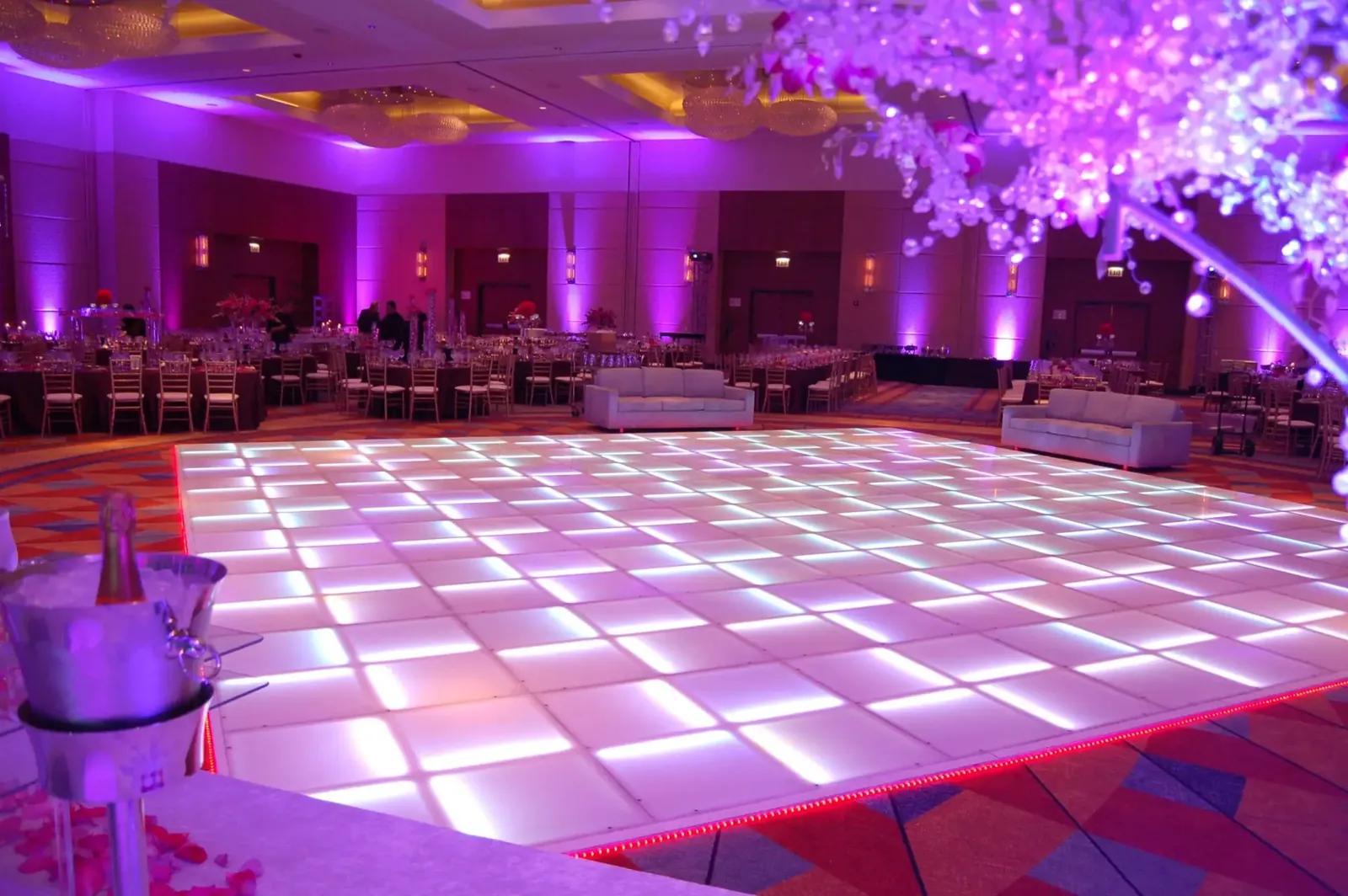
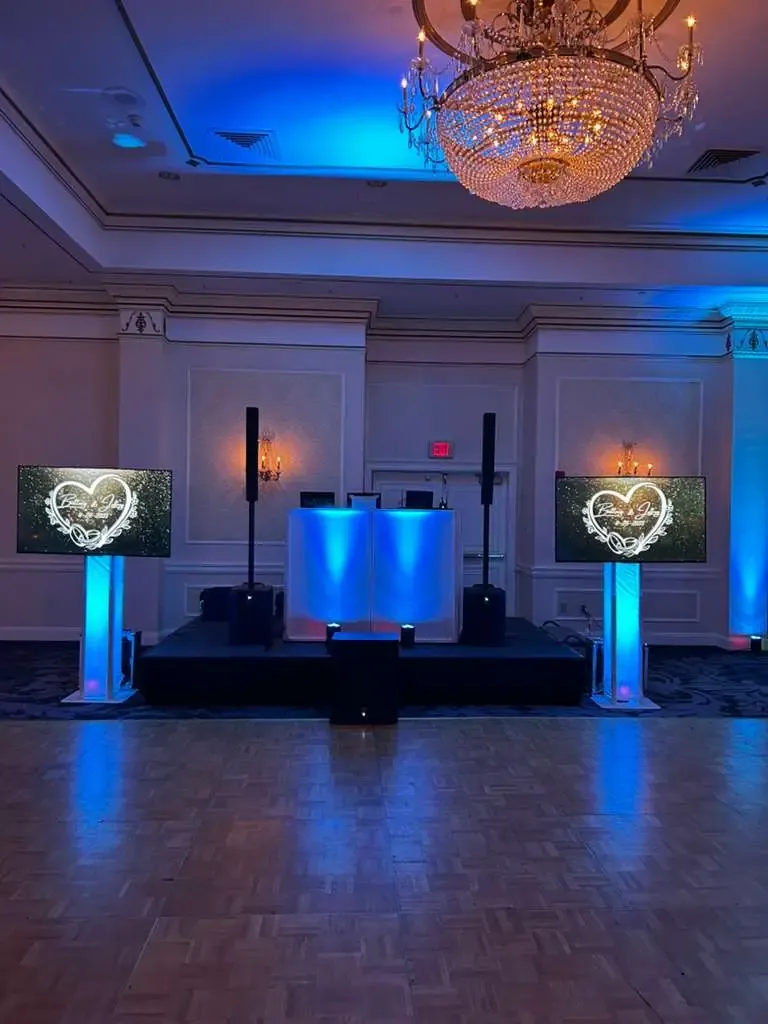
| Uplighting | Ballrooms, tents, plain walls | Washes walls and columns in color, often the fastest way to transform a bland room |
| String or festoon lights | Barns, outdoor tents, patios | Adds a soft overhead glow and works with exposed beams or open sky |
| Pin-spot lighting | Centerpieces, cake table | Draws focused light onto a specific object so it stands out from the room |
| Intelligent (moving head) lighting | Dance floor | Can be programmed with color and movement cues for an energetic, club-like feel |
| Custom monogram or gobo projection | Dance floor, entrance | Projects a couple’s initials or pattern onto the floor or wall |
FNA Events includes dance-floor lighting as part of its DJ and MC packages and offers uplighting free on premium DJ and host packages, along with intelligent lighting for the dance floor and custom monogram projection for a more personalized touch.
How Should Lighting Change Throughout the Night?
One of the most useful concepts in reception lighting is the lighting arc, the idea that brightness and energy should shift intentionally as the evening progresses. Nearlywed recommends keeping lighting brighter and softer during dinner so guests can see their food and each other, then letting it get progressively dimmer as the night moves toward dancing.
- Cocktail hour: warm, inviting light, often uplighting plus any string lights or lanterns already part of the venue.
- Dinner: enough brightness for guests to see their plates and each other, with pin-spots on centerpieces for a layered look.
- Toasts and special dances: dim overheads further, let a single spotlight or warm wash carry the moment.
- Open dancing: dim the overhead lighting as the venue permits, use intelligent lighting and color to energize the floor, and keep exits and walkways clearly visible.
This timing should be coordinated with your reception timeline so your DJ or lighting operator knows exactly when to shift the room.
How Does Your Venue Affect the Lighting Plan?
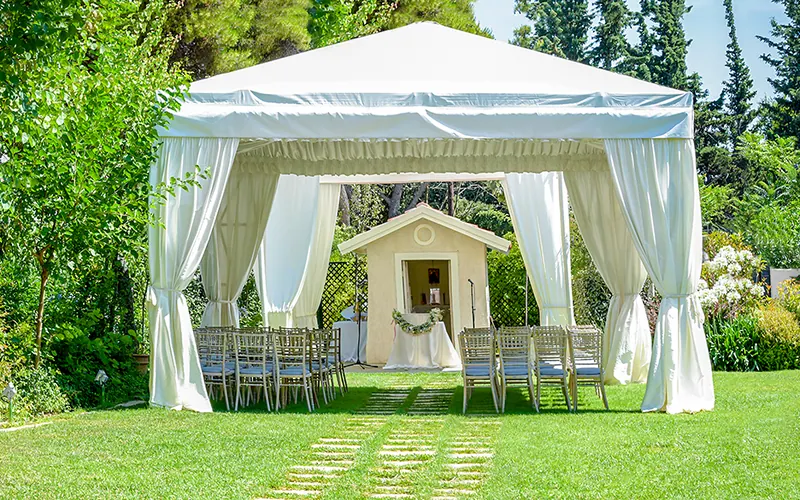
Every venue has its own natural lighting personality, and the best plans work with it rather than against it. A barn with exposed wood beams calls for string lights and warm bulbs that highlight the architecture. A modern space with concrete and glass benefits from clean uplighting and minimal extra decoration. A ballroom with existing chandeliers may only need uplighting and pin-spots to complement what is already there.
It helps to visit your venue at the same time of day as your reception, since a room looks completely different at 2 p.m. than it does at 8 p.m. Outdoor and shore venues along the Jersey coast add another variable: sunset timing shifts by season, and some towns regulate outdoor lighting for glare and light trespass, as seen in local ordinances like Ocean Township’s outdoor lighting code. If your reception includes an outdoor tent or patio component, ask your venue coordinator about any restrictions before locking in your plan.
You can see how lighting choices played out at real venues on FNA’s real weddings by venue page, including properties like Crystal Springs Resort and The English Manor.
What Does Reception Lighting Typically Cost?
Lighting costs vary by scope, venue size, and region. According to Plan A Wedding, a basic uplighting package of 15 to 20 wireless LED fixtures typically runs $500 to $2,000, string lights or Edison bulb installs range from $800 to $3,000, and pin-spot lighting for centerpieces runs $300 to $1,000 for 10 to 20 tables. A full lighting design with uplighting, string lights, pin-spots, gobo, and dance floor effects for a large venue can run $3,000 to $8,000 or more.
These are general industry ranges, not FNA Events pricing. FNA does not publish exact package prices online, and uplighting is included with premium DJ and host packages. You can request exact figures through the packages page or by reaching out through contact FNA Events.
What Power and Safety Details Should You Confirm With Your Venue?
Lighting is an electrical installation, even when it looks purely decorative, so power access and code compliance matter. New Jersey’s electrical subcode incorporates the National Electrical Code (NFPA 70). Ask the venue and a qualified electrical professional which grounding, GFCI protection, and temporary-power requirements apply, particularly outdoors or near water.
- Confirm how many standard outlets and dedicated circuits are available near your dance floor and head table.
- Ask whether your venue requires a certificate of insurance from lighting vendors.
- For tented or outdoor receptions, ask about generator needs and weatherproof cable runs.
- If special effects like cold spark fountains are part of your plan, confirm they are rated indoor-safe and cleared with the venue, since FNA’s cold spark and low-lying cloud effects are designed for indoor-safe use.
This is exactly the kind of detail covered in a venue AV checklist, which is worth reviewing with both your lighting vendor and your venue coordinator well before the wedding.
How Do Lighting, DJ, and Decor Work Together?
Lighting rarely stands alone at a reception. It works alongside your DJ’s energy, your florals, and your photography and video coverage. When the DJ and lighting operator coordinate their cues, they can adjust color and intensity as the night moves from dinner to the first dance and open dancing instead of relying on one fixed look.
Lighting also affects how your photos and video turn out. A well-lit dance floor gives your photographer and videographer more to work with, which matters if you are also booking wedding photography or cinematic videography coverage. If you want to go further with ambiance, event enhancements like sparks, clouds, and lighting can add a dramatic finish to a first dance or exit without overwhelming the room.
Frequently Asked Questions
Do I need to hire a separate lighting company, or can my DJ handle it?
Many couples use their DJ company for lighting since fixtures like uplighting and intelligent dance-floor lights are often bundled into entertainment packages. FNA Events, for example, includes dance-floor lighting with its DJ and MC packages and offers free uplighting on premium packages, which simplifies coordination on the wedding day.
Will colored uplighting mess up my wedding photos?
It can, if the color is too saturated or placed where it reflects onto skin tones. Keeping strong accent colors on walls and architecture, while leaving tabletop and dance floor lighting closer to white or warm amber, protects both your photos and your video from unwanted color casts.
How many uplights does an average reception need?
The number of uplights depends on the room’s dimensions, wall spacing, ceiling height, and the architectural features you want to highlight; ask the lighting vendor for a venue-specific fixture plan.
Can I use string lights outdoors at a shore venue in New Jersey?
Possibly, but the fixtures must be suitable for outdoor use, the rigging and power plan must be approved by the venue, and local restrictions may apply. Check with your venue coordinator about any local rules before finalizing an outdoor lighting plan, especially for tented receptions.
When should I finalize my lighting plan with my vendor?
Plan lighting alongside your reception timeline and confirm the vendor’s deadline for fixture counts, power needs, and color choices with the venue. Late changes may be limited by equipment availability, venue approvals, and production requirements.
Sources
- Wedding Lighting Design Guide — Plan A Wedding
- Tips for Adding Mood Lighting to Your Wedding Reception — Nearlywed
- New Jersey Department of Community Affairs — Current Construction Codes
- Ocean Township Ordinance #2169 — Outdoor Lighting
Ready to Check Your Date
If you are planning a wedding or celebration in New Jersey, New York, or the Philadelphia area, the FNA Events team can walk you through DJ and MC entertainment, photography, videography, live music, enhancements, and photo booths, all run by one coordinated crew. Call (844) 373-7411 or visit our contact page to share your date and venue and get pricing for your celebration.
Written by the team at Fresh New Angle Events, Toms River, New Jersey wedding DJs, photographers, videographers, and event professionals serving couples across New Jersey, New York, and the Philadelphia area.