Venue AV Checklist for DJs & Photographers: Power, Setup & Timeline

Quick answer: A venue AV checklist for DJs and photographers covers dedicated power circuits, outlet placement, load-in access, curfews, and a shared timeline with the planner and other vendors. Confirming these details with the venue manager well before the event helps reduce the risk of breaker trips, rushed setups, and lighting or sound gaps on the wedding day.
Key takeaways
- Ask each vendor for an equipment load list, then have the venue identify circuits with enough capacity and provide dedicated circuits where required, separate from high-draw kitchen or building equipment.
- Power, rigging, access, and curfew should be confirmed in writing before vendors finalize their production plans, not discovered on the wedding day.
- A shared load-in and load-out timeline between the DJ, photographer, videographer, and planner prevents rushed setups and missed golden-hour shots.
- Outdoor and tented venues need a rain and backup-power plan since generator access and extension-cord routing differ from indoor ballrooms.
- FNA Events serves New Jersey, New York, and the Philadelphia area with DJ, lighting, and photography services.
Why a Venue AV Checklist Matters for Your Wedding Day
Many preventable AV problems begin when venue requirements are not confirmed early enough. A DJ booth with no nearby outlet, a photo booth sharing a circuit with the kitchen warmers, or a lighting rig that cannot be hung from a tented ceiling are all avoidable if the venue manager and vendors compare notes before the contract is signed, not the week of the event.
This matters whether you are a couple booking your first venue walkthrough or a venue manager fielding questions from a dozen different vendors each season. A clear checklist keeps everyone speaking the same language about power, access, and timing, which is exactly where most last-minute scrambles start.
FNA Events offers DJ and MC entertainment, photography coverage, and lighting enhancements across New Jersey, New York, and the Philadelphia area.
What Power Requirements Should You Ask the Venue About?
Outlets are not the same as usable power. A room can have plenty of outlets and still not have enough dedicated circuits to run a DJ sound system, uplighting, a photo booth, and catering equipment at the same time without tripping a breaker.
Many U.S. venues provide 120-volt branch circuits rated at 15 or 20 amps, but available capacity depends on other loads on the circuit; higher-demand equipment may require dedicated circuits or temporary power distribution approved by the venue or electrician. Ask what is already connected to each circuit and whether any receptacles are controlled by switches or dimmers; vendors should verify that the available power and controls are compatible with their equipment.
Questions worth asking the venue manager
- What circuits are available near the DJ setup, head table, and dance floor, and what are their voltage, amperage, existing loads, and receptacle locations?
- Are any outlets shared with kitchen equipment, HVAC, or permanent lighting fixtures?
- Which receptacles have GFCI protection or are controlled by switches, dimmers, or building systems, and are they suitable for the vendor’s equipment?
- Is there a separate circuit available for a photo booth or charging station?
- Who do we call if we need additional power drops, and how far in advance must that be requested?
Ask the venue to keep entertainment loads separate from high-draw kitchen equipment where required and to identify any limits in the building’s electrical distribution before upgrades or effects are booked.
Sample Vendor Power Checklist
Use a simple table like this to compare expected equipment loads against what the venue can actually provide. Exact wattage varies by equipment brand and setup size, so always confirm specifics with each vendor.
| Equipment | Load Information to Collect | Recommended Circuit | Notes |
|---|---|---|---|
| DJ sound system and controller | Total wattage or amperage for the controller, mixer, speakers, subwoofers, laptop, and other connected gear | Circuit sized for the vendor’s documented load | Should not share a breaker with catering equipment |
| Uplighting and intelligent lighting | Fixture count and the documented wattage or amperage of each fixture, controller, and power supply | Separate circuit from sound gear when possible | LED fixtures typically draw less than older incandescent units |
| Photo booth | Combined wattage or amperage for the booth, lighting, laptop, printer, and charging equipment | Standalone outlet or circuit | Include a backup outlet for the attendant’s laptop or printer |
| TV displays or projection | Combined wattage or amperage for each display or projector, playback device, switcher, and signal extender | Assign only after the venue or production lead verifies the combined load | Confirm cable run length from nearest outlet |
| Catering warming equipment | Combined wattage or amperage for every warmer, hot box, coffee maker, refrigeration unit, and other powered appliance | Dedicated circuit capacity assigned by the venue or electrician | Keep fully separate from entertainment circuits |
Ask each vendor for the wattage or amperage of its equipment, then have the venue or electrician compare the combined load with the capacity and existing load of each proposed circuit.
What Should the DJ and Photographer Ask Before the Wedding Day?
Beyond power, a few logistics questions can reduce day-of friction between vendors and venue staff. Before vendors quote or finalize a production plan, confirm five items with the venue: power, rigging, access, curfew, and house rules.
Core questions for any venue walkthrough
- How many circuits are available, where are they located, and what else runs on them?
- Can anything be hung from the ceiling or walls, and who needs to approve rigging?
- Is load-in through a loading dock, a front entrance, stairs, or a freight elevator, and during what window?
- What time does the music need to stop, and is that the same time the room must be cleared?
- Does the venue restrict haze, open flame, tape on walls, or require its in-house AV team to handle certain tasks?
These same questions apply to photographers and videographers scouting a room for natural light, power for lighting kits, and space for a second shooter. For couples weighing whether a second photographer makes sense for their layout, see our guide on hiring a second shooter for your wedding.
Sound Requirements for Wedding Ceremonies and Receptions
Sound needs differ by space and setting. An indoor ballroom with carpet and drapes absorbs sound differently than an outdoor beach ceremony or a tented reception with hard flooring, so the same speaker setup will not necessarily work in both.
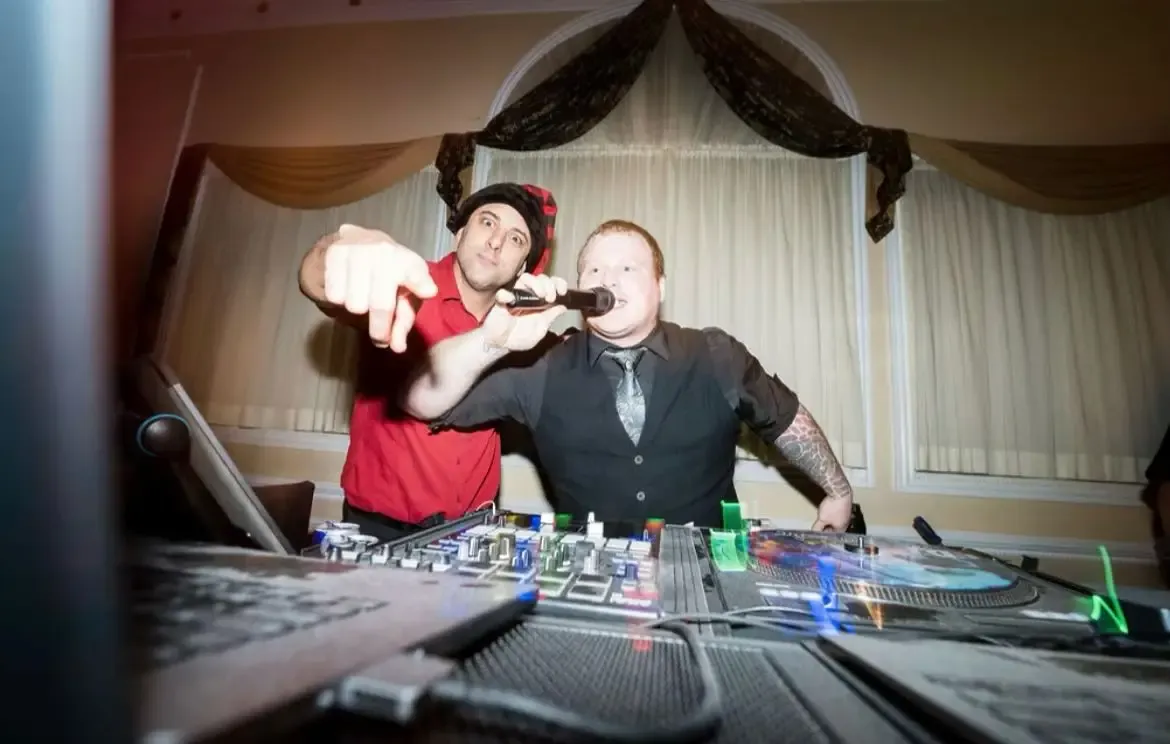
Key sound planning points include whether the ceremony needs a separate wireless or lapel microphone system from the reception speakers, whether the DJ booth location allows cable runs to ceremony and cocktail-hour areas without crossing guest walkways, and whether any outdoor noise ordinances apply. New Jersey’s N.J.A.C. 7:29 regulates sound from specified facility categories, including commercial and community service facilities. Venues must also follow any applicable municipal noise ordinance or permit conditions, which may set separate limits or hours.
FNA Events’ DJ and MC packages include a backup laptop, microphone, and speakers at every event, which matters most during ceremony audio when a single microphone failure could otherwise interrupt vows. Couples planning ceremony sound specifically should also review our guide on ceremony and cocktail music planning.
Timeline Coordination Between Venue, DJ, and Photographer
Power and sound only solve half the problem. The other half is making sure the DJ’s load-in, the photographer’s golden-hour window, and the venue’s room-flip schedule do not collide.
A shared timeline, built with the venue manager and every vendor, should include arrival and load-in times, sound check, first-look or ceremony start, reception room-flip windows, and a firm breakdown and load-out time. Our NJ wedding reception timeline guide walks through how these blocks typically fit together for a full wedding day.
Common timeline friction points
- DJ load-in scheduled at the same time as caterer deliveries, blocking the loading dock
- Photographer’s golden-hour portrait window overlapping with the room flip from ceremony to reception
- Curfew for music conflicting with the venue’s contracted end time for staff or security
- Lighting setup requiring more time than the venue’s available access window allows
Confirming these details in writing, rather than relying on a couple to relay answers between vendors, can make the day run more smoothly, according to Booksui’s guidance for lighting and AV professionals.
Outdoor and Seasonal Venues: What Changes at the Shore or in a Tent
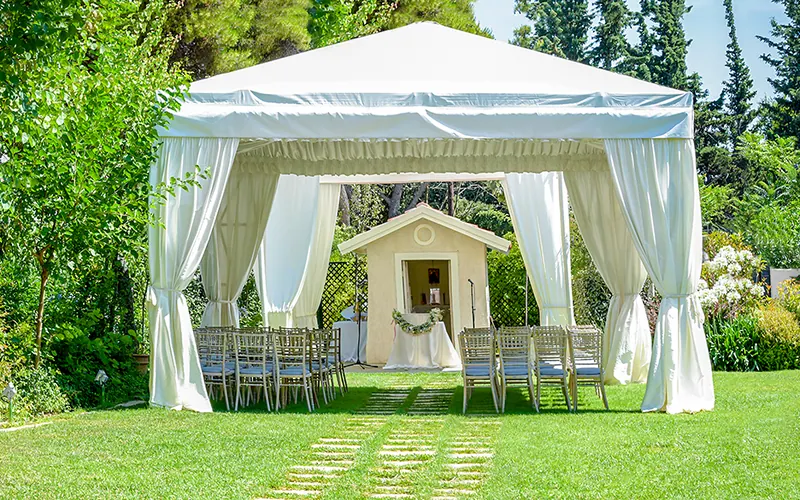
Shore, garden, and backyard venues across New Jersey add variables that indoor ballrooms do not have: generator power instead of building circuits, weather exposure for cables and equipment, and shorter daylight windows in fall and winter months.
For outdoor or tented events, ask whether power comes from the venue’s building or from a rented generator, how extension cords will be routed and protected from foot traffic, and what the rain or backup plan looks like for both the ceremony and the AV setup. Couples planning a beach or backyard ceremony should also review our Toms River wedding guide for local seasonal considerations specific to the Jersey Shore.
Special effects require advance venue approval and may be subject to fire-code, permit, insurance, operator, and site restrictions; review available event enhancements with the venue and provider before booking.
When to Call a Licensed Electrician or Production Pro
A checklist helps you ask the right questions, but it does not replace a licensed electrician when a venue’s power distribution is genuinely uncertain. If a historic building, barn, or outdoor tent cannot confirm its circuit capacity in writing, or if the planned lighting and sound load is large enough to require a generator or temporary power panel, bring in a licensed electrician before the event, not during setup.
This is also where a venue’s compliance with current building and electrical codes matters. The New Jersey Department of Community Affairs maintains the current construction codes, including electrical provisions, that govern permanent venue wiring, though temporary event power may also be subject to electrical-code, permit, and inspection requirements, so the venue and a qualified electrician should confirm what applies to the installation.
Backup laptops, microphones, and speakers can address equipment failures, but they do not replace adequate venue power or a separate power-contingency plan.
Frequently Asked Questions
Who is responsible for confirming venue power requirements, the couple or the vendors?
Typically both. The couple or planner should ask the venue for a basic power and access overview during booking, then forward that information to the DJ, photographer, and lighting vendor so each can confirm their specific equipment needs directly with the venue manager before the event.
Do photographers need dedicated power at a venue?
Usually less than a DJ or lighting setup, but a photographer may need an outlet for charging batteries, running studio lighting for formal portraits, or powering a laptop for on-site backups. Confirming outlet locations near the portrait and getting-ready areas avoids extension cords crossing guest walkways.
How far in advance should we confirm AV and power details with the venue?
As early as possible, ideally during the initial venue walkthrough or contract stage, and again a few weeks before the event once the vendor lineup and equipment list are finalized. Some venues require advance notice for extra power drops or electrician support, so last-minute requests can mean limited options or added cost.
What happens if a venue does not have enough power for all the vendors?
The venue or an electrician may need to add temporary power distribution, or vendors may need to stagger equipment use, run some gear on battery power, or bring a generator for outdoor setups. This is exactly why confirming circuit capacity early matters more than confirming it on the wedding day.
Does FNA Events provide backup equipment in case of a power issue?
FNA Events’ DJ and MC packages include a backup laptop, microphone, and speakers at every event, which helps cover equipment-level failures. Venue power issues themselves still need to be resolved with the venue or a licensed electrician ahead of time.
Sources
- New Jersey Department of Community Affairs | Current Construction Codes
- New Jersey Noise Control Regulations (N.J.A.C. 7:29)
Ready to Check Your Date
If you are planning a wedding or celebration in New Jersey, New York, or the Philadelphia area, the FNA Events team can walk you through DJ and MC entertainment, photography, videography, live music, enhancements, and photo booths, all run by one coordinated crew. Call (844) 373-7411 or visit our contact page to share your date and venue and get pricing for your celebration.
Written by the team at Fresh New Angle Events, Toms River, New Jersey wedding DJs, photographers, videographers, and event professionals serving couples across New Jersey, New York, and the Philadelphia area.