Audio Recording Tips for Capturing Clear Ceremony and Speech Sound
Quick answer: Capturing clear ceremony and speech audio for video or archival use means recording from at least two or three sources at once: a lavalier mic on the officiant or groom, a backup recorder near the altar or podium, and a line feed from the sound system or DJ board, with windscreens for outdoor settings.
Key takeaways
- Record from at least two independent sources during the ceremony so one mic failure does not cost you the vows.
- Clip lavalier mics about a hand’s width below the chin and route cables under clothing to cut down on rustling.
- Outdoor ceremonies need suitable wind protection on microphones exposed to moving air because wind noise can overwhelm recorded speech.
- For speeches, a direct feed from the DJ or band’s sound board is usually cleaner than a microphone pointed at a speaker.
- New Jersey municipalities enforce local noise ordinances under the state’s Noise Control Act, so sound levels and timing can matter at outdoor or shore venues.
Why Ceremony Audio Needs Its Own Plan
Couples spend months choosing flowers, cake flavors, and a first dance song, but ceremony audio often gets left to whatever microphone happens to be nearby. That is a mistake, because vows and speeches cannot be redone once the moment passes. A soft-focus photo is forgivable; missing the words “I do” on your wedding video is not.
Unlike reception music, which plays through a sound system you can hear and adjust in real time, ceremony audio has to be captured correctly the first time. There is no retake. That is why couples working with a videographer, or planning to record the ceremony themselves for archival purposes, should treat audio as its own checklist item rather than an afterthought tied to the reception DJ setup.
FNA Events serves New Jersey, New York, and the Philadelphia area, where ceremony settings range from outdoor waterfront spaces to indoor ballrooms; in any setting, use more than one audio source, place microphones carefully, and keep a backup running.
The Three-Source Rule for Ceremony Audio
Professional audio and video teams generally avoid relying on a single microphone for a ceremony. A widely used approach, sometimes called the three-source rule, is to capture audio from at least two or three independent points at once:
- A lavalier mic on the officiant or on the groom, feeding a wireless transmitter or small pocket recorder
- A standalone recorder placed at the podium, altar table, or lectern as a backup
- Camera or on-site audio capturing ambient sound for sync and room tone
If one source fails because of a dead battery, a bumped cable, or wind interference, another source may still provide a usable recording of the vows. This redundancy matters most at outdoor or unpredictable venues, including beach and waterfront ceremonies where wind and ocean noise are constant variables.
Couples who want a dedicated wireless mic setup rather than a DIY recorder arrangement can read more in our guide to ceremony audio solutions for clear wedding sound, which covers lapel mic and wireless mic options in more depth.
Mic Placement That Actually Works
Placement is where most ceremony audio goes wrong. A lavalier clipped too low, hidden under a thick lapel, or pointed away from the mouth will pick up muffled or inconsistent sound no matter how good the equipment is.
Lavalier Placement Basics
- Clip the mic to the chest, about a hand’s width below the chin
- Keep it away from fabric, ties, or necklaces that can rustle against the capsule
- Run the cable under the jacket or dress if using a wired lav, so it does not catch on movement
- Do a quick sound check at a normal speaking volume, not a whisper, before the processional starts
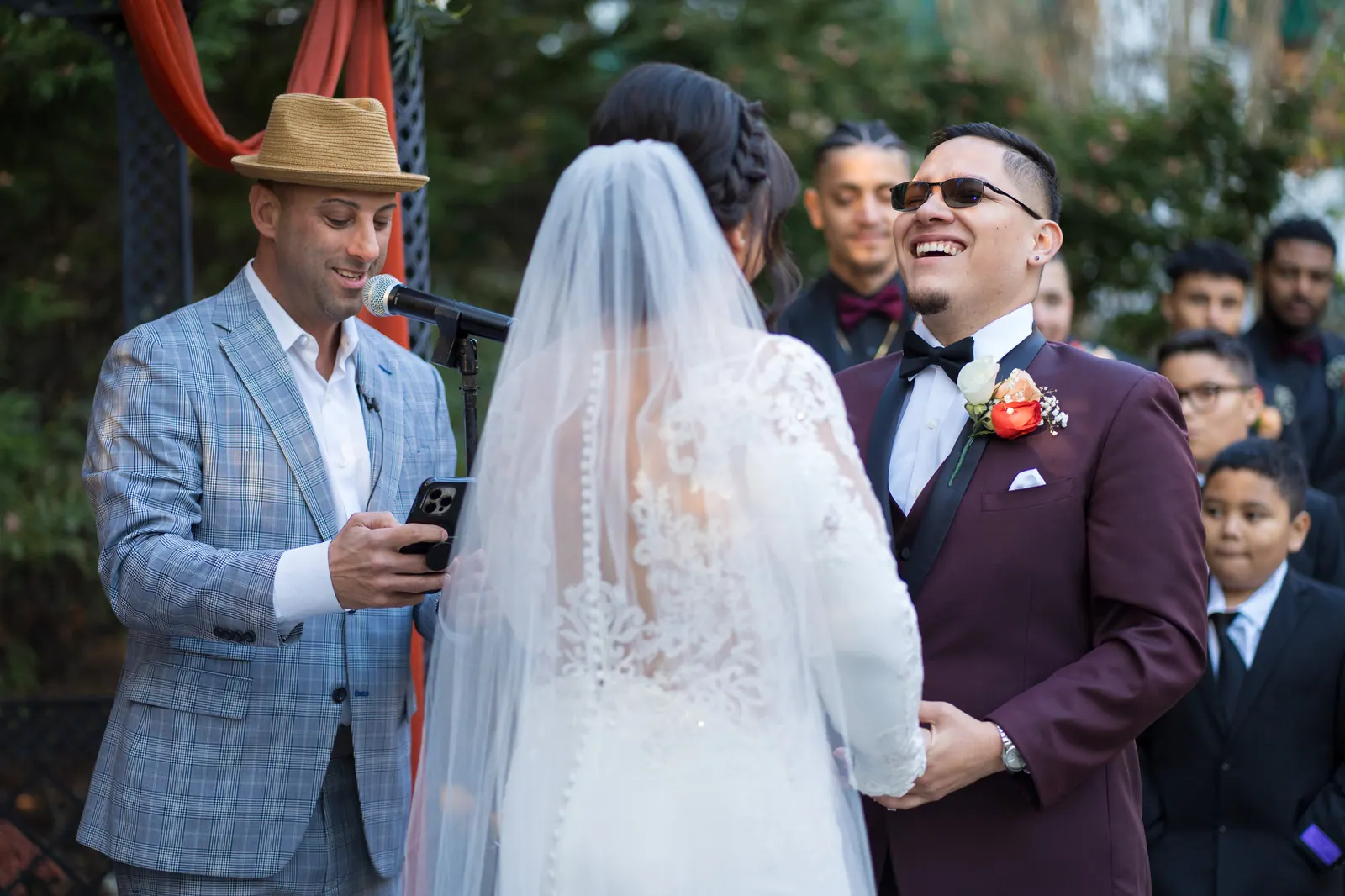
If only one lavalier is available, place it on the officiant or one partner based on where everyone will stand, how close they will be to one another, and who will speak during the ceremony. A second fixed mic near the altar or arch can pick up the bride’s voice and any readings.
Podium and Lectern Mics
If your ceremony includes readings, a unity ceremony, or a religious officiant using a podium mic, placing a small backup recorder on or near that surface gives you a second clean source without adding visible equipment to photos.
Recording Speeches and Toasts
Speeches present a different challenge than ceremony vows because they usually happen through a sound system that is already set up for music, not quiet dialogue. A microphone aimed at a speaker from across the room will pick up echo, room noise, and audience chatter.
The cleanest way to capture speech audio is a direct line feed, sometimes called a board feed, from the DJ or band’s sound system. This records the signal from the mixer and avoids much of the reverberation and audience noise captured by a distant room microphone. If you are hiring a videographer separately from your entertainment team, ask both teams in advance to confirm the connection type, available outputs, and responsibility for monitoring the recording feed.
If a board feed is not possible, the next best option is a dedicated recorder placed close to the speaker system, rather than relying on a camera-mounted mic across the room. For more on who speaks when and how long to plan for toasts, see our guide on wedding toast order and timing.
Outdoor Ceremonies: Fighting Wind and Ambient Noise
Wind is a major cause of poor outdoor ceremony audio. Even a light breeze can create a rumbling, distorted sound on a lavalier or camera mic that is difficult or impossible to fix afterward.
Practical steps for outdoor ceremonies include:
- Use a furry windscreen (sometimes called a deadcat) on every microphone exposed to open air
- Mount lavalier mics beneath clothing only with proper isolation from fabric; otherwise, use a suitable windscreen in an exposed position
- Position speakers and recorders away from the direct wind line where it is practical to do so
- Account for ambient noise sources specific to the venue, such as waves, boardwalk crowds, or nearby traffic
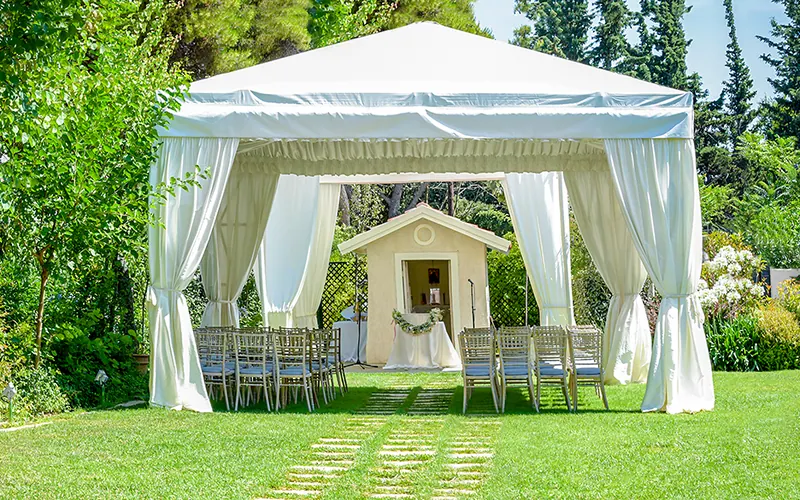
Shore ceremonies in towns like Toms River, Belmar, Manasquan, and Brielle bring beautiful backdrops but also unpredictable wind and surf noise, which is one more reason to plan audio redundancy for beach weddings. Our beach wedding planning checklist and NJ beach and park permit guide cover other site-specific logistics worth reviewing before your ceremony date.
Local Noise Rules Worth Knowing
New Jersey’s Noise Control Act gives the state Department of Environmental Protection authority to set sound level standards, and it allows municipalities to adopt their own noise ordinances based on a model ordinance, according to the New Jersey Department of Environmental Protection. In practice, this means individual municipalities may have approved local noise ordinances, including curfews, while venues and public-site permit authorities may impose additional conditions on amplified sound.
This mostly affects amplified reception sound rather than a quiet lavalier recording a ceremony, but it is worth confirming with your venue or municipal permit office if you are planning an outdoor ceremony with a PA system in a public space. Our sound system rental guide and event sound basics page cover equipment considerations that intersect with these local rules.
Recording Settings and Backup Habits
Good placement only works if the recording settings and habits behind it are solid too. A few habits make a meaningful difference:
| Habit | Why It Matters |
|---|---|
| Record at a conservative input level | Leaves headroom for a loud laugh, a raised voice, or an unexpected cheer without distorting (clipping) the recording |
| Use 32-bit float recording where available | Greatly reduces the risk of permanently damaged audio from clipping, since levels can be adjusted after the fact |
| Start recording early and let it run | Stopping and restarting is one of the most common ways vows or key lines get missed entirely |
| Monitor with headphones during setup | Lets you catch rustling fabric, wind noise, or a loose cable before the ceremony starts, not after |
| Check every recorder before leaving the venue | Confirms that files exist and can be opened before the equipment is packed away |
Backing up audio files the same night, alongside video footage, reduces the risk of losing the only copy if a memory card is later lost or damaged.
DIY Recording vs. Hiring a Pro for Archival Audio
Some couples want ceremony audio purely for archival purposes, separate from any video package, and consider recording it themselves on a phone or a basic recorder. This can work for a simple backup, but it comes with real limits.
A phone propped on a chair will struggle with distance, wind, and ambient noise, and there is no one monitoring levels or troubleshooting a dead battery mid-ceremony. A professional approach, whether through a videographer’s audio package or a dedicated ceremony audio setup, adds the redundancy and mic placement expertise described above, plus someone whose job is to catch a problem before it ruins the recording.
FNA Events’ cinematography team records in 4K and 1080p with multiple cameras and delivers a teaser film within 24 to 72 hours, with the full-length film following later, so ceremony and speech audio is captured as part of a complete video package rather than a separate DIY effort. Couples planning video coverage can review our cinematic wedding videography page.
If your ceremony and reception entertainment are being booked separately from your video team, loop in your DJ or MC early so they know a board feed or extra mic line may be requested. You can see how FNA’s entertainment and sound equipment fits into a full event in our DJ and MC entertainment services overview, or browse full packages on our packages page.
Frequently Asked Questions
How many microphones do I actually need for a ceremony?
Most professionals recommend at least two independent audio sources: a lavalier mic on the officiant or groom and a backup recorder near the altar or podium. A third source, such as a camera mic, adds extra insurance but is not strictly required for a small or indoor ceremony.
Can I just use my phone to record the ceremony audio?
A phone can work as a basic backup if placed close to the speakers and shielded from wind, but it will struggle with distance, ambient noise, and battery life compared to a dedicated recorder or lavalier mic. Treat it as a backup, not your primary source.
Who should wear the lavalier microphone during the ceremony?
The officiant or one partner may be the best choice, depending on where everyone will stand and who will speak during the ceremony. A second mic near the altar can help capture the other partner’s voice as well.
Does the reception DJ’s sound system help with speech recording?
Yes, a direct line feed from the DJ or band’s mixer usually produces cleaner speech audio than a microphone placed across the room because it avoids much of the reverberation and background noise captured at a distance.
Are there noise restrictions for outdoor ceremonies in New Jersey?
New Jersey’s Noise Control Act lets municipalities set their own noise ordinances within a state model framework, according to the New Jersey Department of Environmental Protection. Outdoor or beach venues may have specific sound equipment rules worth confirming with your venue or local permit office in advance.
Sources
- NJDEP – Compliance and Enforcement: What’s All the Noise About?
- Audio Solutions Question of the Week: How Do You Mike a Wedding Ceremony? | Audio-Technica
Ready to Check Your Date
If you are planning a wedding or celebration in New Jersey, New York, or the Philadelphia area, the FNA Events team can walk you through DJ and MC entertainment, photography, videography, live music, enhancements, and photo booths, all run by one coordinated crew. Call (844) 373-7411 or visit our contact page to share your date and venue and get pricing for your celebration.
Written by the team at Fresh New Angle Events, Toms River, New Jersey wedding DJs, photographers, videographers, and event professionals serving couples across New Jersey, New York, and the Philadelphia area.