First Dance Tips for Couples Who Don’t Dance
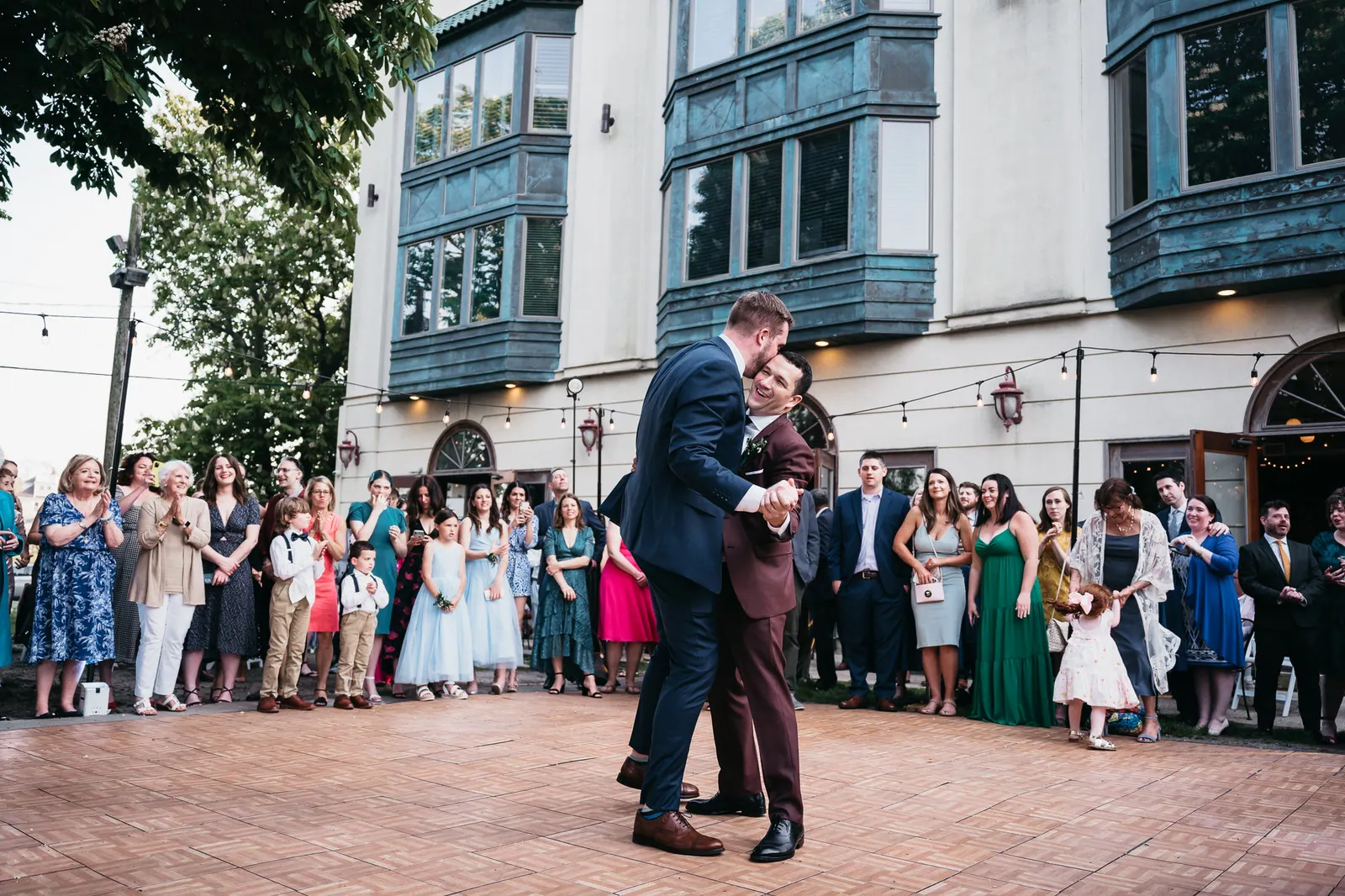
Quick answer: Couples who don’t dance can still enjoy their first dance by choosing a shorter song edit, learning two or three simple repeatable steps instead of full choreography, practicing in real shoes, and taking a handful of lessons if needed. Keeping the routine simple and well-rehearsed matters more than looking like trained dancers.
Key takeaways
- A first dance only needs to run 2 to 3 minutes, so ask your DJ or band to trim the song instead of forcing yourselves through a full track, according to The Knot.
- Lesson needs vary: a few focused sessions may be enough for basic steps, while full choreography generally requires more instruction and practice.
- Practicing in your wedding shoes and testing your range of motion in the dress or jacket can reveal issues caused by a train, heel height or fitted sleeves.
- Starting lessons or practice a few months ahead gives you time to build comfort gradually, but a shorter timeline can still work if you keep the steps simple.
- A sway-and-turn slow dance style often looks more natural on beginners than ambitious choreography with dips and lifts.
Why Do So Many Couples Dread Their First Dance?
If the idea of your first dance makes your stomach drop, you are not alone. Many couples are not trained dancers, and a simple, comfortable first dance can still look warm and genuine.
The anxiety usually comes from one assumption: that a first dance has to look like a performance. It does not. Guests are watching for connection, not technique. A relaxed couple swaying confidently through a simple routine reads better on camera and in person than two nervous people attempting something they have not rehearsed enough.
Once you accept that “good enough and comfortable” beats “ambitious and shaky,” the whole process gets easier. The sections below walk through exactly how to get there.
How Do You Pick the Right First Dance Song?
Song choice shapes everything else, including tempo, how long you need to dance, and how much movement feels natural. A slower ballad gives you more room to just sway and hold each other, while a mid-tempo song pushes you toward actual steps.
A full first dance does not need to run the entire length of the recorded track. According to The Knot, a first dance should generally last between two and four and a half minutes, with two to three minutes as a comfortable sweet spot, and your DJ or band can trim a longer song down to that window.
If you are still weighing options, our guides on how to pick your wedding songs and first dance song ideas and trends for 2026 cover the full selection process in more depth, so this article focuses only on how to actually move once the song is picked.
What Are the Easiest First Dance Steps for Beginners?
You do not need a dance vocabulary to look put-together. A handful of repeatable moves, done confidently, carries most of a short song.
- Basic sway with weight shift: Stand close, hold each other, and shift weight side to side on the beat. This alone fills a slow verse.
- Box step: A repeating step pattern whose timing depends on the dance style and song; an instructor can help match it to the music.
- Slow turn: One partner leads a gentle half-turn or full turn while the other follows; practiced a few times, it stops feeling clumsy.
- Dip or pause at the end: A single rehearsed dip or a slow dip-free pause gives the song a clear, photogenic finish without needing more choreography.
Stacking two or three of these in a loop, rather than learning a long unique sequence, is what most non-dancers land on, and it looks intentional precisely because it is repeated smoothly instead of rushed.
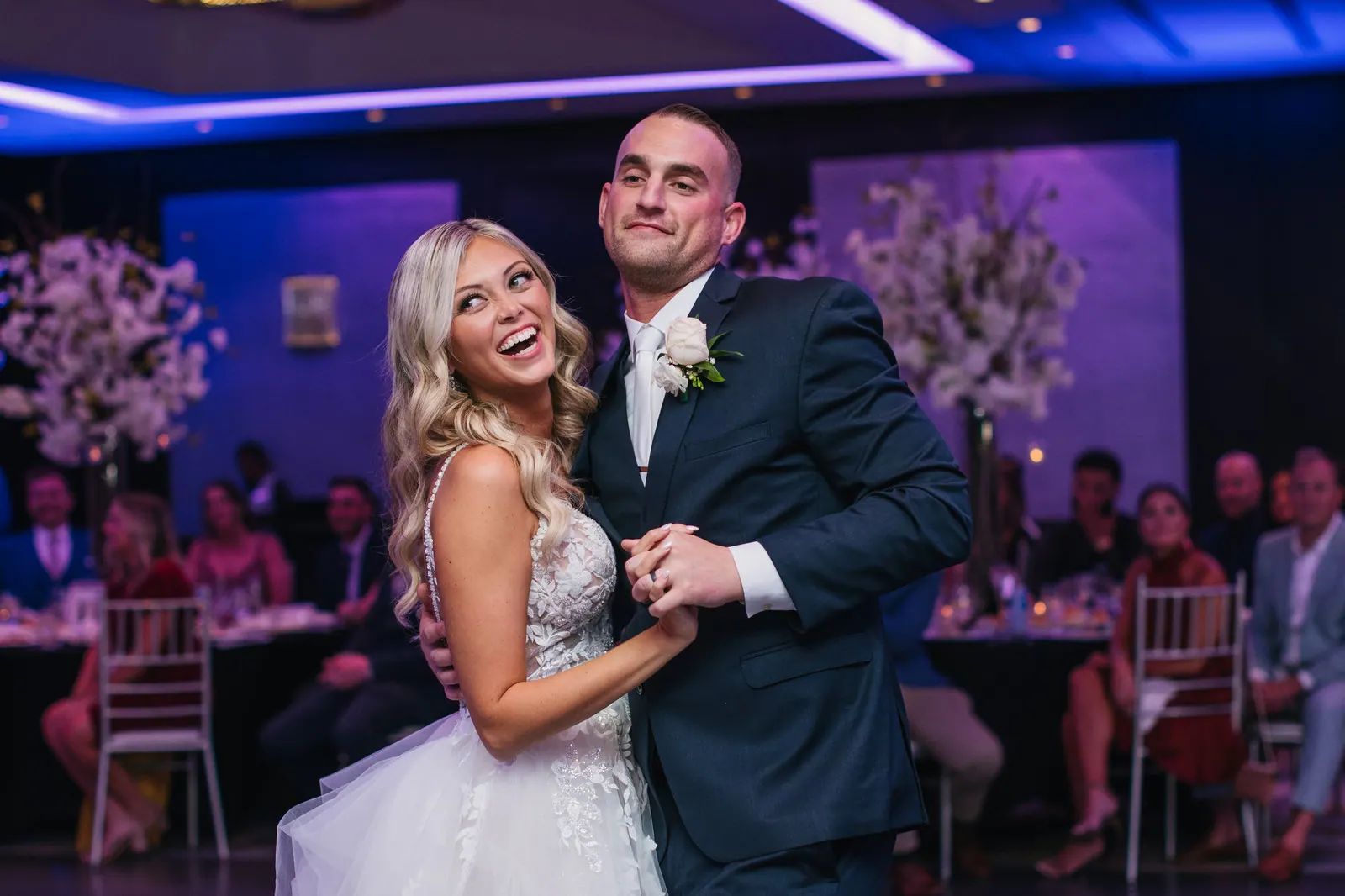
Do You Need Dance Lessons, and How Many?
Lessons are optional, not mandatory, but they help most for couples who feel physically unsure of where to put their hands and feet. The right number depends on how polished you want the result to look.
| Goal | Possible approach | Best for |
|---|---|---|
| Look natural, not panicked | A few focused lessons | Couples who just want comfort and basic steps |
| Simple, polished routine | Several lessons plus home practice | Couples who want a bit of structure and a clean finish |
| Full choreography with turns or dips | A longer lesson plan | Couples comfortable practicing between sessions |
The right lesson plan depends on the song, the complexity of the routine, your starting comfort level and how often you can practice between sessions. If your budget or calendar is tight, a few focused sessions with a local instructor may be enough to practice a sway, a turn and a clean ending.
How Far in Advance Should You Start Practicing?
Give yourselves more runway than you think you need, because steps are easiest to retain when you are not cramming.
- A few months out: Book lessons if you want them, and pick your final song edit so you are practicing to the actual length that will play at the reception.
- Six to eight weeks out: Lock your routine. Stop adding new moves and instead repeat what you already know until it feels automatic.
- Two to three weeks out: Practice in your wedding shoes and test your range of motion during a fitting or in similar clothing, since a train, heel height or fitted sleeves can change how a turn or dip feels.
- Final week: Keep practice light. A short run-through once or twice, not a late cram session, is what keeps the dance feeling natural instead of overthought.
Baila’s review of dance schools in the Netherlands and Flanders found that suggested start times varied, with more lead time recommended for beginners and complex choreography. A short runway of a few weeks still works fine if you keep the routine simple.
Should You Hire a Choreographer or Keep It Simple?
This comes down to how much you want the dance to be a moment versus a show. Both choices are reasonable, and neither is wrong.
- Simple and self-taught: A sway, a turn, and a soft dip at the end, practiced at home in the living room between now and the wedding. No cost, low pressure, and genuinely looks fine on video.
- A few lessons with an instructor: Gets you comfortable with hand placement, leading and following, and one or two transitions, without committing to full choreography.
- Full custom choreography: Best if you both enjoy the process and have time to rehearse weekly. It creates a more performance-focused moment but requires more lessons and consistent practice.
Whatever you choose, tell your DJ or bandleader the plan. Share the plan with your DJ and MC entertainment team so they can prepare the song edit, cues and transition into the next part of the reception.
What Should You Wear and Which Shoes Work Best?
Clothing and footwear change how a dance feels more than people expect. A gown with a long train restricts turns, a fitted jacket can limit arm movement, and new shoes with slick soles can be genuinely risky on a dance floor.
Practice at least once in your actual wedding shoes, or a very close match in heel height and sole texture. If your dress has a train, decide in advance whether you will bustle it before the dance or plan steps that do not require a turn with the train down. For anyone wearing new dress shoes, test them on a similar floor and ask a shoe professional about appropriate non-slip sole pads if more traction is needed.
If your venue has a smooth floor, a rented dance floor, or an outdoor surface like grass or sand, mention it to your planner early. Floor type affects grip, balance, and how confident a dip or turn will feel on the actual day.
How Do You Keep the Moment Relaxed on the Wedding Day?
Nerves spike on the actual day even for couples who rehearsed well, so plan for that instead of hoping it will not happen.
- Walk the room beforehand. If your venue allows a quick walkthrough of the reception space, even a short one, dancing on the real floor once removes a layer of unfamiliarity.
- Keep your posture upright. Try to look at each other rather than staring continuously at your feet; this usually appears more natural and helps you avoid hunching over.
- Agree on a recovery plan. If a step goes sideways, agree in advance that you will just sway and laugh it off rather than stop and restart. Guests remember warmth, not perfection.
- Loop in your photo and video team. Let your photographer and videographer know your general choreography, especially any dip or turn, so they can position for the best angle. See our notes on getting your best wedding photos for more on this coordination.
FNA Events serves Toms River, Freehold, Brick and the wider New Jersey, New York and Philadelphia area, and couples can discuss first-dance timing with its DJ and MC team before the reception.
What If You Want to Skip a Traditional First Dance Entirely?
A first dance is a tradition, not a requirement, and some couples choose to keep it brief on purpose or pair it with an added visual element instead of more choreography.
One popular option is a simple slow dance set against an atmospheric effect like low-lying fog, sometimes called dancing on the clouds, which can make even a basic sway look dramatic in photos without adding any extra steps to learn. If you are considering this, our dancing on the clouds planning guide covers timing and venue considerations.
Other couples shorten the first dance to under a minute and transition quickly into a parent dance or open dancing. Whatever you decide, loop your planner and your entertainment team in early so the reception timeline flows the way you want.
Frequently Asked Questions
How long should a first dance be if we are not confident dancers?
Two to three minutes is usually the sweet spot, even if your song runs longer. Ask your DJ or band to trim the track to that window. A shorter, well-rehearsed dance looks more confident on camera than a longer one where you run out of steps or energy partway through.
Can we just sway instead of learning real steps?
Yes. A basic sway with a weight shift and an occasional slow turn is a completely acceptable first dance style, and it often looks more natural on beginners than ambitious choreography. Many couples combine swaying with one simple turn and a soft finishing pose.
What if we mess up a step during the actual dance?
Agree beforehand that you will just return to swaying and keep eye contact rather than stopping to restart. Guests rarely notice a missed step, but they do notice two people freezing or visibly panicking, so a calm recovery plan matters more than flawless execution.
Should we include our parents or wedding party in the choreography?
That is optional and depends on your reception timeline. Some couples keep the first dance just between themselves and transition into separate parent dances afterward, while others blend in a brief group moment. Decide early so your DJ or bandleader can plan the song transitions.
What dance floor surfaces are hardest for beginners?
Smooth tile, polished hardwood, and outdoor surfaces like grass or sand each change grip and balance differently. Practice on a similar surface if possible, or at minimum test your shoes on a comparable floor before the wedding so a turn or dip does not feel unfamiliar on the day.
Sources
Ready to Check Your Date
If you are planning a wedding or celebration in New Jersey, New York, or the Philadelphia area, the FNA Events team can walk you through DJ and MC entertainment, photography, videography, live music, enhancements, and photo booths, all run by one coordinated crew. Call (844) 373-7411 or visit our contact page to share your date and venue and get pricing for your celebration.
Written by the team at Fresh New Angle Events, Toms River, New Jersey wedding DJs, photographers, videographers, and event professionals serving couples across New Jersey, New York, and the Philadelphia area.