Ceremony Audio Solutions for Clear Wedding Sound
Quick answer: A reliable ceremony audio plan often uses a wireless lapel or headset mic for the officiant plus a handheld mic for readers, all routed through a properly tested mixer and PA; the reception may use the same provider but a separate audio setup.
Key takeaways
- A wireless lapel mic on the officiant plus a handheld for readers covers most ceremonies without extra gear.
- Outdoor ceremonies need more speaker coverage than indoor ones because sound dissipates quickly without walls.
- Coordinating ceremony and reception audio with your DJ helps determine whether one system can be moved safely or separate setups are needed.
- Confirm with your venue whether New Jersey noise regulations and local ordinances affect outdoor amplified sound, especially at shore and park locations.
- A backup microphone and speaker on-site is a basic safeguard every couple should ask about before booking.
What Counts as Ceremony Audio, and Why Does It Matter?
Ceremony audio means every microphone, speaker, and cable needed so guests in the back row hear the vows, readings, and pronouncement as clearly as the people in the front. It is a separate concern from reception music, even though the same team often handles both. If ceremony sound is muffled or inaudible, guests may miss the vows, readings, and pronouncement.
Getting this right matters more outdoors than indoors. Indoor spaces contain and reflect sound, although their acoustics can vary widely. A beach, garden, or vineyard ceremony has none of that, so sound spreads and fades fast, especially with wind or waves nearby. For couples marrying along the Jersey Shore or in open outdoor venues anywhere in New Jersey, New York, or the Philadelphia area, planning ceremony audio early is worth the extra attention.
What Microphone Types Work Best for a Wedding Ceremony?
Many straightforward ceremonies can be covered with two microphones, but the right number depends on the speakers, musicians, venue, and production plan. Knowing the difference helps you ask the right questions when you book a DJ, band, or AV company.
Lapel (Lavalier) Microphones
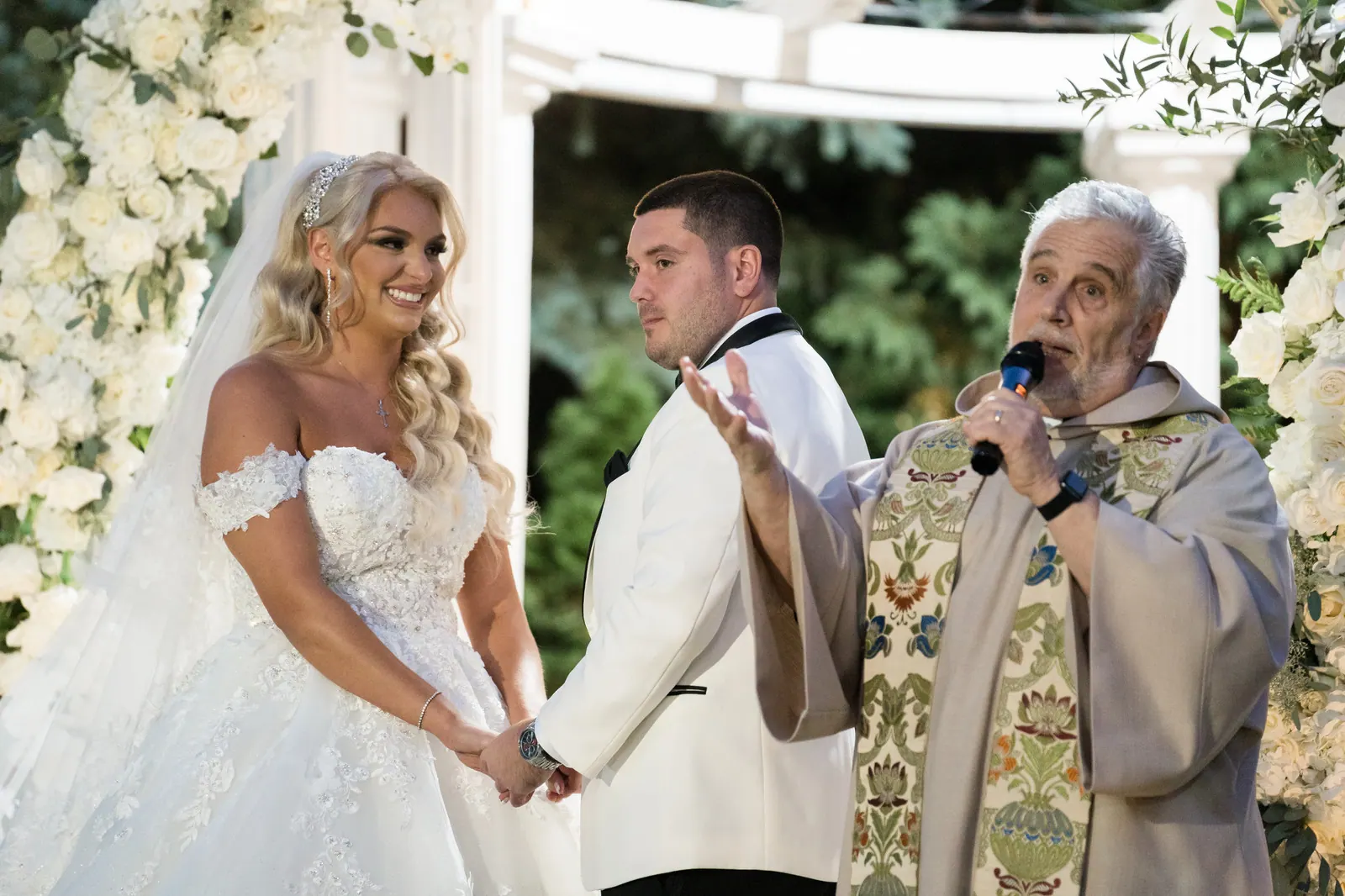
A lapel mic, often called a lav mic, clips to the officiant’s lapel or collar and stays hands-free for the entire ceremony. This is the standard choice for officiants because it picks up a steady, natural voice level without anyone needing to hold anything or stand still at a podium. Wireless lapel mics use a small body-pack transmitter, usually clipped to a belt or waistband, paired with a receiver connected to the sound system.
Handheld Microphones
A wireless handheld mic works well for readers, parents, or anyone giving a short reading or blessing, since it can be passed between people. It requires more attention to mic technique (holding it close enough to the mouth) but is simple to swap between speakers during a multi-reader ceremony.
Headset Microphones
Less common at weddings, headset mics are worth considering for officiants who move around a lot or for outdoor ceremonies with wind, since the mic capsule sits closer to the mouth than a lapel clip.
For many ceremonies, one wireless lapel or headset mic for the officiant and one handheld mic for readers is a practical starting point. A live wedding musician performing ceremony music, such as the live ceremony musicians who play alongside your DJ, typically needs separate instrument mics or direct input, which your sound provider should plan for ahead of time.
How Does Ceremony Audio Feed Into the DJ or Reception System?
One of the most overlooked planning details is how ceremony audio connects to the system that will run your reception later in the day. When the same company handles both, it may use a dedicated ceremony rig or move selected equipment after the recessional, depending on the timeline and locations.
A typical workflow may look like this:
- Set up ceremony speakers and microphone receivers in the ceremony space, tested before guests arrive.
- Run the ceremony (processional, vows, readings, recessional) through that system.
- After the recessional, either secure the dedicated ceremony system or move approved equipment only if the timeline allows.
- Use the reception system for welcome announcements, speeches, dinner music, and dancing.
If your ceremony and reception are at separate venues entirely, you likely need two independent audio setups rather than one that moves. This is worth clarifying with your DJ and MC entertainment team early, since it affects staffing and equipment needs for the day.
Ceremony Audio: Rent It Separately or Bundle It With Your DJ?
Couples often assume ceremony sound is automatically included with a DJ booking. That is not always true, and it is worth confirming in writing before your wedding day.
| Scenario | What You Likely Need | Why |
|---|---|---|
| DJ covers ceremony and reception, same location | May be included or offered as an add-on | Confirm whether a separate ceremony PA, wireless microphones, setup, and monitoring are included |
| Ceremony at a separate site from reception | A standalone ceremony sound rental or a second DJ setup | Equipment cannot be in two places at once; moving gear mid-day takes time and labor |
| Live band or musicians only, no DJ | A rented PA system with mixer and mic inputs | Bands need amplification support that a DJ setup would otherwise provide |
| Playlist only, no DJ or band | A full stand-alone sound rental | Nobody is bringing speakers or mics unless you rent them |
Rental costs vary by the number of spaces, equipment, staffing, delivery, and setup requirements. For current options, see professional sound system rentals for events or request details through the FNA Events packages page.
What Should You Check at Outdoor and Shore Venues?
Outdoor ceremonies, including beach, boardwalk, and open-lawn settings common along the Jersey Shore, need more speaker coverage than an indoor room of the same guest count. Wind, waves, and open air scatter sound instead of containing it, so a single small speaker that works fine indoors often falls short outside.
A few practical questions to ask before your ceremony:
- How many speakers will be used, and where will they be positioned relative to guest seating?
- Is there a backup microphone and battery on-site in case of a dead wireless unit?
- Does the venue or municipality have any restrictions on amplified sound hours or volume?
New Jersey’s Noise Control Act is codified at N.J.S.A. 13:1G, while N.J.A.C. 7:29 contains statewide noise rules; municipalities may adopt NJDEP-approved local ordinances with certain stricter provisions, such as curfews. Beach towns and public parks may impose permit conditions, amplified-sound limits, or local curfews, so confirm the applicable rules with the venue and local permit office. For couples planning a shore ceremony, our Beach Wedding Planning Checklist for NJ and the Venue AV Checklist for DJs and Photographers both cover related logistics in more depth.
How Do You Avoid Dead Air or Mic Failures During Vows?
Technical failures during a ceremony are rare but memorable for the wrong reasons when they happen. A few standard precautions reduce the risk:
- Backup equipment on-site. A spare microphone, battery pack, and speaker should be within reach, not an hour away in a van.
- A sound check before guests arrive. Testing levels in the actual ceremony space, with the actual microphone the officiant will wear, catches problems before they become public.
- Clear handoffs between readers. If multiple people are speaking, a simple plan for who holds the handheld mic and when prevents fumbling mid-ceremony.
- A person watching levels during the ceremony. Someone should be monitoring volume in real time, not just pressing play and walking away.
FNA Events keeps a backup laptop, microphone, and speaker at every event as a standard precaution, which is the kind of redundancy worth asking any DJ or AV provider whether they also carry.
Do You Need a Separate Sound Technician, or Can Your DJ Handle It?
A DJ or MC may be able to manage ceremony audio when the setup is modest and staffing allows, but larger, multi-zone, live-music, or technically complex ceremonies may need a dedicated audio technician. Where a dedicated on-site technician becomes worth the added cost is for larger productions: multiple microphone zones, a live band requiring a full mixing board, delay speakers for a large tent, or a videographer needing a direct audio feed for recording.
If your ceremony involves live musicians in addition to a DJ, confirm ahead of time how instrument mics and the officiant’s lapel mic will share the same mixer without one overpowering the other. This is a routine part of planning when a live musician performs alongside your DJ, and it is worth raising during your first planning call rather than the week of the wedding.
How Does Ceremony Audio Connect to Your Video Coverage?
Clear ceremony audio does more than help guests hear; it also affects what your videographer captures. A properly leveled output from the ceremony mixer or microphone receiver can give the video team cleaner vow and reading audio than a distant camera microphone, but the videographer should also use an independent backup recording. If you are booking cinematic wedding videography, ask the video and audio teams to coordinate a mixer or receiver output and an independent backup recording.
Frequently Asked Questions
Do I need to rent a sound system if I already hired a DJ?
Not necessarily, but confirm whether your DJ package includes a separate ceremony PA, wireless microphones, setup, and monitoring for the ceremony space. You typically only need a separate rental if your ceremony is at a different location from your reception, or if you are not hiring a DJ at all.
Can a wireless lapel mic pick up wind noise outdoors?
Lapel and headset microphones can both pick up wind; performance depends on capsule design, placement, wind protection, and how close the mic is to the speaker’s mouth. For breezy, exposed outdoor sites like beachfronts, a windscreen on the mic or a headset option can reduce distortion.
How many microphones do most wedding ceremonies actually need?
Many straightforward ceremonies can start with two: one wireless lapel or headset mic for the officiant and one wireless handheld for readers or family members giving a blessing. Larger ceremonies with live musicians or multiple readers may need one or two additional inputs.
Who is responsible for ceremony sound if my ceremony and reception are at different venues?
Whoever is providing your reception sound equipment cannot be in two places simultaneously, so a separate ceremony sound rental or a second staffed setup is usually required. Confirm this directly with your DJ, band, or AV company during the booking process rather than assuming it is covered.
Are there noise restrictions for outdoor wedding ceremonies in New Jersey?
Yes. New Jersey’s Noise Control Act is codified at N.J.S.A. 13:1G, N.J.A.C. 7:29 contains statewide noise rules, and municipalities may adopt NJDEP-approved local ordinances with certain stricter provisions. Shore towns and public parks often have specific rules, so check with your venue or local permitting office ahead of time.
Sources
- NJDEP Compliance and Enforcement – Noise Control
- New Jersey State Noise Control Regulation N.J.A.C. 7:29
Ready to Check Your Date
If you are planning a wedding or celebration in New Jersey, New York, or the Philadelphia area, the FNA Events team can walk you through DJ and MC entertainment, photography, videography, live music, enhancements, and photo booths, all run by one coordinated crew. Call (844) 373-7411 or visit our contact page to share your date and venue and get pricing for your celebration.
Written by the team at Fresh New Angle Events, Toms River, New Jersey wedding DJs, photographers, videographers, and event professionals serving couples across New Jersey, New York, and the Philadelphia area.