Ceremony and Cocktail Hour Music Planning Guide
Quick answer: Ceremony and cocktail hour music planning means choosing a prelude, processional, recessional, and cocktail set that fit your venue’s sound needs, then deciding between a DJ, live musicians, or a blended setup. Start with the ceremony’s emotional cues, confirm microphone and speaker needs, and keep the cocktail hour musically distinct from the processional.
Key takeaways
- Plan ceremony music around the prelude, entrances and processional, and recessional, giving each segment its own purpose and pacing.
- Outdoor and larger indoor ceremonies often benefit from amplification, such as a wireless lapel or headset mic for the officiant and a handheld mic for readings.
- WeddingWire’s cost data puts average U.S. wedding ceremony musician costs around 500 dollars, though prices shift with musician count, travel distance, and cocktail hour add-ons.
- Keep cocktail hour music distinct from the ceremony playlist so the room doesn’t feel like a repeat of the aisle walk.
- A combined DJ and live musician setup lets couples get both a curated processional moment and a dance-ready reception from one coordinated team.
What Does Ceremony Music Planning Actually Involve?
Ceremony music planning usually covers three core segments, each with its own job to do. The prelude plays while guests are seated and sets the tone before anything formal happens. The processional accompanies the wedding party and the couple walking in, and it often changes song for different family members or the bride and groom’s entrance. The recessional is the celebratory exit music once you’re officially married.
Each of these segments needs its own song choice, timing, and energy level. A prelude that’s too upbeat can feel out of place while guests are still finding seats, while a recessional that’s too quiet undercuts the moment you’ve been building toward. We generally recommend treating ceremony music as its own separate plan from your reception playlist, since the repertoire, pacing, and purpose are different.
For song-by-song ideas, our guide to picking your wedding songs walks through how to match music to each part of the day.
How Should You Structure the Prelude, Processional, and Recessional?
A simple way to approach this is to plan backward from the moment you walk down the aisle. Here is a practical order many New Jersey and Philadelphia-area couples follow.
- Prelude: about 20-30 minutes of background music while guests arrive and are seated, usually softer instrumental or acoustic songs.
- Family and wedding party processional: one or two songs for parents, grandparents, and the wedding party to walk to.
- Bride or couple’s entrance: a distinct song, often more emotional or dramatic than the rest of the processional.
- Recessional: one upbeat, celebratory song as you exit as a married couple.
If your ceremony includes readings, unity rituals, or a candle lighting moment, build in a short instrumental or quiet moment there as well so the pacing doesn’t feel rushed. Couples planning a religious ceremony should also check with their officiant or house of worship, since some venues restrict secular songs, which we cover separately in our guide to church wedding ceremony music.
Cocktail Hour Music: What Works and What to Avoid
Cocktail hour is a bridge, not a continuation of the ceremony. Guests are mingling, drinks and appetizers are circulating, and the room usually hasn’t fully settled into reception mode yet. Brides.com notes that cocktail hour should set its own tone, whether that’s a relaxed singer-songwriter vibe, a jazzy speakeasy feel, or something more upbeat, and that this tone should be decided deliberately rather than left to chance.
One common mistake is simply looping the ceremony playlist into cocktail hour. Keeping the two sets distinct helps the day feel like it’s building rather than repeating itself. If you used a string quartet or acoustic guitar for the ceremony, you can carry those musicians into cocktail hour but add a bit more energy, such as layering in light percussion or a saxophone.
Transitions matter too. As guests move from cocktail hour into the reception, a short transition cue helps signal the shift without jolting anyone out of conversation. This is one of the places where having your live wedding musicians and DJ working from the same timeline pays off, since the handoff between live music and the reception DJ set can happen smoothly instead of with an awkward pause.

DJ, Live Musicians, or Both? Comparing Your Options
There’s no single right answer here. It depends on your venue, budget, and how much you value a live performance element versus a fully curated recorded playlist.
| Option | Best For | Tradeoffs |
|---|---|---|
| DJ-only ceremony and cocktail music | Couples who want a wide song catalog, seamless transitions, and one vendor handling everything | No live instrumental texture; relies entirely on recorded tracks |
| Live musicians only (strings, sax, piano) | Couples who want an acoustic, in-person feel for the aisle walk and cocktail hour | Set length, repertoire, amplification needs, and breaks vary by performer and contract |
| Live musicians plus DJ | Couples who want a live ceremony moment and a full reception dance floor without hiring two separate companies | Slightly more coordination up front, though a combined team handles this for you |
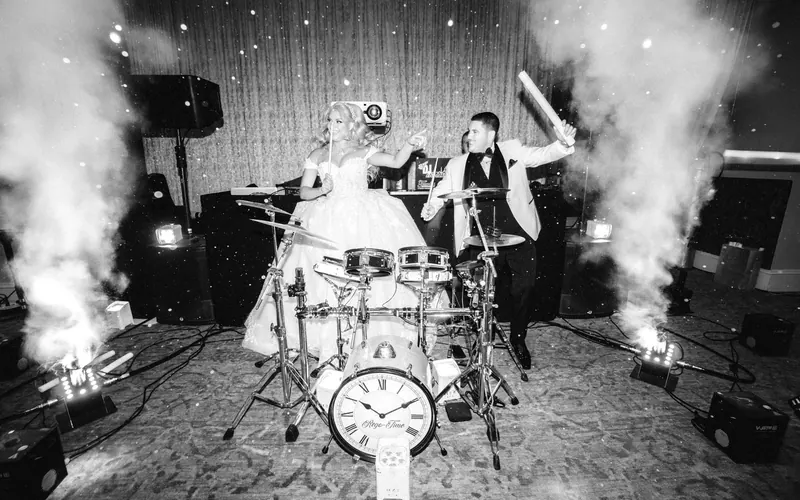
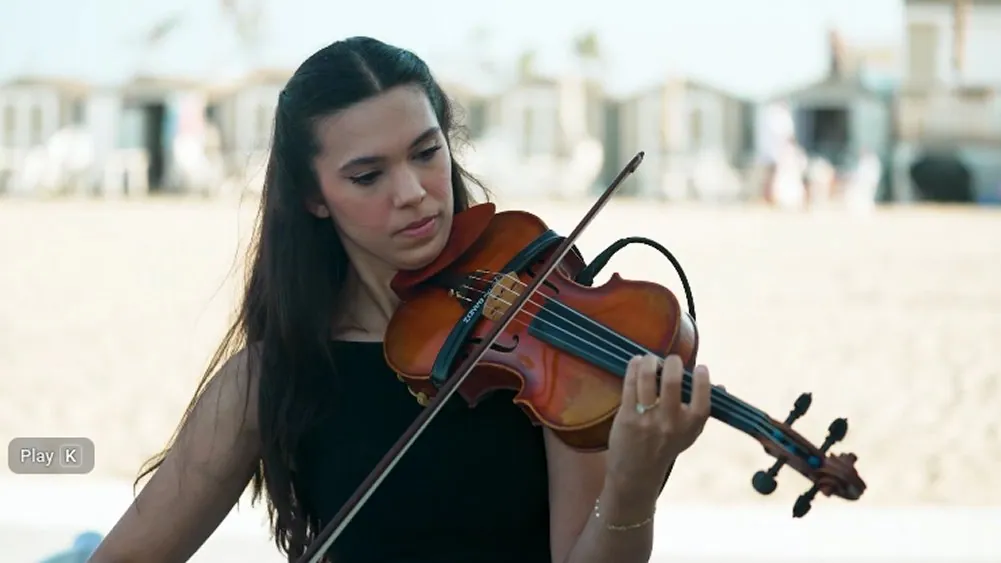
FNA Events offers live music options including saxophone, percussion, electric violin, and ceremony or cocktail strings. Ceremony or cocktail musician coverage is available for up to one hour, while other live-music options may have different coverage periods. That setup lets you get a live aisle moment and a DJ-driven reception from one coordinated team instead of juggling two vendors’ timelines. Learn more on our live wedding musicians page.
What Sound Setup Do Ceremony Musicians and DJs Actually Need?
Amplification needs depend heavily on your venue and guest count. A small ceremony in a quiet indoor space may need only modest reinforcement, while a beach or garden ceremony may require a PA system to overcome wind and ambient noise.
- Outdoor ceremonies: wind and ambient noise from waves, traffic, or nearby events often make amplification advisable for the officiant and readers.
- Large indoor venues: high ceilings, reflective surfaces, and open floor plans can make speech harder to understand, so sound reinforcement may be helpful.
- Intimate ceremonies: a quiet indoor space may suit unamplified acoustic instruments, though a small PA can still help guests hear readers and the officiant.
WeddingWire notes that outdoor ceremonies in particular may require musicians to bring amplification, usually a PA system with microphones and speakers, and that this can be an added cost beyond the base musician fee. Confirm outlet access and sound restrictions with the venue and municipality. New Jersey has statewide standards for certain noise sources, while municipalities may also enforce applicable local ordinances and permit conditions.
Microphones: What Your Officiant and Readers Actually Need
Microphone choice matters as much as speaker placement, especially outdoors. Here’s what most ceremonies need.
- Lapel (lavalier) microphone on the officiant: hands-free and consistent, this is the standard choice so the officiant doesn’t have to hold anything while guiding the ceremony.
- Additional mic for readings and vows: a handheld mic on a stand works well for readers, while the couple’s vows may need a separate discreet mic or careful placement of the officiant’s mic.
- Backup equipment: a dead battery or a dropped mic shouldn’t derail a ceremony, so ask whatever vendor is handling your audio what backup gear they bring.
FNA Events’ DJ and MC teams bring backup laptops, microphones, and speakers to every event, which matters most during the ceremony when there’s no second chance to redo a moment like vows or an officiant’s pronouncement. If you want a deeper look at ceremony microphone types and placement, our sister guide on ceremony audio solutions covers wireless and lapel mic setups in more detail.
Building Your Ceremony and Cocktail Playlists
Start with structure before you start picking songs. Decide how many processional songs you need (one for the full wedding party, a separate one for the couple, is common), then build your cocktail hour playlist around a consistent mood rather than a random mix of favorites.
A few practical tips:
- Time your processional song to your actual walking pace. A slow song with a long walk can feel endless; test the timing during your rehearsal if possible.
- Keep cocktail hour instrumental-leaning or lower-energy than your reception set, since guests are talking and eating, not dancing yet.
- Avoid repeating a song from the ceremony during cocktail hour, even as a different arrangement, so the day keeps moving forward emotionally.
- Build in buffer time. Ceremonies rarely run exactly on schedule, and a few extra instrumental minutes for the prelude or cocktail hour gives your photographer and planner breathing room.
For full song-by-song processional and recessional ideas, see our dedicated wedding processional and recessional songs guide. And if you want to map ceremony music into your full day-of schedule, our NJ wedding reception timeline article shows how ceremony, cocktail hour, and reception music fit together.
When to Book Your Ceremony Musicians or DJ
WeddingWire recommends researching and booking ceremony musicians about six months before the wedding date, which gives enough lead time to confirm availability, discuss repertoire, and sort out logistics like travel fees for venues farther from a musician’s home base.
Booking order matters too. If you’re hiring a DJ for the full day and adding live musicians for ceremony and cocktail hour, it’s usually easier to book the DJ first and layer live musicians in afterward, since a combined team can coordinate the handoff between live and recorded music without you managing two separate schedules. Couples across Toms River, Brick, Freehold, Belmar, and the broader Jersey Shore, as well as North Jersey, South Jersey, New York, and the Philadelphia area, can see FNA’s full coverage on the service areas page.
If you’re still deciding what’s included in a ceremony and cocktail music package, the FNA Events packages page outlines what’s bundled with DJ, live musician, and photo/video coverage, and our premium wedding DJ packages guide breaks down tiered options in more detail.
Frequently Asked Questions
Do I need a separate sound system for an outdoor ceremony versus cocktail hour?
Often yes, especially if the two take place in different locations. Outdoor ceremonies need amplification for the officiant and readers to carry over wind and ambient noise, while cocktail hour typically needs lower-volume background coverage. If the ceremony and cocktail hour are in different locations, ask whether separate sound systems are needed and how the equipment transition will be handled.
Can the same musicians play both ceremony and cocktail hour?
Yes, and it’s a common setup. Many couples use the same string quartet, saxophonist, or pianist for both segments, sometimes adding more energetic songs or additional instruments like light percussion during cocktail hour to shift the mood from ceremonial to social.
How many songs do I need for the processional?
Most ceremonies use one song for the wedding party and immediate family, then a second, more emotional song for the couple’s entrance. Some couples use a third song if there’s a longer walk or additional family members being seated separately.
What happens if our ceremony runs long and affects cocktail hour timing?
A few extra minutes of prelude or recessional music built into the plan usually absorbs small delays without affecting the rest of the day. If the ceremony runs long, the planner, venue, caterer, and music team should coordinate any cocktail-hour or reception timeline changes.
Is a live musician or a DJ better for a small, intimate ceremony?
Both work well for small ceremonies, and the choice often comes down to preference. Live musicians add an acoustic, in-person feel that some couples find more intimate, while a DJ offers a broader song catalog and can seamlessly carry music into cocktail hour and the reception without an additional vendor.
Sources
- Wedding Ceremony Music Cost Guide | WeddingWire
- How to Hire Musicians for Every Part of Your Wedding | Brides
- New Jersey State Noise Control Regulation N.J.A.C. 7:29
Ready to Check Your Date
If you are planning a wedding or celebration in New Jersey, New York, or the Philadelphia area, the FNA Events team can walk you through DJ and MC entertainment, photography, videography, live music, enhancements, and photo booths, all run by one coordinated crew. Call (844) 373-7411 or visit our contact page to share your date and venue and get pricing for your celebration.
Written by the team at Fresh New Angle Events, Toms River, New Jersey wedding DJs, photographers, videographers, and event professionals serving couples across New Jersey, New York, and the Philadelphia area.