Expert Tips to Keep Your Wedding Reception Dancing All Night
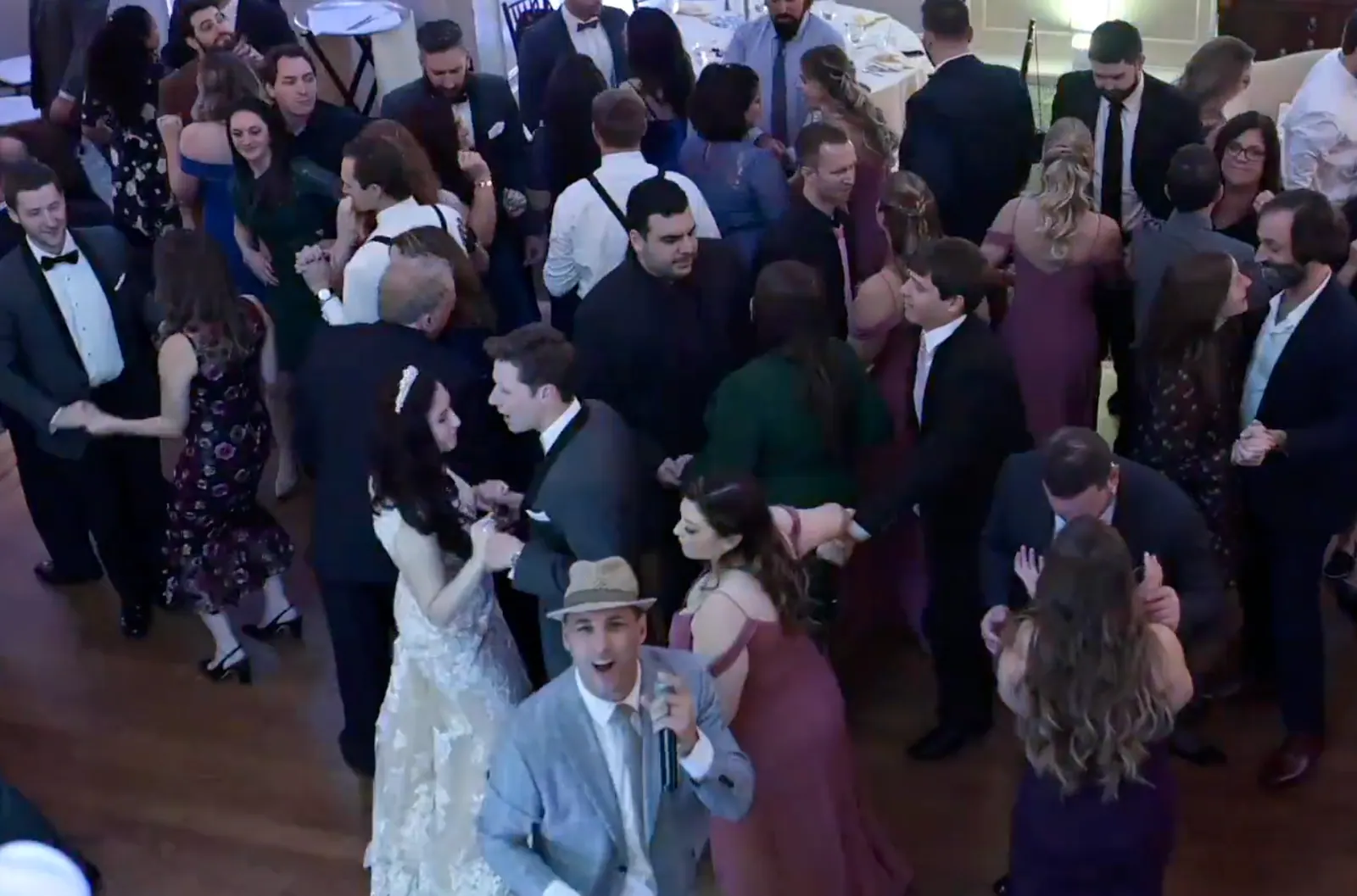
Quick answer: Keep a wedding dance floor packed by pairing a timeline-savvy DJ with intentional lighting, a strong first dance handoff, and short, well-timed breaks. The biggest factors are energy pacing, not stopping the music too often, and getting the wedding party and guests moving early so others feel permission to join in.
Key takeaways
- DJs should build energy gradually rather than front-loading the fastest songs.
- Inviting guests onto the floor at the end of the first dance removes hesitation and gets the party started immediately, according to the Los Angeles Times.
- A focused, well-paced block of open dancing often works better than a long, unstructured set.
- Lighting that shifts from warm uplighting during dinner to more dynamic, colorful movement during open dancing signals to guests that it is time to dance.
- Limiting interruptions once the floor is open (fewer speeches, toasts, or formalities mid-dance set) keeps momentum from stalling out.
Why Do Wedding Dance Floors Empty Out?
Most empty dance floors are not a music problem. They are a pacing problem. A reception timeline that stacks too many formalities back to back, or that opens the floor too late after dinner, trains guests to sit and wait rather than get up and move.
Reception energy usually rises in stages, so open dancing should build rather than begin at maximum intensity. That means the goal is not to blast the loudest song first. It is to build momentum in stages so the room is still climbing when you hit your peak.
Long gaps between dinner, toasts, and dancing are one of the most common culprits. Every time the party pauses for another announcement or activity, some guests sit back down, refill a drink, or head toward the exit. A tight NJ wedding reception timeline helps your DJ protect that momentum instead of fighting to rebuild it twice.
How Should Your DJ Time the Energy Through the Night?
A good DJ reads the room in real time, but a strong structure gives them something to work from. The general arc looks like this:
- Grand entrance: an upbeat, celebratory song as the couple is introduced, setting the tone for the night.
- First dance: the couple’s chosen song, with the DJ inviting the wedding party or all guests onto the floor for the last 30 seconds or an immediate upbeat transition, a move the Los Angeles Times notes removes the hesitation guests feel about being first on the floor.
- Parent dances: emotional, intimate songs confirmed in advance with both the couple and the parents.
- First 30 minutes of open dancing: crowd-pleasers everyone knows, played at medium-high volume to build without overwhelming guests still finishing dessert.
- Peak dancing: the highest-energy stretch, once the floor is already warm.
- Wind-down and last dance: a planned close rather than an abrupt stop.
Sharing your must-play and do-not-play preferences with your DJ well before the wedding, and discussing them during planning, helps them build this arc around your crowd instead of guessing. Our must-play and do-not-play list guide walks through how to put that list together.
Should You Limit Open Dancing Time?
More open dancing is not always better. A focused, well-paced dance block often works better than several hours of unstructured open dancing. Stretch it much longer without shaping it, and the floor tends to thin out and never fully recover as guests tire or feet start to hurt.
It helps to work backward from your venue’s actual end time and your desired exit moment, then build a dance block that ramps up, peaks, and lands gracefully rather than just filling hours. Coordinating this with your DJ and planner also gives late-night snacks or a surprise moment a natural place in the night instead of interrupting the dancing mid-peak.
If you are weighing live musicians alongside a DJ for parts of the night, such as cocktail hour or a special entrance, our live wedding musicians page covers how that pairing typically works alongside a DJ set.

How Does Lighting Affect Guest Engagement?
Lighting does more decorative work than most couples expect. It signals mood shifts to the room before anyone says a word into a microphone. Warm, soft uplighting during dinner tells guests it is time to relax and eat. A shift to more dynamic, colorful, moving light as open dancing begins tells them something different is starting.
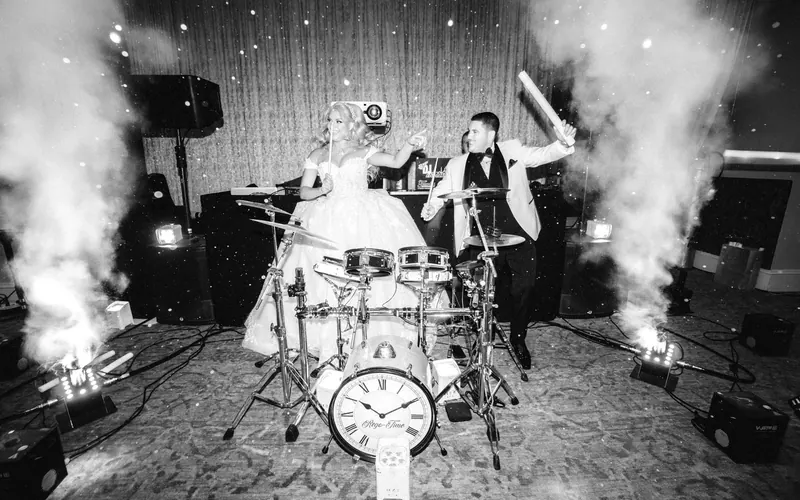
Intelligent dance-floor lighting that moves and changes with the music helps reinforce the energy the DJ is building, and it gives photographers and videographers more to work with during the most photogenic part of the night. Effects like a custom monogram projection during the first dance, or cold spark fountains timed to a big chorus, can also mark key transitions and pull guests back toward the floor when attention starts to drift.
FNA Events includes dance-floor lighting as part of its DJ and MC coverage, with uplighting offered free on premium DJ and host packages. Couples who want to layer in more can look at intelligent dance-floor lighting or cold spark fountains for bigger moments.
How Do You Get Guests Onto the Floor Early?
Guests take their cues from the couple and the wedding party. If you are visible on the floor early, mingling during cocktail hour and dancing without hesitation once the music starts, other guests follow. If you hang back near the head table all night, so will a lot of your guests.
A few practical ways to lead by example and prime the room:
- Ask your bridesmaids and groomsmen to hit the floor immediately after the first dance invitation, since their visible energy gives other guests permission to join.
- Make a point of dancing with your partner, parents, and wedding party during the first few songs rather than stepping off to greet tables right away.
- Have your DJ or MC make a warm, brief invitation rather than a long announcement, since extended talking between songs tends to cool the room down.
- Keep younger and older guests in mind with song choices that span generations in the first 30 minutes, rather than starting with niche or very current tracks.
If you want a well-rounded playlist that spans those generations, our reception song lists and playlists guide is a good starting point.
What Should You Plan With Your DJ Ahead of Time?
The best dance floors are usually the result of planning conversations that happen weeks before the wedding, not decisions made on the fly. Couples should share their reception timeline by their DJ’s requested planning deadline so there is time to prepare transitions and song selections for each phase of the night.
| Planning item | Why it matters | When to finalize |
|---|---|---|
| Must-play and do-not-play lists | Gives the DJ a clear sense of your crowd’s taste and avoids awkward song choices | By your DJ’s requested deadline |
| Reception timeline | Keeps formalities tight so open dancing does not get interrupted repeatedly | 4 to 6 weeks before the wedding |
| First dance transition plan | Determines whether guests are invited onto the floor at the end of the song or after a pause | At your DJ planning meeting |
| Lighting and enhancement choices | Coordinates visual cues with the DJ’s energy build | When booking enhancements |
| Last dance and exit plan | Avoids an abrupt stop to the party at its peak | By your final planning meeting |
Couples can discuss these details with FNA Events’ DJ and MC team before the wedding. You can see how that coverage is structured on our DJ and MC entertainment services page, or review full entertainment and photo/video packages.
What Role Does the Emcee Play in Keeping Energy Up?
A DJ picks the music, but the emcee shapes how the room feels between songs. A confident, well-timed announcement can help draw guests back to the dance floor. A rambling or poorly timed one can empty it just as fast.
Good emcee work means keeping transitions brief, reading whether the room needs a breather or a push, and timing announcements like the bouquet toss or cake cutting so they do not interrupt a dance floor that is still building. It also means knowing when to simply let the music play and stay out of the way.
This is one reason many couples book DJ and MC services as a package rather than separately, so the person on the microphone is working directly with the person controlling the music. Our emcee services for weddings and events page covers how that pairing works in practice.
Real Examples of Receptions That Kept the Energy High
At the Sheraton Eatontown, Shannon and Steve closed the night with the room singing along to “Thunder Road.” At Smithville Inn in Galloway, Kim and Vitaly’s celebration blended Russian and American music for their multicultural guest list.
These examples show that keeping a reception dancing is less about any single trick and more about a DJ and MC who understand the room, a timeline that protects momentum, and song choices that reflect the actual guests in attendance. You can browse more real FNA weddings by venue for additional ideas, including the Sheraton Eatontown wedding and Smithville Inn wedding.
Frequently Asked Questions
How many hours of open dancing should a wedding have?
Most planners suggest about 1 hour 45 minutes to 2 hours of focused, high-energy open dancing rather than stretching it over several hours. A shorter, well-shaped dance block that ramps up and peaks tends to keep guests engaged better than a long, unstructured one.
Should the DJ take requests during peak dancing?
Request policies vary, so agree on an approach with your DJ before the reception. For more detail, see our <a href=”https://fnaevents.com/handle-guest-song-requests/”>guide to handling guest song requests without killing the vibe</a>.
What time should the dance floor open at a wedding reception?
Open dancing typically starts right after dinner and the parent dances, since long gaps between dinner and dancing give guests time to settle in and lose momentum. Opening the floor too late, after guests are already tired, makes it harder to get the energy back.
Does lighting really make a difference for guest engagement?
Yes. Lighting signals mood changes before the music does, and a shift from warm dinner lighting to more dynamic dance-floor lighting helps cue guests that it is time to get up. It also improves photos and video from the most active part of the night.
Can a live musician help keep the dance floor energized alongside a DJ?
Yes, pairing a DJ with a live musician, such as a saxophone or drummer sitting in during key songs, can add a memorable live element without losing the DJ’s control over pacing and transitions throughout the night.
Sources
Ready to Check Your Date
If you are planning a wedding or celebration in New Jersey, New York, or the Philadelphia area, the FNA Events team can walk you through DJ and MC entertainment, photography, videography, live music, enhancements, and photo booths, all run by one coordinated crew. Call (844) 373-7411 or visit our contact page to share your date and venue and get pricing for your celebration.
Written by the team at Fresh New Angle Events, Toms River, New Jersey wedding DJs, photographers, videographers, and event professionals serving couples across New Jersey, New York, and the Philadelphia area.