Day-Of Logistics for Weddings: Setup, Load-In, and Breakdown Explained
Quick answer: Day-of logistics means scheduling vendor arrival (load-in), setup, and breakdown so DJs, photographers, and videographers are ready before guests arrive and cleared out without extra fees. Setup time varies with the equipment, venue access, and production plan, so confirm each crew’s arrival window, parking, and loading-dock access with the venue.
Key takeaways
- DJ and sound-and-lighting setups need a venue-approved load-in window based on the amount of equipment, travel path, power access, and required testing.
- Photographers and videographers typically need 30-60 minutes to set up ceremony or reception gear, longer if they are rigging lighting or a second camera position.
- Confirm parking, loading dock location, and elevator access with your venue weeks in advance, not the week of the wedding.
- Breakdown may be faster than setup, but the required time varies by production; confirm the venue’s load-out deadline and any overtime charges in writing.
- A written load-in schedule shared with every vendor prevents the gridlock that happens when DJs, photographers, florists, and caterers all show up at once.
What Does “Day-Of Logistics” Actually Mean?
Day-of logistics is the behind-the-scenes schedule that gets every vendor’s equipment into the venue, set up, and operating before a single guest walks in, then reverses the process at the end of the night. For a wedding, this usually covers DJ and sound equipment, photography and videography gear, lighting and enhancements, florals, and catering setup, all competing for the same loading dock, service elevator, or parking lot at roughly the same time.
Couples rarely think about this until a vendor calls asking what time they can “get in.” Venue managers think about it constantly, because a crowded loading dock or a locked door at the wrong hour can push back an entire timeline. Getting this right is less about any single vendor and more about how well all of them are sequenced together, which is why we always build a written load-in plan alongside the overall reception timeline.
How Long Does DJ and Sound Setup Actually Take?
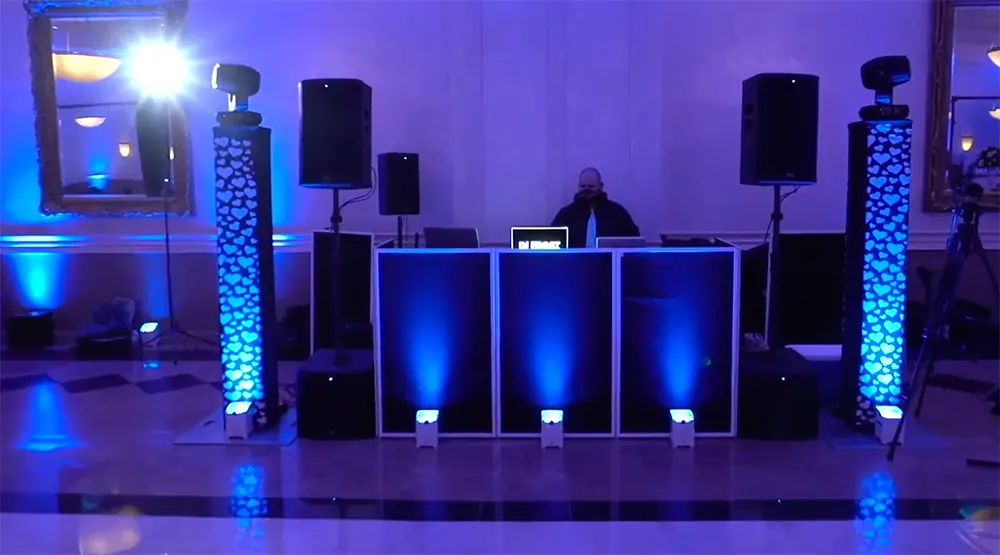
A basic DJ booth with speakers and a microphone can go up in well under an hour. Add dance-floor lighting, uplighting around the room, a video wall, or special effects like cold sparks, and that window stretches considerably. As a general industry benchmark, AV load-in guidance from event logistics specialists at corporateevents.at notes that a basic rig (speakers, projector, wireless mics) needs 2-3 hours minimum, with each major add-on, such as a stage or theatrical lighting, adding another 45-90 minutes.
Wedding setups are usually simpler than corporate productions, but the same logic applies: more gear means more time. A DJ and MC team should set its arrival time according to the selected equipment and the venue’s access rules, and every FNA event carries backup equipment, including a spare laptop, microphone, and speakers, so a last-minute hiccup does not become a day-of delay. If your reception includes lighting or effects like uplighting, cold sparks, or dancing on the clouds, tell your venue coordinator ahead of time so the extra setup minutes are built into the schedule rather than squeezed in on the fly.
How Much Time Do Photographers and Videographers Need to Set Up?
Photography and videography setup is usually lighter than DJ or full AV production, but it still needs a defined window. For a ceremony or formal portrait setup, photographers generally need 30 to 60 minutes to check lighting angles, set reflectors or flashes, and walk the space before guests arrive, according to general AV and event logistics guidance from corporateevents.at.
Video crews running multiple cameras need a bit more time to position tripods, run cables, and do a sound check with the DJ or ceremony musician. Our videography coverage uses 3-4 cameras and both 4K and 1080p formats, so our team arrives early enough to get every angle dialed in before the processional. If you are also deciding how long to book your photo team for the day overall, see our guide on how many hours of photography coverage you actually need.
Why Getting-Ready Coverage Changes the Math
When the couple is getting ready in two separate locations, photographers need enough lead time to be in both places, which is one reason a second photographer is often recommended for that scenario. This timing question overlaps with planning a first look, so it’s worth reading alongside our guide to planning a first look if your morning schedule is tight.

Building a Realistic Load-In Schedule
A load-in schedule is simply a written list of arrival times for every vendor, built backward from the ceremony or guest arrival time. Skipping this step is how DJs, florists, and caterers all end up trying to use the same door at the same time.
- Start with the hard deadline: the time guests arrive or the ceremony begins.
- Work backward by vendor: DJ/AV (60-120 minutes), photo/video (30-60 minutes), florals and decor (90-120 minutes for centerpieces, more for installations), catering (2-4 hours depending on plated vs. buffet service).
- Stagger arrival times so vendors are not all fighting for the loading dock or a single elevator at once.
- Add a 15-30 minute buffer before guest arrival in case anything runs long.
- Share the final schedule with the venue coordinator and every vendor well before the event, then reconfirm it after any timeline changes.
This is also exactly the kind of coordination problem that a day-of point person solves well. If you have not assigned one yet, our piece on how to coordinate your DJ, photographer, and videographer walks through who should be managing that communication.
Parking and Loading Dock Logistics Couples Forget
Parking is one of the most overlooked pieces of day-of logistics, and it is almost always a venue-specific question rather than a generic one. Some venues have a dedicated loading dock with carts to help vendors move gear inside; others expect vendors to park on the street and hand-carry everything through a front entrance.
As an example of how specific these rules get, the Wildwoods Convention Center’s published vendor policy directs vendors to use a loading dock at a named cross street and limits what can be hand-carried through the front doors for safety reasons. Every venue has its own version of this rule, and it is rarely volunteered unless you ask.
| Question to Ask Your Venue | Why It Matters |
|---|---|
| Is there a loading dock or service entrance? | Determines how fast equipment moves in versus hand-carrying through a main entrance |
| Is parking free, reserved, or metered for vendors? | Avoids a DJ or photographer circling the block during their setup window |
| Is there an elevator, and does it require a key or code? | Unarranged elevator access can delay load-in at multi-floor venues |
| What time does the prior event clear the space? | A back-to-back booking can shrink your load-in window to under an hour |
| Is there a dedicated vendor contact on-site during setup? | Prevents confusion when multiple vendors arrive at once |
Ask these questions when you book the venue, not the week of the wedding. For a full rundown of what to confirm about power, sound, and setup space specifically, see our venue AV checklist for DJs and photographers.
What Happens If Load-In Runs Short?
A tight load-in window is one of the most common sources of day-of stress, and it usually traces back to the venue contract rather than the vendors. If a venue books a prior event that ends close to your start time, your vendors may only have a fraction of the time they actually need.
As corporateevents.at explains, a venue that releases the space 60 minutes before a 7 p.m. start is not giving an AV team enough time to rig a stage, screens, and a lighting system. The same principle applies to weddings: a DJ bringing a full uplighting package or a video crew setting up multiple camera positions needs more than a rushed 30-minute window. Some venues may offer earlier access, sometimes for an added fee, so ask about the available options before signing the contract.
This is also where experienced vendors matter. An experienced team serving New Jersey, New York, and the Philadelphia area should prioritize essential equipment first, such as sound and microphones ahead of decorative lighting, so the ceremony or reception can still start on time.
Breakdown Timing: What to Expect After the Last Dance
Breakdown is typically faster than setup because there is no need to fine-tune lighting angles or run a sound check; equipment just needs to come down and get loaded out safely. Setup and breakdown allowances vary by venue. One venue document hosted in The Knot’s vendor marketplace pairs four hours of setup with two hours of breakdown, so couples should verify the allowances in their own contract rather than assume the same ratio applies.
Wedding DJ breakdown time depends on the sound, lighting, and enhancement equipment in use, as well as the route back to the loading area. Photography and video teams are often fastest, since cameras and lighting stands pack down quickly once the last formal shots or reception moments are captured. The bigger risk at breakdown time is venue overtime fees, which many venues charge by the hour if vendors are still loading out after the contracted end time. Confirm your venue’s exact cutoff and overtime policy in writing so nobody is surprised by a post-event bill.
A Simple Checklist for Couples and Venue Managers
Use this list when you are building your final timeline with your venue coordinator and vendor team.
- Confirm the exact load-in window (start and must-be-ready times) for every vendor in writing.
- Ask whether there is a loading dock, service elevator, or only a front entrance for hand-carried items.
- Reserve or confirm parking for DJ, photo, and video vehicles, especially at shore venues during peak summer weekends.
- Share one master schedule with all vendors, not separate calls with each one.
- Build in a 15-30 minute buffer before guests arrive in case setup runs long.
- Confirm the venue’s overtime policy and exact breakdown deadline before the big day.
- Designate one point of contact, such as a planner, venue coordinator, or trusted member of the wedding party, to answer vendor questions during setup so the couple is not fielding logistics texts while getting ready.
For couples planning at specific venues, our real wedding venue pages feature real FNA weddings at venues such as The English Manor and Sheraton Eatontown, which can be a useful reference when you are mapping out your own schedule.
Frequently Asked Questions
What time should wedding vendors arrive for setup?
Most DJs arrive 60-120 minutes before guests, photographers and videographers arrive 30-60 minutes before the ceremony or first formal moment, and florists typically need 90-120 minutes for centerpieces. Exact times depend on the venue’s access rules and how much equipment each vendor is bringing.
Who is responsible for coordinating vendor load-in times?
Usually the venue coordinator or a hired day-of planner builds the master load-in schedule, though some couples coordinate it themselves by email. Whoever owns it should confirm arrival windows with every vendor in writing, ideally two or more weeks before the event.
Do photographers need access before the ceremony starts?
Yes, photographers typically want 30-60 minutes before the ceremony to check lighting, set up any additional equipment, and photograph empty ceremony and reception spaces before guests arrive and change the scene.
What happens if a venue only gives a short load-in window?
Vendors prioritize essential equipment first, such as sound and microphones, before decorative extras like uplighting. Couples can also ask the venue about paying for early access, since many venues offer extended load-in windows for an additional hourly fee.
Does breakdown time affect how much a venue charges?
It can. Many venues set a strict end time for the rental and charge overtime fees per hour if vendors are still loading out afterward, so confirming the exact breakdown deadline in your venue contract helps avoid unexpected charges.
Sources
- 2026 Vendor Policies – Wildwoods Convention Center
- Rental Fee and Setup/Breakdown Terms – The Knot Vendor Marketplace
Ready to Check Your Date
If you are planning a wedding or celebration in New Jersey, New York, or the Philadelphia area, the FNA Events team can walk you through DJ and MC entertainment, photography, videography, live music, enhancements, and photo booths, all run by one coordinated crew. Call (844) 373-7411 or visit our contact page to share your date and venue and get pricing for your celebration.
Written by the team at Fresh New Angle Events, Toms River, New Jersey wedding DJs, photographers, videographers, and event professionals serving couples across New Jersey, New York, and the Philadelphia area.