Wedding Processional and Recessional Songs: How to Choose the Right Music for Your Aisle Walk
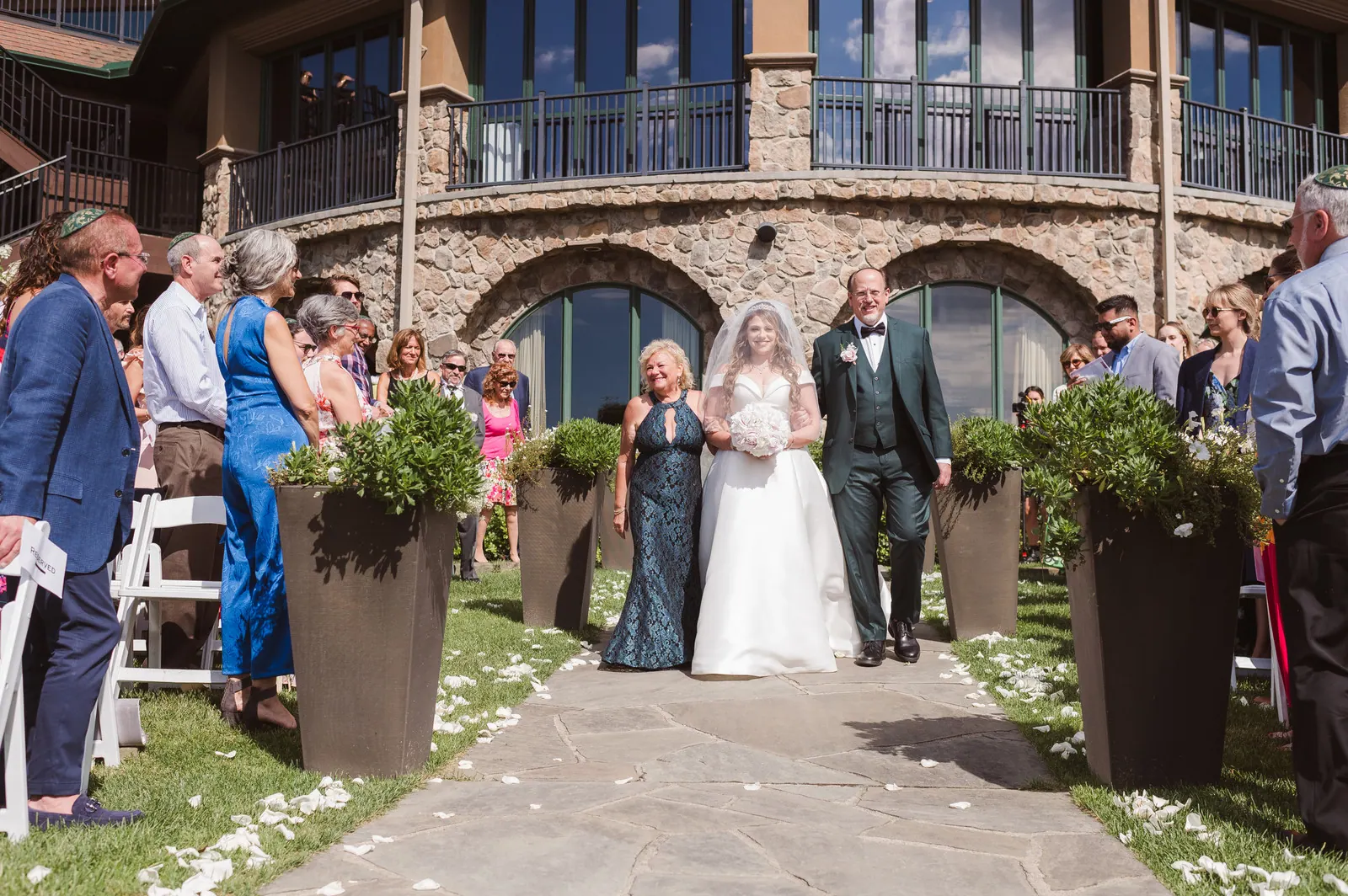
Quick answer: Wedding processional songs play as the wedding party and couple walk down the aisle, while recessional songs play as the newly married couple and wedding party exit; processional music is usually slower and emotional, and recessional music is upbeat and celebratory, with the choice shaped by ceremony style, venue rules, and aisle length.
Key takeaways
- Processional songs play during the walk down the aisle and are typically slower and more emotional, while recessional songs play during the exit and are upbeat and celebratory.
- A quick rehearsal walk is the best way to time your processional song accurately, since aisle length and the number of people walking both affect how long the music needs to run.
- The recessional cue usually needs to cover only the couple’s and wedding party’s exit, so ask your DJ or musicians to start at a strong point and fade the music when the walk is complete.
- Houses of worship and some venues may restrict secular lyrics or require pre-approved selections, so confirm any music rules with your officiant or venue early in planning.
- Couples across NJ, NY, and Philadelphia-area venues use everything from live strings to a DJ-curated playlist for their ceremony music, and the right choice depends on ceremony style, setting, and budget.
What Is the Difference Between Processional and Recessional Music?
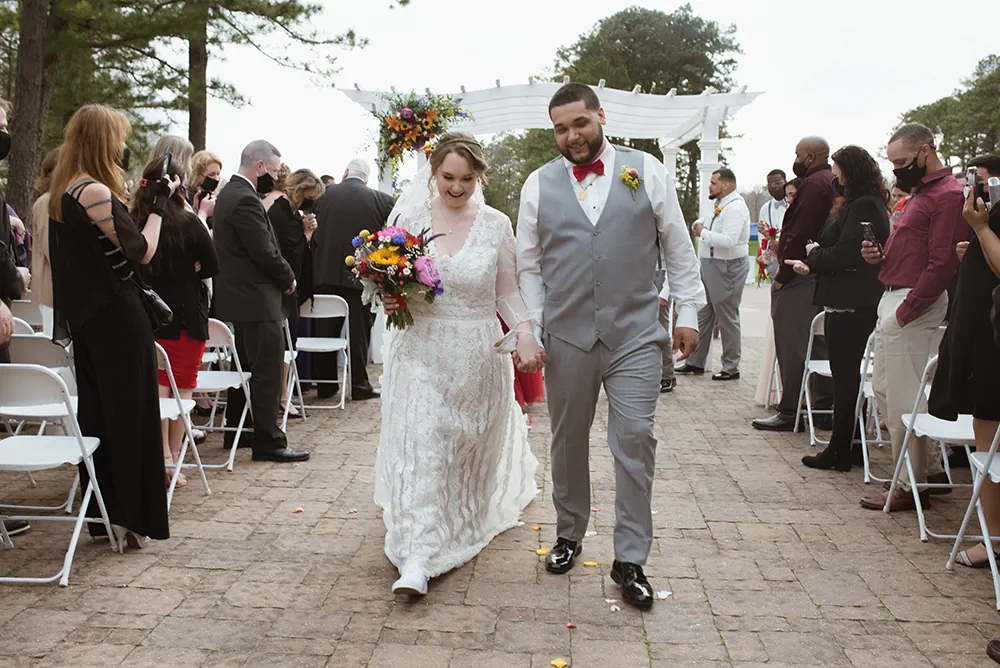
The processional is the music played while the wedding party, and finally the couple, walk down the aisle to begin the ceremony. The recessional is the music played right after the ceremony ends, as the newly married couple and wedding party walk back up the aisle together.
The two serve different emotional purposes. A processional tends to build anticipation and often slows down for the final entrance, while a recessional is meant to release energy after the vows and send everyone into celebration mode. According to WeddingWire’s wedding ceremony music cost guide, a recessional is typically described as “celebratory and very upbeat,” in contrast to the more deliberate pacing of a processional.
Some ceremonies also include a prelude (music during guest seating) and an interlude (music during a unity ritual or reading), but processional and recessional are the two moments most couples focus on first because they bookend the ceremony itself.
How Do You Choose Your Processional Song?
Start with the mood you want to set. Classical and instrumental pieces (Canon in D, Clair de Lune, or orchestral arrangements of modern songs) remain popular because they feel formal without pulling focus from the moment. Others prefer a familiar pop or acoustic song with meaning to their relationship, especially for smaller or non-religious ceremonies.
A few practical questions help narrow the choice:
- Is this a religious ceremony with its own music guidelines, or a more flexible civil or outdoor ceremony?
- Do you want the wedding party to walk in to one song and the couple to enter to a different, more significant piece?
- Will the music be live (strings, a soloist, a small ensemble) or a recorded track played by a DJ or sound system?
Many couples use one song for the wedding party and grandparents, then switch to a second song, or a new section of the same piece, for the final entrance. This creates a clear before-and-after moment that guests notice even if they can’t name why. For couples weighing live music against a playlist, FNA’s live wedding musicians page covers ceremony and cocktail-hour strings along with other live-music options.
How Do You Choose Your Recessional Song?
Recessional songs should feel like a release: upbeat, joyful, and immediate. Because the exit often moves quickly, choose a track that reaches its celebratory hook without a long introduction. A high-energy instrumental, a classic celebratory track, or even a brief burst of a favorite song all work.
Unlike the processional, there is usually only one recessional song, since the whole wedding party and couple exit together in a shorter span of time. If your reception is at the same venue, the recessional can also set the tone for cocktail hour that follows immediately after.
Couples planning their full ceremony and cocktail hour music together may find it easier to work from a single music plan rather than picking songs in isolation. Our Ceremony and Cocktail Music Planning Guide walks through that fuller timeline.
Live Musicians, Vocalists, or a DJ: What Fits Your Ceremony?
There is no single right answer; the best fit depends on your ceremony style, venue acoustics, and budget. The table below compares common options.
| Option | Best For | Trade-Offs |
|---|---|---|
| Solo instrumentalist (harp, violin, guitar) | Intimate or outdoor ceremonies, acoustic settings | Limited volume outdoors; typically costs $300 to $700 per ceremony according to Plan A Wedding |
| String trio or quartet | Formal, traditional ceremonies with a classical feel | Needs more setup space and chairs; runs roughly $800 to $2,000 per Plan A Wedding |
| Vocalist with accompanist | Couples who want a specific song performed live, including lyrics | Song choice may be limited to what the vocalist can prepare in time; often $500 to $1,500 per Plan A Wedding |
| DJ with curated playlist | Any ceremony style, especially when music needs to match recorded tracks exactly | No live performance element, but offers the widest song selection and easiest tempo control |
Many couples combine approaches, hiring a DJ for reception entertainment while adding live musicians for the ceremony itself. FNA Events offers both DJ and MC entertainment and live music options for weddings.
How Do You Time Your Processional and Recessional Correctly?
A short rehearsal can help prevent ceremony-music timing problems on the wedding day. Time the processional during a rehearsal so the music matches the actual aisle walk, and choose a recessional track that reaches an upbeat section immediately.
Follow these steps to time it correctly:
- Walk the actual aisle at the pace each person or pair will use, timing it with a stopwatch.
- Add the walking times for each group (officiant, grandparents, parents, wedding party, flower girl and ring bearer, then the couple) to get a total processional length.
- Choose or trim your song, or songs, to match that total time, with a few extra seconds of buffer.
- Confirm with your DJ or musicians that they can fade, extend, or loop a section if the walk runs long on the actual day.
- Time the recessional separately since it usually moves faster with everyone exiting together.
If you are working from a written plan already, our downloadable wedding music and timeline template gives you a place to log these times alongside your other ceremony and reception cues.
What Venue and Officiant Restrictions Should You Expect?
Religious ceremonies often come with specific music guidelines. Catholic parish policies vary, but they may require sacred or liturgically appropriate music and approval from the parish music director; St. Patrick Catholic Church, for example, states that it accepts only one processional piece. If you are marrying in a house of worship, ask for their written music policy during your first meeting, since rules vary significantly by denomination and even by individual parish or synagogue. For practical questions about performers and setup, see FNA’s ceremony musicians FAQ.
Outdoor and secular venues have their own considerations. Noise ordinances can affect amplified ceremony music, particularly for beach, park, or residential-area ceremonies. New Jersey’s N.J.A.C. 7:29 establishes statewide sound limits for covered sources, while municipalities may enforce approved local noise ordinances that can include provisions such as curfews. If your ceremony is at a shore town or public park, check with the venue or town clerk about any time or volume restrictions well before the wedding.
For NJ shore ceremonies specifically, our NJ Beach & Park Permit Guide and Beach Wedding Planning Checklist cover permit basics that often intersect with music and sound equipment rules.
How Does Ceremony Style Change the Music Plan?
Your overall ceremony style shapes nearly every music decision, not just song choice but who plays it and how.
- Formal or religious ceremonies often lean toward classical or sacred instrumental pieces, with a slower pace and strict officiant guidelines.
- Outdoor and shore ceremonies need durable sound equipment that holds up to wind and open space, and may face local noise ordinance limits on amplification.
- Intimate or micro weddings sometimes skip a formal processional entirely in favor of a single shared entrance song, since there is no long wedding party line to time.
- Multicultural and bilingual ceremonies may blend musical traditions, for example a traditional instrumental entrance paired with a recessional that reflects both families’ backgrounds.
Whatever the style, the goal is consistency between the mood of your processional, the tone of the vows, and the energy of your recessional, so the ceremony feels like it builds naturally from entrance to exit.
When Should You Book Your Ceremony Musicians or DJ?
WeddingWire recommends researching and booking ceremony musicians about six months before the wedding date, leaving time to choose performers and coordinate music and venue requirements. Popular dates and peak season months at shore and suburban venues across New Jersey tend to book musicians and DJs earliest, so earlier is generally safer than later.
FNA Events serves couples planning weddings across New Jersey, New York—including Staten Island and the Bronx—and the Philadelphia area, with DJ, MC, and live-music services available. If you are still deciding between a full band, solo musicians, or a DJ-led ceremony, our guide on DJ or live band for your reception covers many of the same trade-offs that apply to ceremony music. When you are ready to lock in a date, you can check availability and contact FNA Events directly.
Frequently Asked Questions
Can the processional and recessional use the same song?
Yes, some couples use one track for the wedding party’s walk and let it build into a more powerful section for the couple’s entrance, then reprise it as the recessional. This works well with instrumental versions of songs that have a clear emotional swell, but confirm timing with your musicians or DJ during rehearsal.
Do I need different songs for the wedding party and the bride or groom?
Many couples use one song for the wedding party’s entrance and a second, more significant piece for the final entrance to set that moment apart. This is not required, but it helps set the couple’s entrance apart and gives guests a cue that the key moment has arrived.
Who controls the music if I hire a band or soloist instead of a DJ?
Live musicians typically need sheet music or a recording in advance to learn or arrange the piece, and they generally cannot match a recorded track’s exact tempo or length. Build in extra rehearsal time and confirm instrumentation limits, especially for songs with vocals or electronic elements.
What if my officiant or venue has music restrictions?
Many houses of worship require religious or approved instrumental selections and may restrict secular lyrics, while some event venues limit volume or require music to end by a certain time. Ask for a written list of approved songs or restrictions during your first planning meeting so there are no surprises on the wedding day.
How long should the processional and recessional songs be?
A recessional is typically high-energy and should reach its celebratory section quickly; the required play time depends on the aisle and the number of people exiting. The processional length depends on your aisle’s distance and how many people are walking, so a rehearsal walk-through with a stopwatch gives the most accurate timing.
Sources
- WeddingWire: Wedding Ceremony Music Cost Guide
- NJ Department of Environmental Protection: Noise Control Compliance and Enforcement
- St. Patrick Catholic Church: Wedding Music Selections
Ready to Check Your Date
If you are planning a wedding or celebration in New Jersey, New York, or the Philadelphia area, the FNA Events team can walk you through DJ and MC entertainment, photography, videography, live music, enhancements, and photo booths, all run by one coordinated crew. Call (844) 373-7411 or visit our contact page to share your date and venue and get pricing for your celebration.
Written by the team at Fresh New Angle Events, Toms River, New Jersey wedding DJs, photographers, videographers, and event professionals serving couples across New Jersey, New York, and the Philadelphia area.