Lighting Design Moodboards: Turning Color Ideas Into Real Wedding Ambience
Quick answer: A lighting design moodboard is a visual plan that pairs color palettes, fixture types, and intensity levels with specific wedding moments, like uplighting for a ceremony or saturated color washes for a dance floor, so couples and their DJ team can agree on a cohesive look before the event.
Key takeaways
- A lighting moodboard pairs a color palette with specific room moments so everyone (couple, planner, DJ) agrees on the look before the wedding day.
- Warm amber and soft white tones generally read as romantic and timeless, while saturated jewel tones or color-changing washes read as high-energy and celebratory.
- The same fixtures often shift mood by dimming or changing color between dinner and dancing, which keeps one lighting rental working for two very different parts of the night.
- Layering light sources, uplighting on walls, pin spots on centerpieces, and moving patterns on the dance floor, avoids the flat, single-source look that photos and video pick up poorly.
- Venue walls, ceiling height, and existing house lighting all affect which colors and fixtures will actually work, so a moodboard should be built around your specific room, not a generic Pinterest photo.
What Is a Lighting Design Moodboard, and Why Do Couples Use One?
A lighting design moodboard is a simple visual reference, usually a collage of photos, color swatches, and notes, that shows how a couple wants their reception room to look and feel at different points in the night. It is not a technical lighting plan with fixture counts and wattage; it is a shared language between the couple, their planner, and their entertainment team so everyone pictures the same room.
Think of it as the lighting version of a Pinterest board for florals or a playlist for music. Instead of describing a mood in words that can mean different things to different people, like “romantic” or “vibrant,” a moodboard shows actual color tones, fixture styles, and example rooms so the look gets locked in before anyone sets up a truss or uplight.
Moodboards are especially useful for couples who know how they want their reception to feel but do not have the vocabulary to describe it. A few reference photos next to a color palette usually gets the point across faster than a long conversation. If you are still deciding what enhancements to add to your package at all, our event enhancements page is a good starting point before you build out a full moodboard.
The Core Palettes: What Different Lighting Colors Actually Communicate
Color temperature and saturation do most of the emotional work in a room. Here is a quick breakdown of common wedding lighting palettes and the mood each one tends to create.
| Palette | Typical colors | Mood it creates | Best used for |
|---|---|---|---|
| Warm amber/candlelight | Amber, soft gold, warm white | Romantic, cozy, timeless | Dinner, toasts, first dance |
| Blush and champagne | Soft pink, peach, ivory | Soft, elegant, bridal | Cocktail hour, sweetheart table backdrop |
| Jewel tones | Deep purple, sapphire, emerald | Dramatic, upscale, moody | Evening reception, fall/winter weddings |
| Bold saturated color | Hot pink, cobalt, bright red | High-energy, celebratory | Dance floor, after-dinner party |
| Cool white/ice | Bright white, pale blue | Modern, crisp, clean | Industrial or modern venues, winter themes |
According to Forbes, a layered approach that combines ambient, task, and accent lighting defines a room’s function and feel, and designers recommend at least three light sources per space to avoid harsh shadows. The same principle applies at a wedding: no single color or fixture should be doing all the work in a room.
Dance Floor Looks: How Lighting Changes When the Party Starts
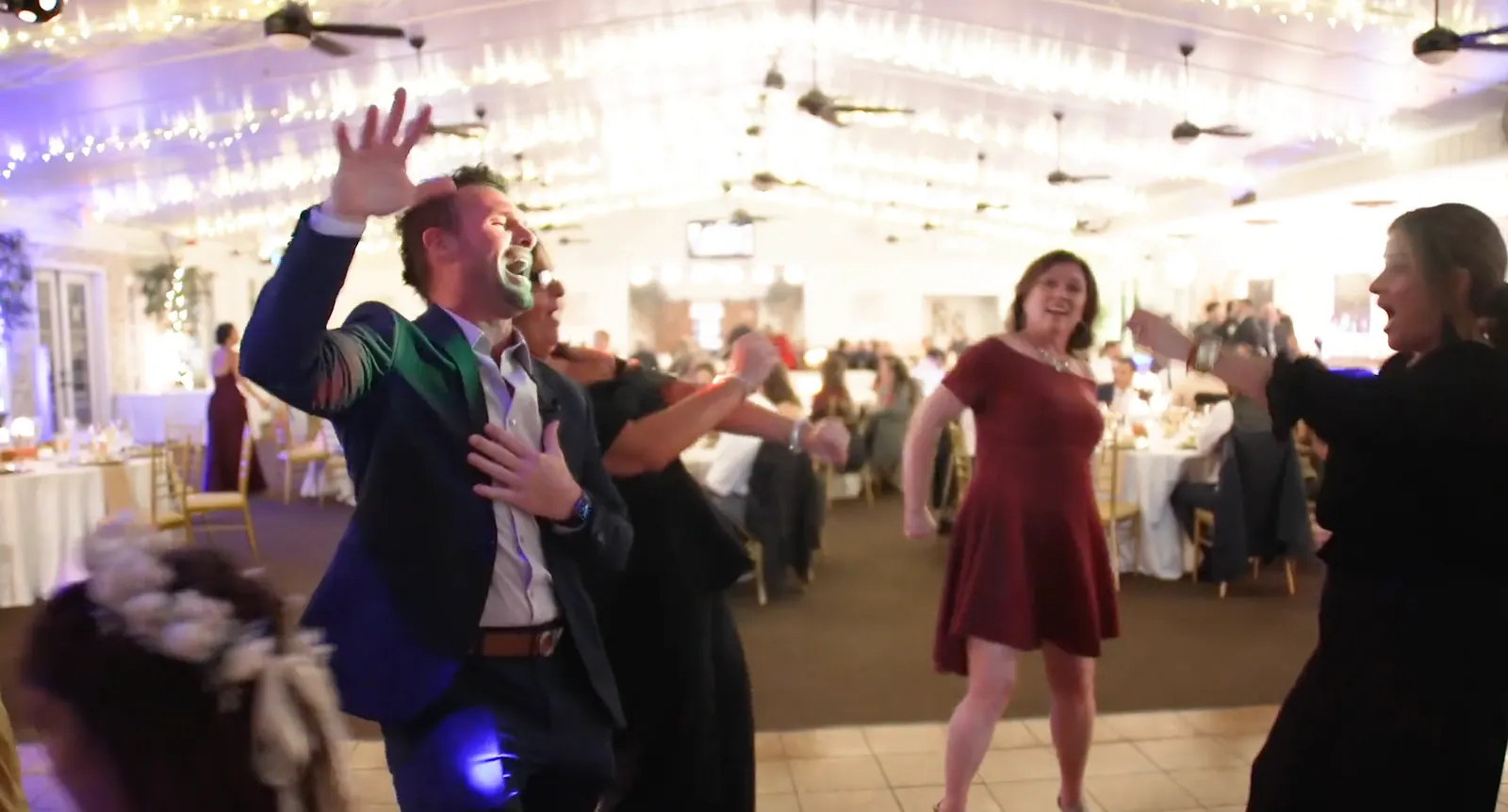
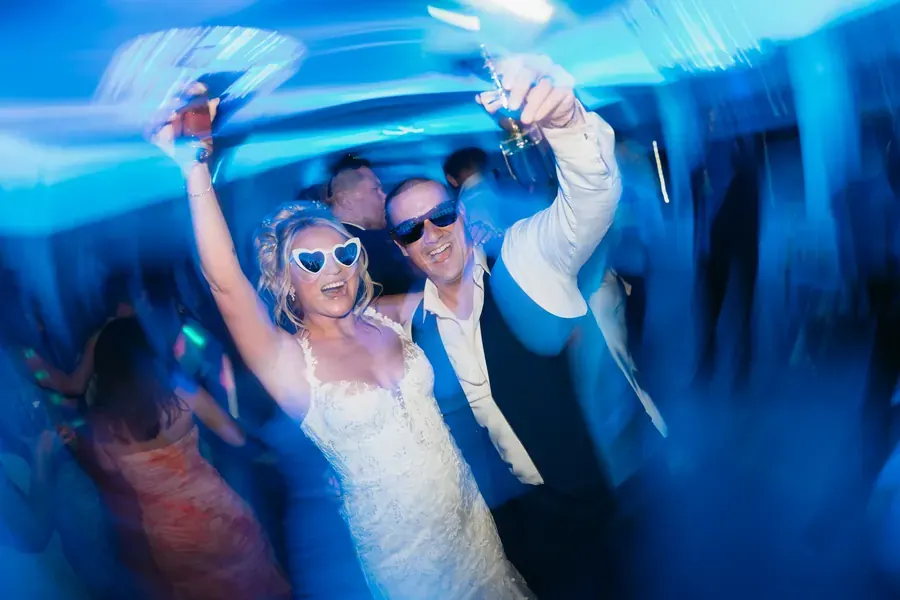
Dance floor lighting has a different job than dinner lighting. During dinner, the goal is flattering, even light that lets guests see their food and each other comfortably. Once dancing starts, the goal shifts to movement, energy, and visual excitement that matches the music.
Common dance floor looks include:
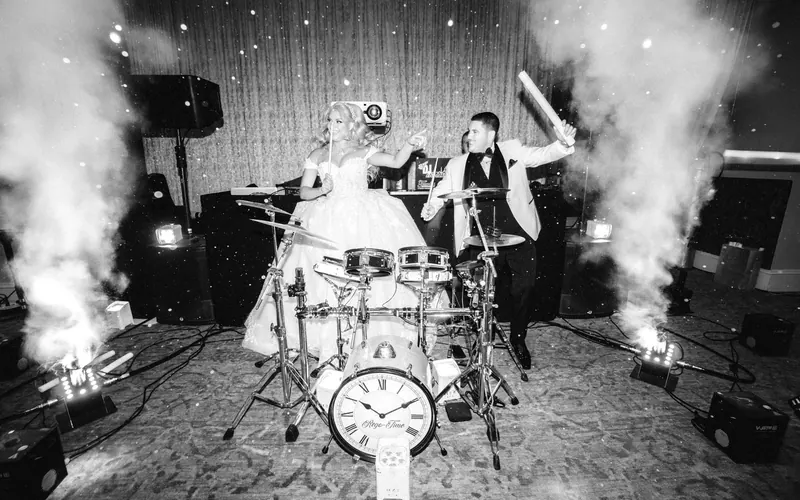
- Color-changing wash lighting that shifts in time with the music, often cycling through two or three colors from the couple’s palette.
- Moving head or gobo patterns that project texture and motion onto the floor and walls, which reads well on video and photo.
- Spotlight or focused-beam moments for the first dance or a grand entrance, where the rest of the room dims and one beam of light holds focus.
- Strobe or pulse effects used sparingly for high-energy songs, paired with sound to build a peak moment rather than running continuously.
A professional DJ and MC team typically controls these transitions live, dimming dinner lighting and bringing up dance floor colors as the band or DJ shifts from dinner music to open dancing. FNA Events includes dance-floor lighting with its DJ and MC packages, while intelligent lighting that shifts color and pattern is available as an enhancement. You can see more on the intelligent lighting page.
Building a Moodboard: A Simple Step-by-Step Approach
- Start with your existing palette. Pull two or three colors from your florals, linens, or invitation suite rather than choosing lighting colors in isolation.
- Separate the room into moments. List out cocktail hour, dinner, speeches, first dance, and open dancing, since each one may call for a different look.
- Collect a small set of reference photos. Real reception photos (not just stock images) show how light actually falls on walls, ceilings, and dance floors.
- Note your venue’s existing conditions. Chandeliers, string lights, or colored walls already built into the room will interact with any lighting you add.
- Share it early. Send the moodboard to your DJ, planner, or lighting vendor well before the wedding so there is time to confirm what is technically possible in your specific room.
If you are not sure which enhancements fit your venue, our team can walk through options when you check your date and contact FNA Events.
How Uplighting and Accent Lighting Set the Base Mood
Uplighting, fixtures placed along walls and pointed upward, is usually the foundation of a reception’s color story. It washes the perimeter of the room in a chosen color, which affects how every other element in the space reads, including florals, linens, and even guests’ outfits in photos.
Uplighting pairs well with a neutral or warm centerpiece and florals lighting plan, since too many competing light sources can wash out delicate colors. If florals and lighting are being planned by separate vendors, it is worth coordinating the two so the final palette does not clash; our guide on how lighting enhances florals covers that handoff in more detail.
FNA Events includes uplighting at no extra cost with its premium DJ and host packages, which is worth asking about if you already know you want a colored wall wash for your reception. For a deeper technical breakdown of fixture types and placement, see our full guide to designing lighting for your reception atmosphere.
Seasonal and Venue Considerations in New Jersey, New York, and Philadelphia
Lighting choices should respond to the actual room, not just a trend. A few things we see change the plan across our service area:
- Shore venues with large windows or ocean views often look best with lighting that complements natural light during golden hour, then shifts to bolder color once the sun sets.
- Tented and outdoor venues need fixtures rated for the setting, and cold weather in fall and winter can affect setup timing and equipment placement.
- Historic or indoor venues with existing chandeliers or wood paneling often look best with warm amber tones rather than cool or saturated colors, which can clash with the architecture.
- Modern or industrial spaces tend to handle bold, saturated dance floor color well since the walls and floors are usually neutral to begin with.
FNA Events serves weddings across New Jersey, New York, and the Philadelphia area, from shore towns to suburban banquet halls to city venues, and the lighting approach we recommend shifts based on the room and the season. You can browse real examples by venue on our venues page, including weddings at Crystal Springs Resort and The English Manor.
When to Bring In a Lighting Professional Versus DIY String Lights
Not every lighting need requires a professional designer. String lights, candles, and simple lamp rentals can create a nice ambient layer for a backyard or tented wedding on a smaller budget. But there are limits to what a couple should handle without a licensed professional.
Any lighting that involves running new electrical circuits, adding outlets, or wiring fixtures into a venue’s existing power should be handled by a licensed electrician, and work must meet the applicable electrical code; New Jersey has adopted the 2023 National Electrical Code as part of its Uniform Construction Code, effective August 2026, according to the New Jersey Department of Community Affairs. This matters most for tented and outdoor weddings where power is being run across a property.
Wedding lighting is generally quoted by event scope, venue, equipment, and setup requirements, so ask vendors for an event-specific proposal rather than relying on residential lighting costs. Compare what is already included before adding enhancements; the FNA Events packages page is the appropriate place to request current package details.
Frequently Asked Questions
How far in advance should we finalize our lighting moodboard?
Finalize lighting choices after major decor decisions are set and early enough for your venue and vendors to confirm equipment, placement, and power needs. This gives your DJ or lighting vendor enough time to confirm fixture counts and placement with the venue, especially if the room has specific power or ceiling-height limitations.
Can lighting colors clash with my venue’s existing decor?
Yes. Wood paneling, colored walls, or patterned carpet can shift how a lighting color reads in person. Always test or review photos of your chosen colors in a similar room style before committing, and ask your vendor whether your venue has any known lighting quirks.
Do we need different lighting for an outdoor ceremony versus an indoor reception?
Often yes. Outdoor ceremonies usually rely on natural light and simple accents like string lights or lanterns, while indoor receptions use uplighting and dance floor fixtures that need controlled, dim ambient conditions to look their best on camera and in person.
What is the difference between uplighting and intelligent lighting?
Uplighting refers to fixtures placed along walls to wash the room in a steady color. Intelligent lighting refers to moving, color-changing fixtures, often used over the dance floor, that can shift patterns and colors throughout the night in time with the music.
Will cold spark fountains or CO2 cannons work with any lighting palette?
Cold spark fountains and CO2 jets are typically used for standalone high-energy moments rather than ongoing ambient color, so they generally complement any palette. Confirm with your venue whether these effects are permitted indoors, since some venues restrict them regardless of their indoor-safe rating.
Sources
- These Task, Accent, And Ambient Lighting Tips Can Transform Your Home – Forbes
- Biggest Home Lighting Trends To Look Out For – Forbes Home
- New Jersey Department of Community Affairs | Current Construction Codes
Ready to Check Your Date
If you are planning a wedding or celebration in New Jersey, New York, or the Philadelphia area, the FNA Events team can walk you through DJ and MC entertainment, photography, videography, live music, enhancements, and photo booths, all run by one coordinated crew. Call (844) 373-7411 or visit our contact page to share your date and venue and get pricing for your celebration.
Written by the team at Fresh New Angle Events, Toms River, New Jersey wedding DJs, photographers, videographers, and event professionals serving couples across New Jersey, New York, and the Philadelphia area.