Church Wedding Ceremony Music: What Is Usually Allowed
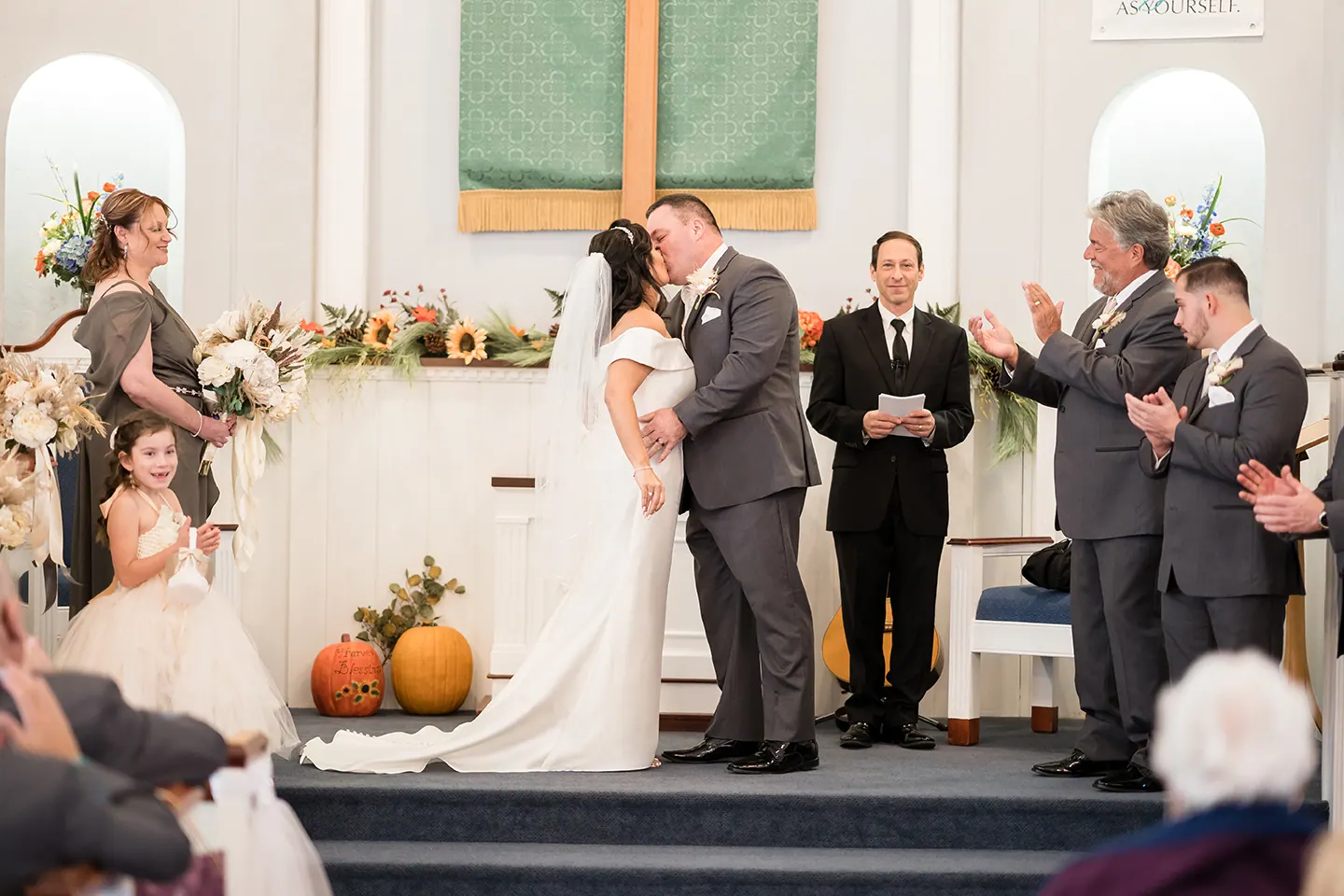
Quick answer: Church policies vary: many favor sacred or liturgically appropriate music, while some restrict secular songs or instrumental pieces drawn from secular works; the parish or congregation should approve every selection. Rules vary by denomination and parish, so couples should request the written music policy and approval deadlines early in the planning process.
Key takeaways
- Many churches favor sacred or liturgically appropriate music, but policies on classical pieces, secular songs, and instrumental covers vary by congregation.
- Song choices are typically reviewed under the church’s approval process, which may involve the officiant, music director, organist, or other church staff.
- Some Catholic parishes prohibit secular songs and stage-derived pieces such as Wagner’s “Bridal Chorus” and Mendelssohn’s “Wedding March.”
- Ask the church when to meet with its music director, since approval, sheet-music, and rehearsal requirements vary.
- A church may permit a cantor, soloist, or small ensemble to supplement or replace the organ, subject to its rules and the available instruments and acoustics.
What Kind of Music Is Typically Allowed in a Church Wedding?
Church wedding music policies vary by denomination, parish, and even by individual priest, pastor, or church music director, but most houses of worship share a common framework: music should be sacred, reverent, or purely instrumental, and it should support the meaning of the ceremony rather than distract from it.
In practice, this usually means hymns, psalms, classical organ pieces, and liturgically appropriate vocal works are welcome, while pop songs, movie themes, and anything with secular lyrics are often restricted or banned outright. Many Catholic parishes are explicit about this. As one Houston parish’s wedding music guidelines put it, music should be “sacred or purely instrumental and not from a secular source (i.e., not from a ballet, opera, or play),” which is why even beloved classics like the Mendelssohn Wedding March and the Wagner Bridal Chorus are off-limits at some churches, since both originated in stage works.
Some Protestant and Anglican churches may offer more flexibility, but local policies still control. The Church of England notes that couples can discuss “other ideas” with their vicar and organist beyond the standard classical repertoire, though the organist’s instrument and skill level still shape what is realistic.
Sacred vs. Secular Music: Where Churches Draw the Line
The sacred-versus-secular distinction trips up more couples than any other part of planning church ceremony music. A song can be instrumental and still be considered secular if its origin is a non-religious work, which is exactly why some parishes reject classical wedding standards that couples assume are automatically approved.
According to the Incorporated Society of Musicians, a British organization that advises churches and musicians on wedding music, “for church weddings there are many pieces which are liturgically appropriate,” and couples should expect their choices to be narrowed by what actually fits a worship service rather than a concert hall.
Generally, you can expect this kind of split:
- Commonly proposed, subject to church approval: traditional hymns, psalms, approved settings of Ave Maria or Panis Angelicus, Pachelbel’s Canon in D, Bach’s Jesu, Joy of Man’s Desiring, and other liturgically appropriate pieces.
- Often restricted: pop love songs, movie and TV themes, secular classical pieces originally written for opera, ballet, or theater, and anything with explicit or non-religious lyrical content.
- Case-by-case: contemporary Christian music, instrumental covers of popular songs, and original compositions, which some music directors allow and others do not.
If a song you love falls into the restricted category, ask whether it can be played during the prelude while guests are seated, at the reception instead, or during a related moment like the unity candle or sand ceremony if your church permits it there.
Who Approves the Music: The Role of the Music Director
Church music approval may rest with the officiant, music director, organist, cantor, or a combination of church staff. This person understands the parish’s specific policies, the capabilities of the organ or sound system, and what has worked well in that space before.
Treat the music director as a planning partner who can explain the church’s rules, available instruments, and suitable alternatives. If you want to bring in outside musicians, such as a violinist, string quartet, or vocalist, most churches require that they coordinate directly with the music director on logistics, sound check timing, and song approval rather than showing up and setting up independently.
Ask whether organist, cantor, outside-musician, rehearsal, or sheet-music fees apply and whether they are included in the church’s ceremony charges.
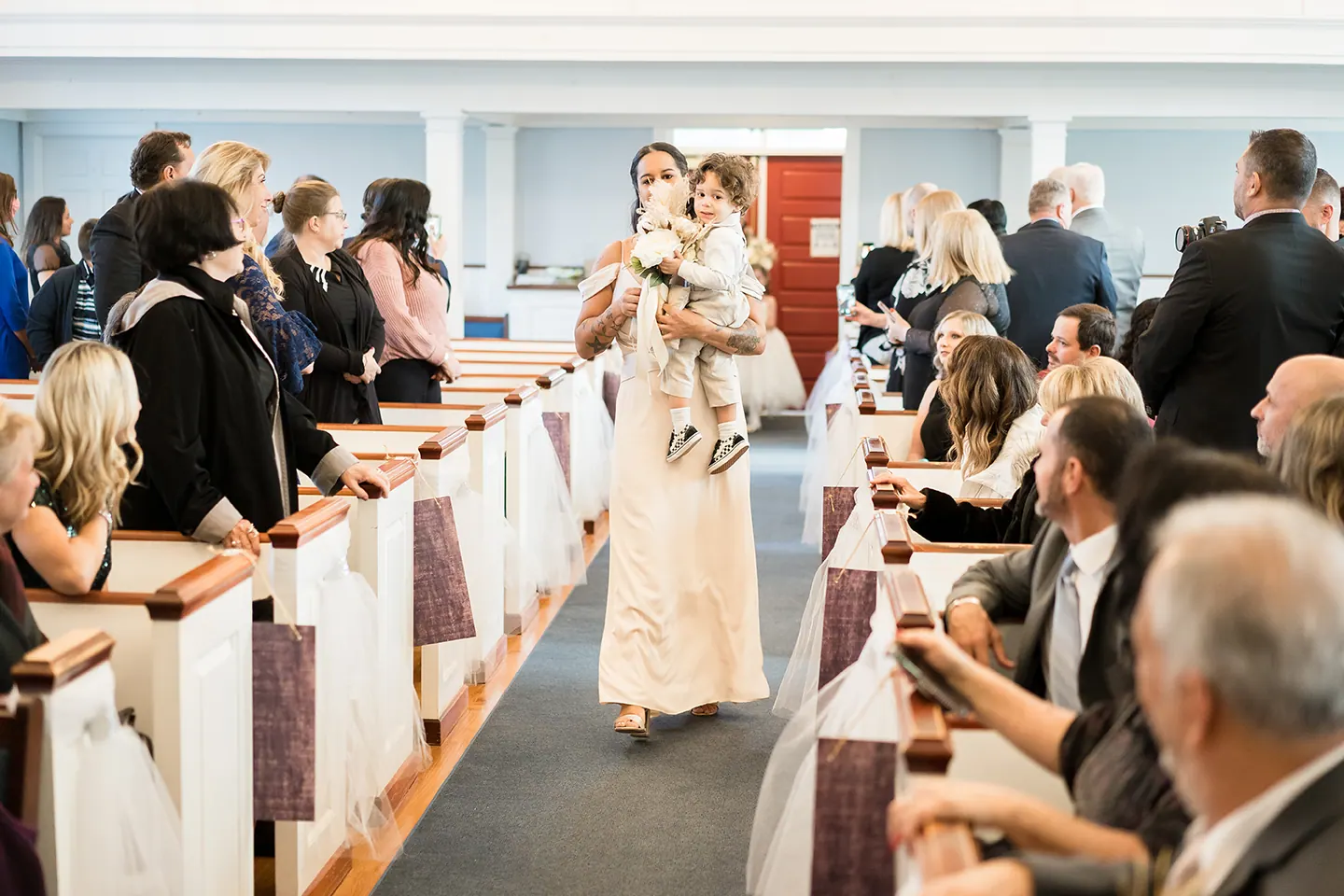
Organ, Choir, or Live Musicians: What Are Your Options?
The traditional church organ remains the default choice for a reason: it fills large, reverberant sanctuaries well and most organists already know the standard wedding repertoire. But it is not your only option, and many couples now blend the organ with other live music for a more personal feel.
Common instrumentation choices
- Organ solo: a traditional option where an organ and approved organist are available; ask whether the musician’s fee is included or separate.
- Organ plus soloist or choir: a vocalist or small choir performs a hymn or special piece, often during the signing of the register or communion.
- String instruments: a violinist, cellist, or string quartet can play preludes, the processional, and the recessional, either alone or alongside the organ.
- Brass or trumpet: a trumpet soloist paired with the organ adds drama to pieces like Clarke’s Trumpet Voluntary, a popular choice noted by the Church of England for bridal entrances.
- Acoustic guitar or harp: allowed in some contemporary or non-denominational churches, though traditional parishes may restrict these instruments during the Mass or service itself.
With church approval, couples can ask FNA Events about live wedding music, including ceremony or cocktail strings and saxophone, percussion, or electric-violin options for other parts of the celebration.
How Far in Advance Should You Book Church Music?
Most churches want ceremony music finalized well before the wedding, and the timeline is often tighter than couples expect because it depends on the music director’s calendar, not just your own.
- After reserving the church: ask for its written music policy and required approval deadlines.
- When the church recommends: meet with the music director to discuss song options, instrumentation, and rules for outside musicians.
- By the church’s deadline: submit the final song list in the required format for approval.
- After approval: ask who must obtain any required sheet music and allow enough time for ordering and rehearsal.
- Before the ceremony: follow the church’s instructions for any needed musician rehearsal or sound check so timing and cues are clear.
Building this into your broader planning is easier when you already have a wedding music and timeline template to track approvals alongside your reception music choices.
Common Church Wedding Music Policies by Denomination
No two parishes are identical, but patterns do emerge across denominations. Use this table as a starting point, then confirm specifics with your own officiant and music director since local policy always overrides general trends.
| Denomination | Typical music stance | What to confirm |
|---|---|---|
| Catholic | Often emphasizes sacred and liturgically appropriate music; local rules determine whether secular or stage-derived pieces are permitted | Whether the diocese or individual parish sets the policy, and if a cantor is required |
| Episcopal/Anglican | Selections are reviewed within the congregation’s worship tradition; the officiant and music staff may collaborate on choices | Organ capabilities and whether a trumpet or string soloist can be added |
| Protestant (Methodist, Lutheran, Baptist, etc.) | Policies vary widely; hymns or other worship music may be favored, while contemporary or secular selections require local approval | Whether a worship band or guitar is allowed during the full service |
| Non-denominational | Policies vary by congregation; ask about secular selections and outside performers | Sound system compatibility and any volume or lyric-content expectations |
If your ceremony is part of a broader celebration with a reception DJ and dance floor afterward, FNA Events’ ceremony and cocktail music planning guide walks through how ceremony music choices connect to the rest of your day.
What About Sound Equipment and Noise Rules?
Most churches have their own sound systems and will not allow outside equipment to be wired into their system without coordination, since mismatched gear can cause feedback or damage. If you are bringing in a wireless microphone for readings or vows, clear it with the music director or church staff ahead of time.
Churches with outdoor courtyards or garden ceremony spaces in New Jersey should also be aware that municipalities can enforce local noise ordinances under the state’s Noise Control Act, administered by the New Jersey Department of Environmental Protection. New Jersey’s state rules address noise from specified stationary sources, while approved municipal ordinances may include local requirements such as curfews; ask the church or municipality about any rules affecting outdoor amplified music.
For couples who want crisp, reliable audio for vows and readings regardless of venue, FNA Events’ guide to ceremony audio solutions covers wireless lapel mic setups that work well in both church sanctuaries and outdoor settings.
Planning Your Processional, Recessional, and Reception Music
Once your church music is locked in, the rest of your day’s soundtrack still needs attention. Processional and recessional song selection has its own set of traditions and options worth exploring separately, and FNA Events covers that in depth in its wedding processional and recessional songs guide.
For the reception that follows, many couples in New Jersey, New York, and the Philadelphia area coordinate their church ceremony musicians with their reception DJ so the transition from sacred music to celebration feels seamless rather than disconnected. Couples can coordinate FNA Events’ DJ and MC entertainment with church staff and approved ceremony musicians so cues and transitions are documented in the day’s timeline.
Couples who want a single point of contact for photography and video coverage of both the church ceremony and the reception can also review FNA’s wedding photography and cinematography services, which document everything from the processional at the altar to the final dance.
Frequently Asked Questions
Can I play a secular song during the prelude before a Catholic wedding Mass?
Possibly, but do not assume the prelude is exempt from the parish’s sacred-music policy. Ask the parish music director or officiant to approve the song before making plans. Always confirm with your specific parish’s music director, since policies differ even within the same diocese.
Do I have to use the church’s organist, or can I bring my own musician?
Most churches prefer or require that outside musicians coordinate with the in-house music director, and some charge a fee if you use their organist versus bringing your own. A few parishes do not allow outside musicians at all, so ask this question during your first planning meeting.
What happens if the church rejects a song I really want?
Save it for another moment in your day. Many couples move a beloved but non-approved song to the reception entrance, first dance, or cocktail hour instead, where there are no religious restrictions on music choice.
Is there a fee for church ceremony musicians separate from the venue cost?
A separate fee may apply for an organist, cantor, music director, rehearsal, or required sheet music. Ask the church for its current fee schedule and payment instructions.
Can a live violinist or string quartet replace the organ entirely?
Some churches permit strings without organ, while others require or prefer their organist. Approval depends on church policy, musician requirements, and the room’s acoustics. Confirm instrumentation preferences during your planning meeting.
Sources
- Other music for your wedding | The Church of England
- Music for Weddings | Incorporated Society of Musicians
- Popular Wedding Music Selections | Church of the Annunciation, Houston
- NJDEP Noise Control Regulations (N.J.A.C. 7:29)
Ready to Check Your Date
If you are planning a wedding or celebration in New Jersey, New York, or the Philadelphia area, the FNA Events team can walk you through DJ and MC entertainment, photography, videography, live music, enhancements, and photo booths, all run by one coordinated crew. Call (844) 373-7411 or visit our contact page to share your date and venue and get pricing for your celebration.
Written by the team at Fresh New Angle Events, Toms River, New Jersey wedding DJs, photographers, videographers, and event professionals serving couples across New Jersey, New York, and the Philadelphia area.